How Can You Determine The Hardness Of A Mineral

You’re walking along a pebbled beach, and your fingers close around a smooth, shimmering stone. It feels ancient, maybe even precious. But is it a soft, chalky trickster or a...
You’re walking along a pebbled beach, and your fingers close around a smooth, shimmering stone. It feels ancient, maybe even precious. But is it a soft, chalky trickster or a hard-core survivor? Determining a mineral’s hardness is actually one of the simplest—and coolest—party tricks in geology.
Hardness isn’t about how heavy a rock feels. It’s a measure of how well it resists being scratched. Think of it as the mineral’s personal resilience score. This isn’t just trivia; knowing the hardness of a mineral helps you identify gems, choose the right countertop, or even impress a date at a museum.
The Legendary Mohs Scale: Your New Best Friend
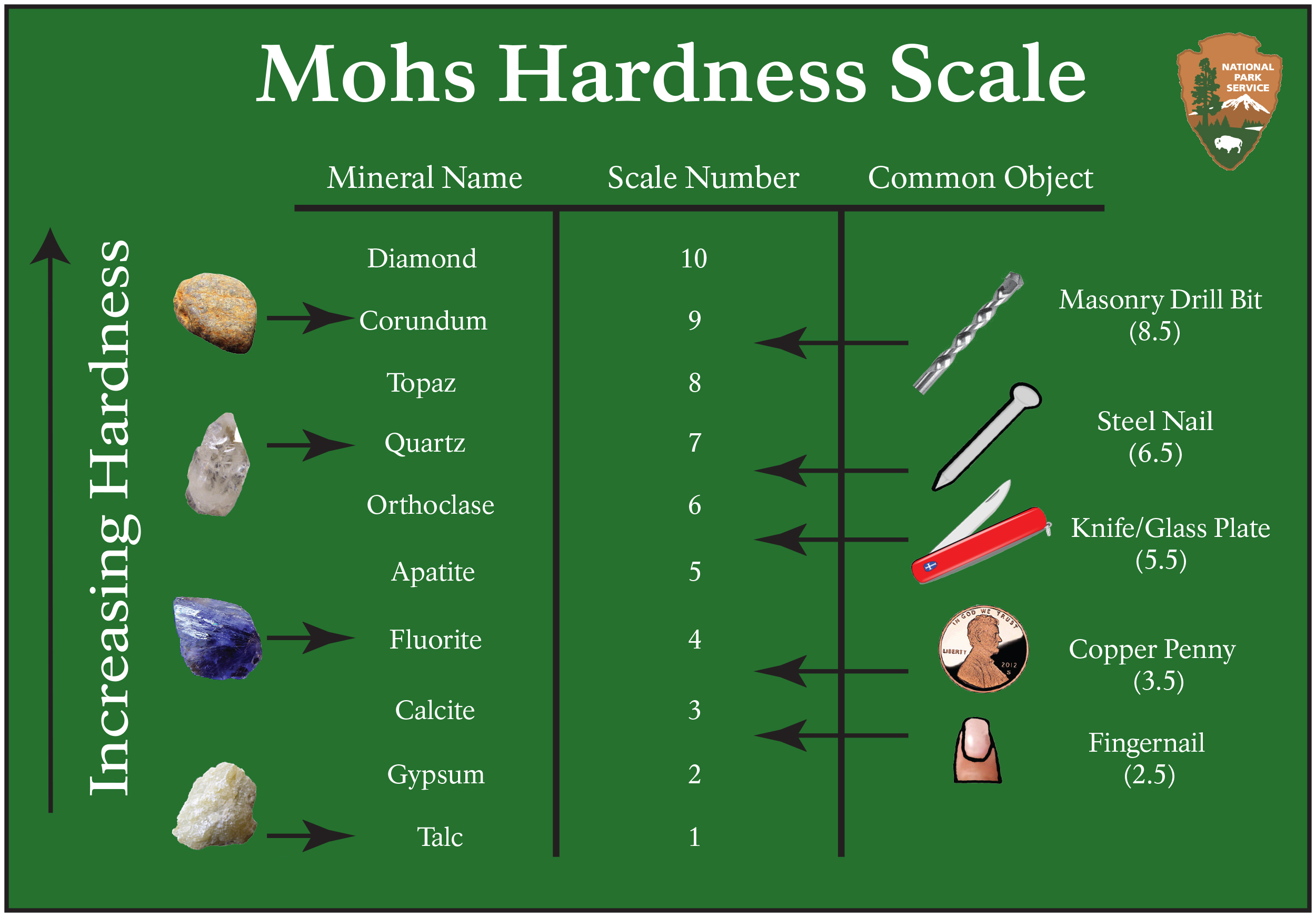
Enter Friedrich Mohs, a German mineralogist who, in 1812, gave us the ultimate ranking system. He created a scale from 1 to 10, where 1 is the softest (talc) and 10 is the hardest (diamond). It’s not a linear scale; think of it more like a hierarchy of bullies—each mineral scratches the ones below it.
Must Read
Here’s the quick cheat sheet you’ll want to memorize: Talc (1) feels soapy. Gypsum (2) can be scratched by a fingernail. Calcite (3) fizzes with acid. Fluorite (4) is pretty and soft. Apatite (5) is the knife’s best friend. Orthoclase (6) is tough. Quartz (7) is the king of everyday rocks. Topaz (8) glitters. Corundum (9) includes rubies and sapphires. And Diamond (10) is, well, forever.
Fun fact: If you own a diamond ring, you’re holding nature’s ultimate bully. It can scratch anything except another diamond. That’s why jewelers get nervous around hard countertops.
The Pocket Test: Use What You Carry
You don’t need a lab coat to test hardness. Your own body is a surprisingly good tool kit. Start with your fingernail (hardness ~2.5). If you can scratch the mineral with your nail, it’s softer than gypsum. If not, move to a copper penny (hardness ~3.5).
Next, grab a common steel knife blade (hardness ~5.5). Most pocketknives or kitchen knives will scratch anything up to apatite. If the blade leaves a mark, your mineral is softer than steel. No mark? You’re dealing with something tougher—likely quartz (7) or higher. Finally, glass (hardness ~5.5 to 6) is your last-ditch test. Scratch a piece of window glass with the mineral. If the glass suffers, your rock is a serious contender.
Pro tip: Always test on a small, hidden spot. You don’t want to ruin a perfect crystal face just to prove a point. And remember, scratches are permanent—so be gentle, like you’re handling a first-edition vinyl record.
When Minerals Fight Back: The Scratch vs. Streak Confusion
Here’s where beginners get tripped up. Hardness testing is about scratching the mineral, not crushing it. You’re looking for a permanent groove, not a powder line. That powdery trail is the mineral’s streak, which is a different property entirely. For example, hematite looks black but leaves a red-brown streak.
To avoid confusion, use a fresh edge of your specimen. Press firmly but slowly across a flat surface of your testing tool. If you hear a squeaky sound or feel resistance, you’re probably just rubbing off dust. True hardness leaves a distinct, clean line. Think of it like testing a good eyeliner—smudge is bad, a crisp line is success.
Cultural aside: Ancient Romans used powdered pumice (a soft volcanic glass) to scrub their togas. They knew hardness mattered, even for laundry day. Your modern jeans? That’s just a softer system.
The “Real World” of Hardness: From Countertops to Class Rings
This isn’t just rock-hound hobbyism. Hardness determines why your granite kitchen island is so tough (quartz, feldspar, and mica) while your marble countertop (calcite) etches easily from lemon juice. Your everyday mug is made from ceramic that’s about a 7 on the Mohs scale—hard enough to handle a spoon, soft enough to chip if dropped.
 How to Identify Minerals in 10 Steps (Photos) – Geology In
Did you know? The Hope Diamond is a perfect 10, but it still has cleavage planes—a crack you can split along. That’s why diamond cutters are geniuses with stress and geometry. Hardness doesn’t mean indestructible; it just means extra picky about scratches.
Even your smartphone screen is a hardness game. Most modern glass (Gorilla Glass) is around a 6 to 7, which is why sand (mostly quartz at 7) scratches it. That’s why you keep a screen protector—because tiny quartz dust in your pocket is a mineral ninja.
Practical Tips for the Curious Rock Hound
1. Build your own test kit. Wallet items are perfect: a copper penny, a steel nail (from a hardware store), a piece of glass from a jar, and a ceramic tile. Store them in a small pouch with your mineral collection.
2. Use the “Mohs-App” method. There are free apps that compare mineral photos and properties, but they can’t beat a real scratch test. Trust your hands first, your phone second.
3. Beware of fake “hard” stones. If a vendor insists their amethyst is an 8 (it’s actually quartz, a 7), test it with a steel blade. Real quartz will not scratch steel; topaz will. Trust but verify.
4. Protect your eyes and fingers. Small shards fly off when testing. Safety glasses are a good idea, especially when scratching glass. And never test a mineral you value highly with a tool that could damage it.
Quick quiz: You find a shiny gray rock. Your nail won’t scratch it, a penny barely marks it, but a steel knife leaves a visible line. What’s its hardness? If you said between 5 and 5.5, go grab a geologist badge. You’re basically a field expert now.
The Daily Reflection: Softness is a Superpower
In a world obsessed with being hard—tough deadlines, strong opinions, unbreakable plans—minerals teach us a quiet lesson. A diamond is forever, but it’s also brittle. Talc is a 1, yet we use it in baby powder, cosmetics, and even dinner plates (yes, talc is in ceramics). Softness, it turns out, has its own utility and grace.
So the next time you hold a stone, ask it: How hard are you? But also ask yourself: When do I need to be diamond-tough, and when can I be talc-soft? Because resilience isn’t always about resistance. Sometimes, it’s about knowing exactly what you’re made of—and letting the world scratch the surface just a little.
Now go find a rock. Scratch it wisely. Live flexibly.
