Deionised Water And Distilled Water Difference

Let’s be honest: when you first heard about deionised water and distilled water, you probably thought they were the same boring, lab-coat thing, right? Wrong! These two are li...
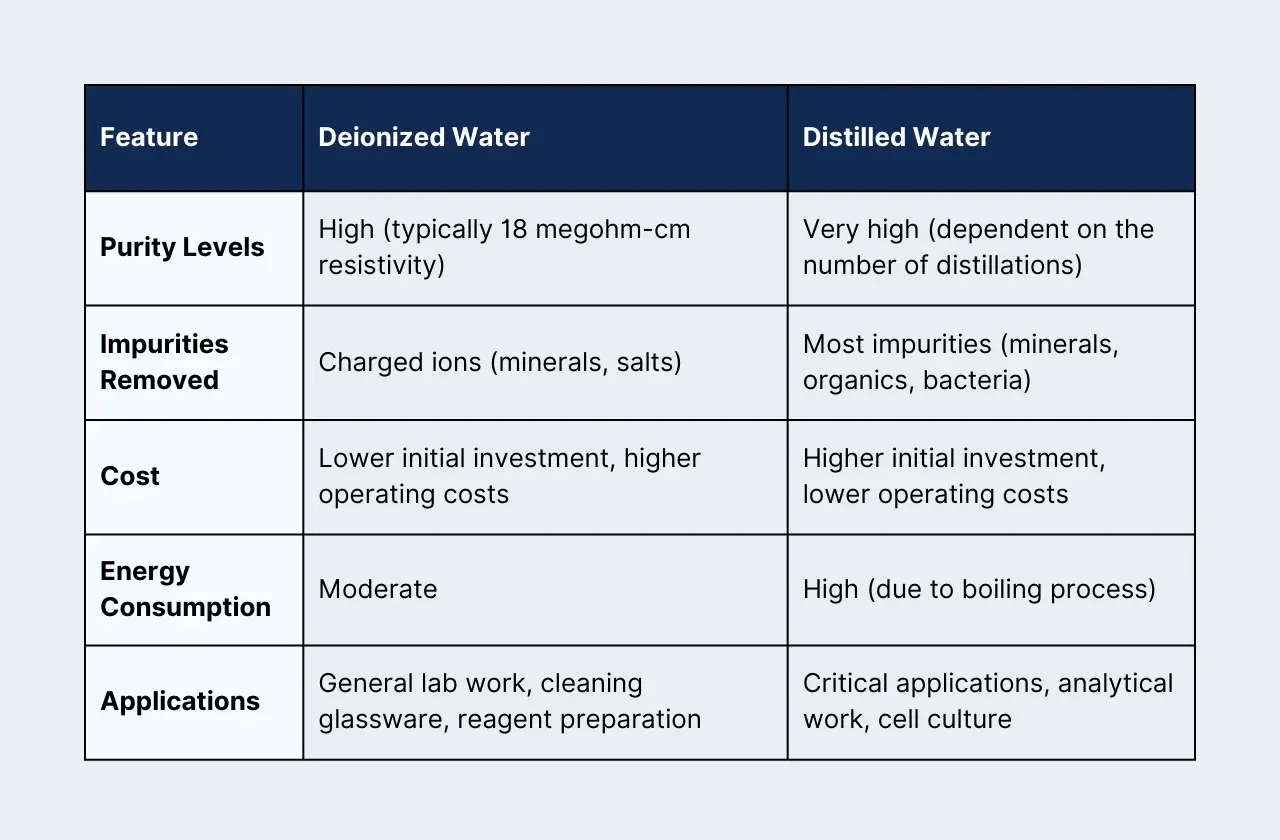
Let’s be honest: when you first heard about deionised water and distilled water, you probably thought they were the same boring, lab-coat thing, right? Wrong! These two are like the quirky cousins of the water world—similar on the surface, but with wildly different personalities. And once you understand the difference, you’ll feel like a secret science insider who can make everyday life just a little more fun.
The Quick, No-Fuss Breakdown
Distilled water is the old-school purifier. You boil water, catch the steam, and let it condense back into liquid—leaving behind minerals, bacteria, and pretty much everything else. Think of it as water that went to a high-end spa, had a steam bath, and came out reborn, alone.
Deionised water, on the other hand, is like a magnet gone wild. It passes water over special resins that yank out charged mineral ions—things like calcium, magnesium, and sodium—like a bouncer at a club. The result? Water that’s stripped of its electrical charge, but not necessarily free of germs or organic gunk. Surprised? I know, right?
Must Read
Why Should You Care? (Hint: It’s Not Just for Labs!)
Here’s where it gets fun. Distilled water is your best buddy for household gadgets. Use it in your steam iron, humidifier, or car battery, and you’ll never deal with white, crusty mineral buildup again. Your appliances will thank you with longer lives—and you can brag to your friends that you’re a “preventive maintenance ninja.”
Deionised water is the star in places where you can’t have any ions messing things up. Think car detailing (no water spots on that glossy paint!), aquarium setups, or even rinsing your prized photography prints. It’s also used in labs and pharmaceuticals—but let’s be honest, you’ll feel like a mad scientist using it to clean your car’s windows to a perfect, streak-free shine.
The Hidden Danger: They’re Not Interchangeable!
Here’s the catch: don’t go swapping them like you’d swap salt for sugar. Deionised water can still contain bacteria, so you shouldn’t drink it regularly—your tap water is way safer. Distilled water is generally safe to drink, but it tastes flat (all those minerals that give water its “zip” are gone). So, if you want a crisp sip, stick with mineral water, okay?
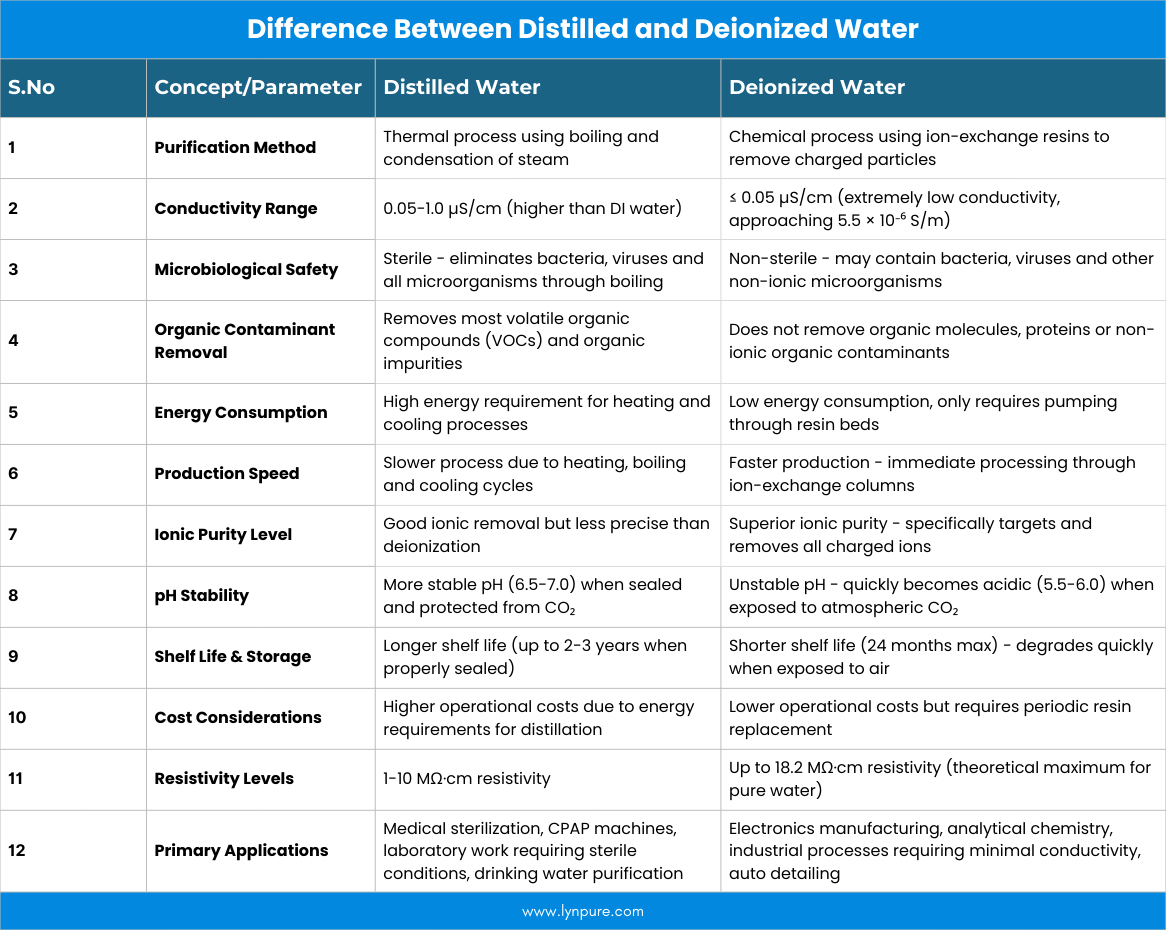 Distilled Water vs Deionized Water | Key Differences
But for everything else? This is where you can shine. Use distilled for your iron, and deionised for a spotless car wash. Or, if you’re feeling adventurous, try making your own iced coffee with distilled water—it’s said to pull out cleaner flavors, no weird mineral aftertaste. Who knew science could taste this good?
The “Wow, I Feel Smarter Already” Wrap-Up
So, distilled and deionised are like two superheroes: one fights everything with heat, the other targets ions with attitude. You don’t need a Ph.D. to use them—just a little curiosity and a willingness to experiment. Next time you’re at the store, glance at those bottles and smile, because you now know their secret origin stories.
And here’s the uplifting part: every time you learn a small, fun fact like this, you’re building a brighter, more playful relationship with the world around you. Science isn’t just for textbooks—it’s for making your coffee taste cleaner, your car gleam brighter, and your appliances last longer. So go ahead, pour yourself a glass of whatever water you like, and keep asking “why?” Because that’s where all the magic—and the fun—begins.
