Difference Between Drinking Water And Distilled

Let’s be honest: most of us don’t think twice about the water we drink. We just fill a glass from the tap or grab a bottle from the store and gulp it down. But have you ever s...

Let’s be honest: most of us don’t think twice about the water we drink. We just fill a glass from the tap or grab a bottle from the store and gulp it down. But have you ever stood in the supermarket aisle, staring at a jug labeled “distilled water,” and wondered, “What’s the big deal?” You’re not alone. It’s a simple question, but the answer can actually make your everyday life a little easier—and your coffee taste a whole lot better.
Think of regular drinking water as your friendly neighborhood all-rounder. It’s the water that comes from your faucet, a well, or a standard bottle. It’s full of tiny, natural extras—like calcium, magnesium, and a few trace minerals. These are the good guys that give water its taste and sometimes even a little health boost. It’s like a hearty stew: full of flavor and character, but it can also leave a little residue behind, like that white film on your glass after it dries.
Now, meet distilled water: the minimalist cousin. This water has been boiled into steam and then cooled back into liquid, leaving all those minerals, bacteria, and impurities behind. Think of it as the super-pure, introvert of the water family. It has no taste, no smell, and no minerals. It’s the water equivalent of a blank white canvas—perfectly clean, but a little boring on its own for daily sipping.
Must Read
So why should you care? Let me tell you a quick story. My friend Sarah used to get these annoying white spots on her glasses after washing them. She scrubbed and scrubbed, but they kept coming back. I told her to try distilled water for her coffee maker and her final rinse on dishes. The next week, she texted me: “My glasses look like I bought them yesterday.” That’s the magic of distilled water—no minerals means no scale, no spots, and no gunky buildup.
The Everyday Showdown: Tap vs. Distilled
Imagine you’re making a pot of your morning coffee. With regular tap water, your machine builds up a crust of calcium over time—that’s “scale.” It’s like a stubborn barnacle on a ship. Use distilled water, and your coffee maker stays clean as a whistle, and your coffee tastes sharper, without any muddy aftertaste from old minerals.
But here’s the catch: drinking only distilled water long-term can actually be a bit of a problem. Because it has zero minerals, it can leach tiny amounts of minerals from your body when you sweat or use the bathroom. You won’t turn into a skeleton overnight, but your body prefers water with a little natural company—like the magnesium and calcium you get from regular water or food.
That’s why most people keep distilled water for specific jobs, not for their main water bottle. It’s the designated specialist. You use it for your humidifier so you don’t end up with white dust on your furniture. You fill your car’s battery with it. You even use it in steam irons to avoid rust stains on your favorite shirt. It’s the handy helper that doesn’t cause trouble.
When You Want the Minerals
Regular drinking water, especially from a good source, gives you those little trace minerals that your body actually needs. It’s like a gentle, free multivitamin. If you’re an athlete, or just someone who sweats a lot on a hot day, you’ll miss those minerals if you only drink distilled. Your muscles might feel a bit crampier, and you’ll need to eat extra foods to make up for it.
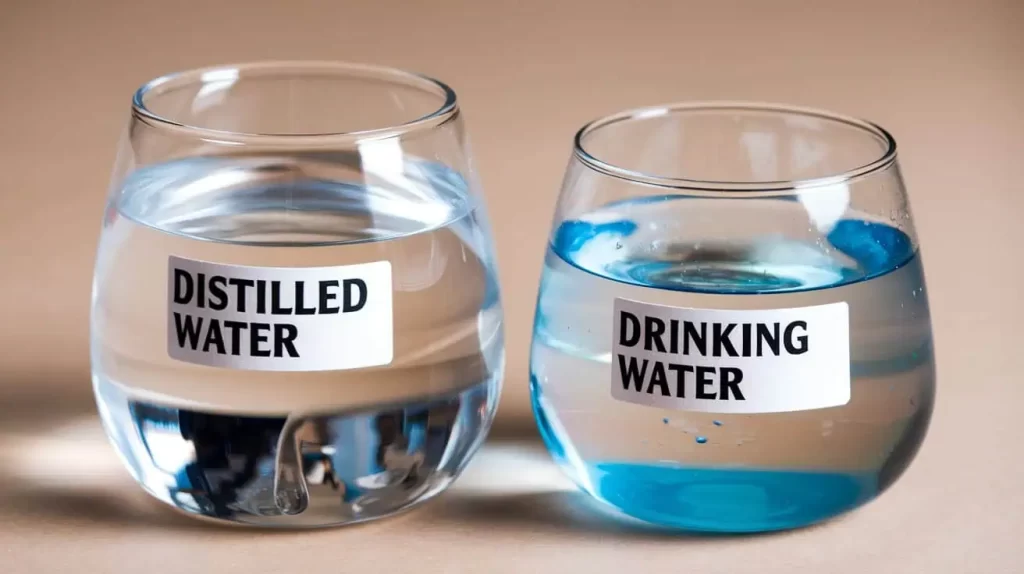 Distilled Water vs Drinking Water: Which Is Best for You?
On the flip side, distilled water is a godsend for people with sensitive kidneys or those who need to avoid certain minerals due to health conditions. It’s also the purest bet for baby formula in places where tap water quality is iffy. But for the average, healthy adult who just wants a glass to go with dinner? Stick with your regular filtered or tap water.
I once tried a week-long “distilled only” challenge just for fun. By day three, my water felt… hollow. It was like drinking the ghost of water. My body didn’t feel bad, but my brain missed that subtle, crisp taste from my usual filtered tap. I realized then that drinking water isn’t just about hydration—it’s also about enjoying it.
A Simple Rule of Thumb
Here’s how to keep it simple: Drink regular water for living; use distilled water for loving your appliances. Pour regular water into your body, your pets’ bowls, and your plants. Pour distilled water into your iron, your coffee maker (sometimes), and your car’s cooling system. That way, you get the benefits of minerals in your body and the benefit of a mineral-free life for your gadgets.
It’s a bit like choosing between a cozy, rustic lodge and a sterile, shiny lab. The lodge (regular water) is where you want to hang out, eat, and live. The lab (distilled) is where you go to get a perfectly clean result for a specific task. Both are useful, but they serve very different rooms in your house—and in your life.
So the next time you see that jug of distilled water, give it a respectful nod. It’s not trying to be your everyday drink. It’s just the quiet, reliable friend who shows up to clean up the mess that regular water leaves behind. And honestly, isn’t that a relationship we all need?
