How Long Is A Water Softener Regeneration Cycle

You’ve probably stood in your laundry room, staring at your water softener, a low hum vibrating through the pipes. It feels a bit like waiting for a mysterious appliance to do...

You’ve probably stood in your laundry room, staring at your water softener, a low hum vibrating through the pipes. It feels a bit like waiting for a mysterious appliance to do its secret work. The question everyone asks but no one seems to answer with total clarity is: how long does a water softener regeneration cycle actually take?
The short answer is that a standard cycle lasts between 60 and 90 minutes. But like a good film, the runtime can vary depending on the director—or in this case, the model and settings. Some high-efficiency units zip through in around 45 minutes, while older systems might stretch to two hours.
Think of it as the laundry cycle for your home’s water supply. It’s scrubbing, rinsing, and flushing the resin beads that catch all the hard minerals. The actual process is a ballet of backwashing, brine draw, and a final quick rinse.
Must Read
The Four-Act Drama of Regeneration
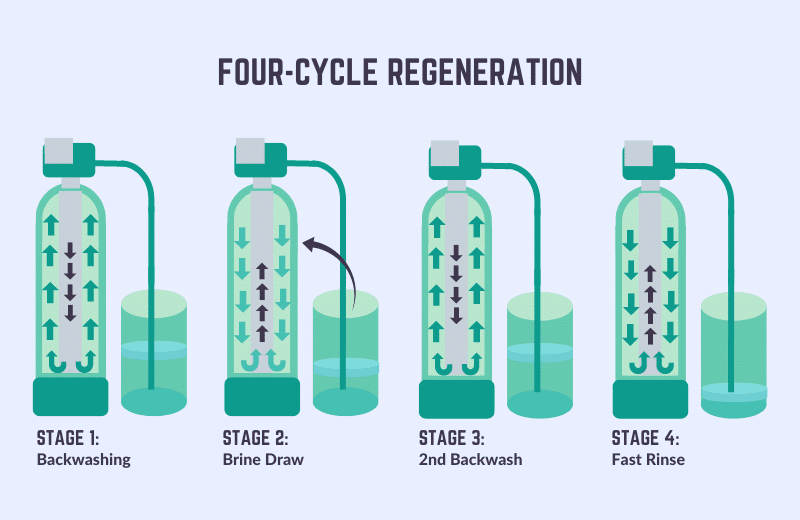
Let’s break down the timeline, because knowing the beats makes the wait a little less annoying. The cycle is not one long event; it’s four distinct, intentional stages.
Act One: Backwash (10-15 minutes). This is the pre-wash. Water rushes backwards through the tank, fluffing up the resin beads like a good pillow fluff. It knocks loose any dirt or sediment clumped together during the week.
Act Two: Brine Draw (30-45 minutes). This is the main event. The system pulls salty brine from the tank, passing it over the resin beads. The sodium ions force the calcium and magnesium off the beads, effectively recharging them for another round of duty.
Act Three: Slow Rinse (10-15 minutes). After the salt bath, the system slowly rinses all that salty, mineral-laden water away. It’s the cool-down period, ensuring no brine stays behind to sneak into your morning coffee.
Act Four: Fast Rinse & Refill (10-20 minutes). The final flush clears any remaining debris, then the unit fills the brine tank with just enough water for the next cycle. It’s like resetting a timer—your softener is now ready for the next seven days.
Why Does It Feel So Long?
If you’re used to instant gratification, a 90-minute interruption feels like a lifetime. But here’s the fun fact: most softeners are programmed to regenerate at 2:00 AM. You’re asleep. You barely notice, unless you wake up for a midnight glass of water and hear that faint mechanical hum.
It is a bit like the unwritten rule of Hollywood blockbusters. The 1993 film Groundhog Day runs about 101 minutes—a cycle that repeats until the lesson is learned. Your water softener does the same: it repeats its regeneration until the water stays soft, and the only lesson you need is patience with your home’s infrastructure.
A cultural parallel: think of the regeneration cycle as a slow-cooker recipe. You don’t rush a good chili. You let the flavors meld. Your water softener needs that full hour to properly eject hardness, or it will just dump salty water back into your pipes, which is the equivalent of serving burnt toast.
Practical Tips for Timing Your Regeneration
So, you want to avoid waking up to a shower that suddenly turns cold and salty? Here are three easy wins to keep your cycle from becoming a plot twist in your morning routine.
 What is Water Softener Regeneration ("Regen")?
1. Check your clock settings. Most modern softeners let you set the regeneration start time. Make sure it’s set for after you typically take your morning shower. If you shower at 6:00 AM, set regeneration for 3:00 AM. Simple math.
2. Know your water usage. If you have guests or do three loads of laundry in one day, your softener might regenerate more frequently. A typical family of four regenerates once a week, but a week of heavy water use can trigger an extra cycle. Monitor the salt level.
3. Listen for the sounds. A regeneration cycle sounds like a washing machine filling, then a gurgle, then silence. If you hear a constant hiss for more than three hours, something might be stuck. Call a pro—don’t ignore it like you ignore that one drawer that won’t close.
Pro tip: During regeneration, your water supply is still on, but it’s bypassing the softener. You can still flush toilets and wash dishes, but you’ll be using hard water for that 60-90 minute window. It won’t hurt anything, but your glassware might spot a little.
The Salt & Science of It All
Let’s drop a couple of fun facts that make you sound smart at dinner parties. Did you know the resin beads in your softener are positively charged, while calcium and magnesium are positively charged? They repel each other—which is why the resin grabs them in the first place, then lets go when salt (sodium) takes their place.
Another nugget: the average regeneration uses about 50 gallons of water. That sounds like a lot, but it’s less than one load of laundry. And compared to the damage hard water does to your pipes—which can cost thousands to replace—it’s a drop in the bucket.
And here’s a cultural wink: the regeneration cycle is the appliance equivalent of the pomodoro technique. You work hard for 25 minutes, then take a break. Your softener works hard for six days, then takes a 90-minute rejuvenation break. It’s a rhythm that just works.
A Reflection on the Quiet Rhythm
We live in a world that demands speed. We tap a button and expect instant coffee, instant streaming, instant answers. The water softener regeneration cycle is a gentle, physical reminder that some things still require a natural, unhurried pace.
It’s not an interruption. It’s a reset. A chance for the system to shed the burden of hard minerals and come back clean. We could all use a little regeneration cycle now and then. A quiet hour to flush the grime, recharge our own energy, and flow forward without the weight of everything we carry.
So next time you hear that softener hum in the middle of the night, smile. The water you drink tomorrow will be softer, your pipes will be happier, and you—like your softener—will have spent the night in a slow, steady renewal. That’s not so bad, is it?
