Difference Between Distilled Water And Ro Water

Let’s be honest: water is amazing. We drink it, cook with it, and shower in it, but how often do we actually think about what’s in it? You might have heard of distilled water...
Let’s be honest: water is amazing. We drink it, cook with it, and shower in it, but how often do we actually think about what’s in it? You might have heard of distilled water and reverse osmosis (RO) water, and wondered which one is the superhero of hydration. Spoiler alert: they’re both pretty cool, but for totally different reasons.
The Basics: What Makes Them Different?
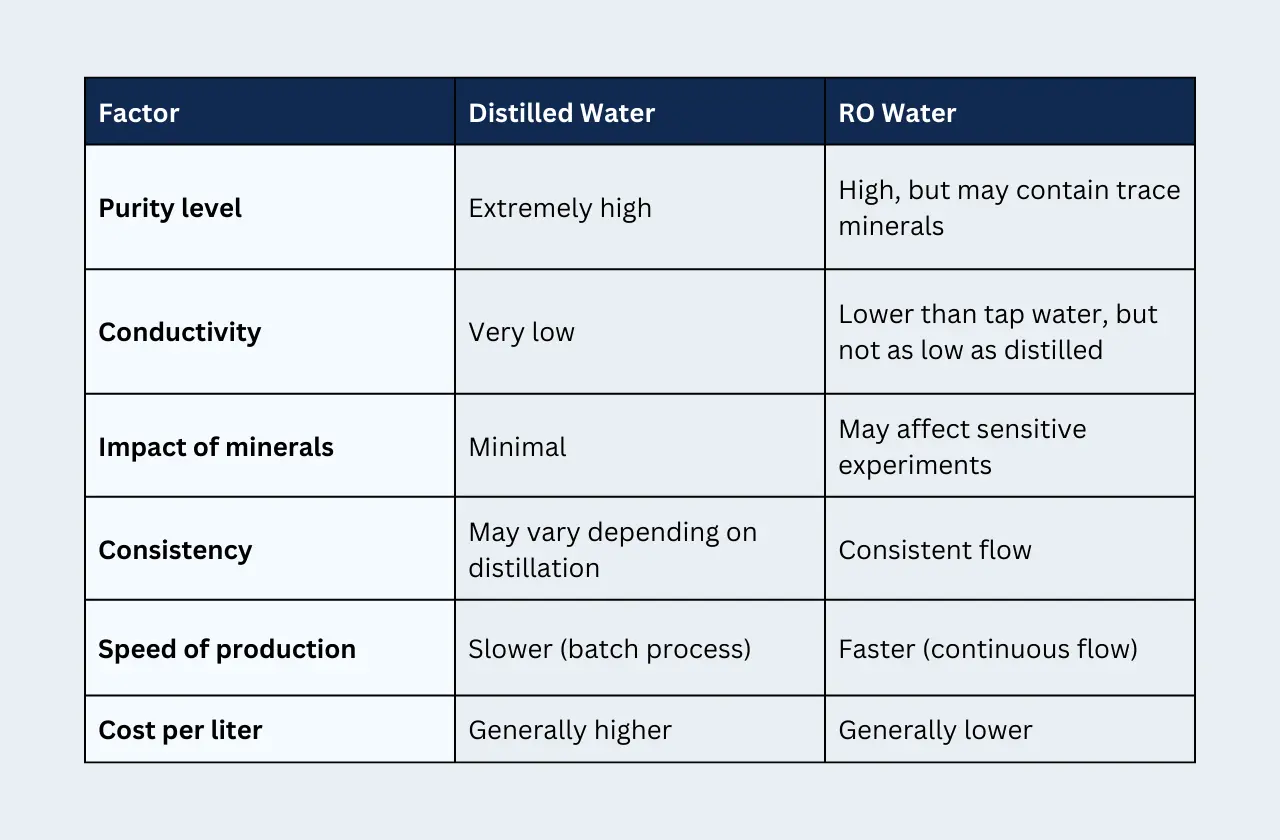
Distilled water is a classic. You boil water until it turns into steam, then catch that steam as pure liquid, leaving all the minerals and gunk behind. It’s the ultimate purifier, stripping away almost everything—including the good stuff.
RO water, on the other hand, uses a high-tech membrane. It pushes water through a super fine filter that catches contaminants like a bouncer at an exclusive club. Both methods remove impurities, but the how matters for your taste and health.
Must Read
Distilled Water: The Clean Slate
Imagine water that has been reborn. Distillation is like giving your H2O a spa day where it sweats out all its problems. The result is incredibly pure water, great for things like car batteries, steam irons, and medical equipment.
But here’s the kicker: because it’s so pure, it can taste a bit flat. Your taste buds might miss the minerals that make tap water feel alive. Also, drinking only distilled water long-term might not be ideal, since you lose beneficial electrolytes like calcium and magnesium.
RO Water: The Smart Filter
RO water is like distilled water’s more practical cousin. It removes 99% of contaminants—think lead, chlorine, and pesticides—but it often keeps a tiny bit of mineral goodness. Many systems add a remineralization stage, so you get crisp, clean water that still hydrates like a champ.
This is the water you’ll find in most bottled “purified” brands. It’s perfect for daily drinking, coffee, and cooking, because it doesn’t leave a weird aftertaste. Plus, it’s way more energy-efficient than boiling gallons of water for distillation.
Which One Should You Choose?
Here’s where it gets fun. If you need ultra-pure water for a science experiment or a fancy humidifier, go distilled. Your plants and appliances will thank you. But if you want great-tasting water for your morning tea or hydrating after a run, RO is your winner.
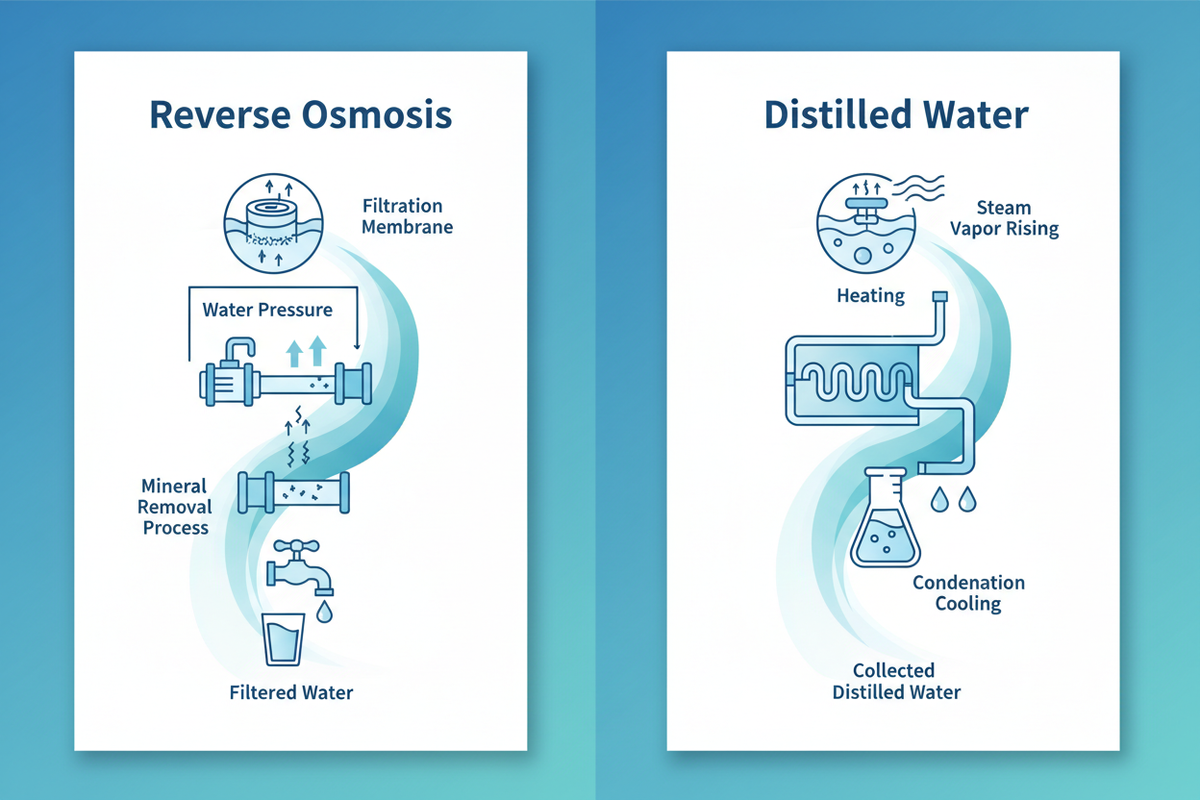 Reverse Osmosis vs Distilled Water: Which One is Best? – VonWater
Let’s talk cost: Distillation uses a lot of electricity, like running a kettle all day. RO systems use pressure, so they’re cheaper to run, but they waste some water (usually a few gallons for every one good gallon). Technology is improving fast, though, making RO more eco-friendly.
Also, think about where you live. If your tap water is really hard or full of heavy metals, RO is a fantastic daily solution. Distilled water might be better for short-term detox cleanses, but it’s not a long-term lifestyle for most people. Listen to your body—your taste buds will tell you what feels right.
The Fun Part: Making Water a Game
Here’s a little secret: you can experiment with both. Fill a glass with distilled water, one with RO, and one with regular tap. Do a blind taste test with your family. You’ll be amazed at how your sense of smell and taste pick up the differences—it’s like a wine tasting, but cheaper and more hydrating.
Once you know the difference, you can choose your water based on your mood. Feeling fancy? Make iced coffee with RO water for a smoother brew. Need to clean your glasses? Distilled water leaves zero spots. It’s a small but powerful way to feel like a pro in your own kitchen.
The Uplifting Takeaway
Understanding water isn’t just science; it’s about taking control of the little things that make life better. Every glass you drink can be a tiny act of self-care, a chance to marvel at the simple magic of purity and taste. You’re not just hydrating—you’re choosing clarity.
So go ahead, geek out a little. Pick a water, test a filter, or ask your local store about their RO machine. This is your life, your hydration, and your incredible journey of discovery. The more you learn, the more you realize that even the most basic things—like water—are endlessly fascinating. Cheers to that!
