Describe What The Ph Of A Substance Is Measuring

So, you want to know what pH actually is. Let’s be honest, most of us remember it from high school science class, where it was some confusing number thingy on a colorful chart...

So, you want to know what pH actually is. Let’s be honest, most of us remember it from high school science class, where it was some confusing number thingy on a colorful chart. I pictured a mad scientist yelling, “Your pH is off!” while shaking a beaker of green goo. Turns out, it’s way simpler and weirder than that.
It’s All About the Hanging Out in Water
At its heart, pH is measuring one specific, tiny little ninja: the hydrogen ion. Think of it as the ultimate party crasher in a glass of water. These little H+ guys are ridiculously reactive—they’ll bond with anything, which is why pure water is so boring and stable.
Imagine a swimming pool full of people. A high pH means there are very few energetic, grabby hydrogen ions—it’s a calm, floaty pool. A low pH means the pool is packed with those grabby little ions, turning your relaxing dip into a mosh pit of chemical chaos. That’s why strong acids can burn your skin; it’s a hydrogen ion rave.
Must Read
The “Power of Hydrogen” Isn’t Just a Cool Name
The letters pH literally stand for “potential of Hydrogen,” or potentia Hydrogenii if you want to sound fancy at parties. It’s a scale from 0 to 14, but don’t let the math scare you. It’s a logarithmic scale, which means every single number jump is a tenfold change. Going from pH 7 to pH 6 isn’t a little shift; it’s ten times more acidic.
To put that in perspective: lemon juice (pH ~2) is about 100,000 times more acidic than black coffee (pH ~5). That’s the difference between a mild morning wake-up and a face-melting zit treatment. Your stomach acid? It clocks in around pH 1.5. That’s basically industrial-strength battery acid, which explains why you shouldn’t eat a spoonful of it—your body made it to dissolve rocks (and lunch).
Acids: The Drama Queens of Chemistry
Acids are substances that donate those hydrogen ions when they dissolve in water. They’re the generous—and kind of angry—relatives at the family reunion. Think of vinegar, lemon juice, or your car battery. They have a low pH, usually between 0 and 7.
A cool, horrifying fact: hydrofluoric acid is an acid so nasty it can dissolve glass. But it doesn’t burn your skin immediately—it actually seeps in and starts dissolving your bones from the inside out. So yeah, low pH: handle with extreme prejudice.
Bases: The Chill, Soapy Friends
Then you have bases, also called alkaline substances. These are the pacifists at the party. Instead of donating hydrogen ions, they gobble them up like free snacks. A base has a high pH—from 7 to 14. Think baking soda, bleach, or soap.
Here’s a mind-bender: bases feel slippery on your skin because they are literally dissolving your outer layer of dead skin cells into a gooey soap. That’s why hands feel ‘squeaky clean’ after washing with strong soap—you’ve just performed a minor chemical peel. Soaps are basic in more ways than one.
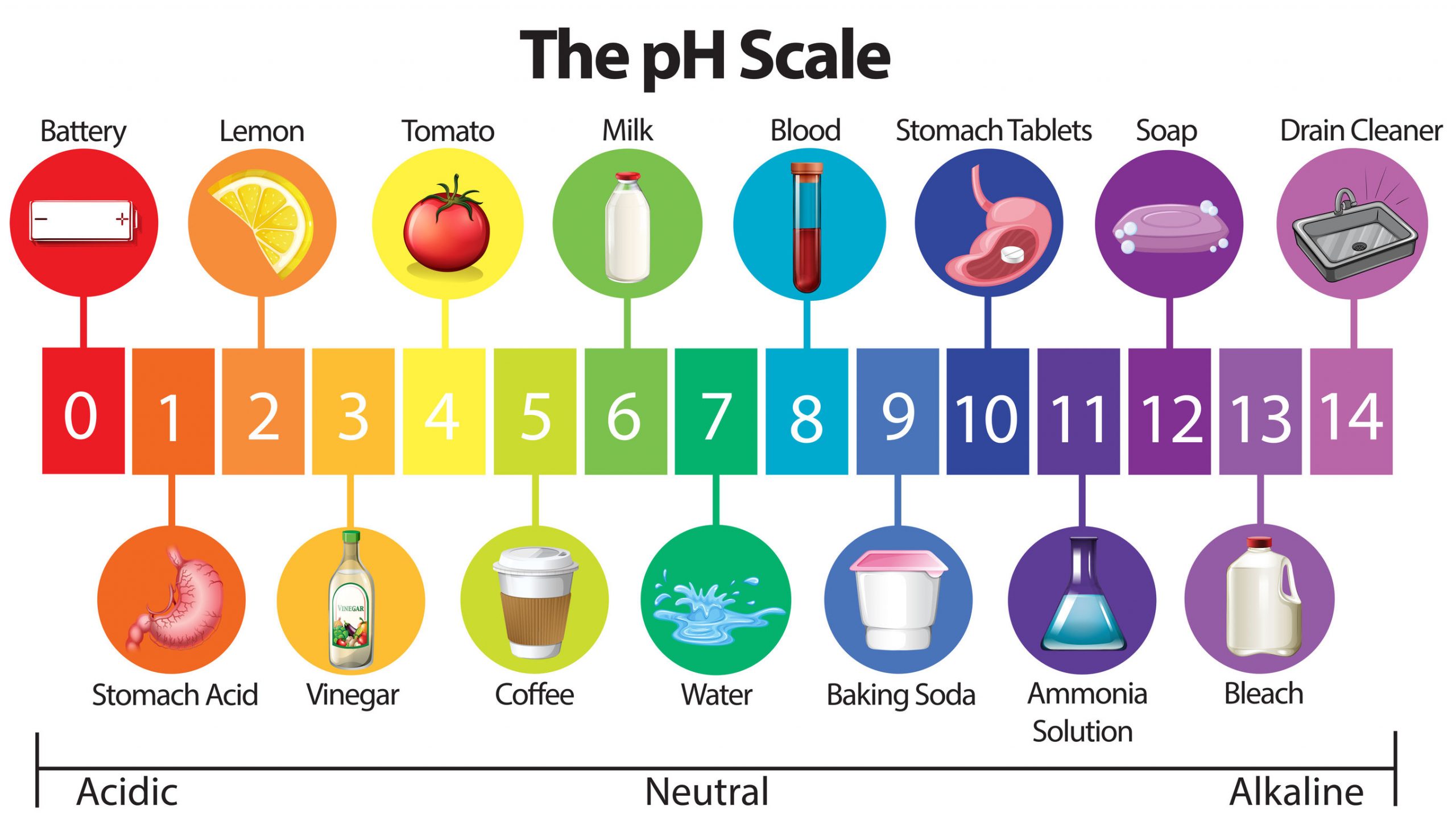 Oven Cleaner Ph Scale
What’s the “Neutral” Zone?
pH 7 is the holy grail: neutral. That’s pure water. It’s not an acid, it’s not a base. It’s Switzerland. But here’s the catch: pure water is incredibly rare. Even a tiny bit of carbon dioxide from the air dissolves into rainwater, making it slightly acidic (pH ~5.6). That’s normal. It’s only when we burn fossil fuels and create sulfuric acid that rain turns into a face-melting pH of 4 or lower.
And your blood? Your body fights like a berserker to keep it at exactly pH 7.4. If it swings even a few tenths either way, you stop working. That’s why drinking too much baking soda water can kill you. Yes, people actually do that for heartburn. Pro tip: don’t.
Everyday pH: The Gross and the Hilarious
Your skin’s natural pH is about 5.5—acidic! It’s called the “acid mantle,” a protective shield against bacteria. So every time you use an alkaline soap, you nuke your personal army. Your mouth? Saliva is pH 6.7, but after you eat sugar, bacteria throw a party and dump acid, dropping your mouth’s pH to 4.0. That’s how cavities happen—it’s a tiny acid war in your face.
Even your pee has a pH. If you eat a lot of meat, it’s more acidic. If you become a fruitarian guru, it goes basic. You can literally test your pee and know what you ate for breakfast last Tuesday. It’s the ultimate dietary tattletale.
The Ultimate Takeaway
So to sum up: pH is just a fancy way of counting how many grabby hydrogen ions are swimming around in a liquid. Low number = angry acid party. High number = base cleaning crew that eats your skin. Neutral = boring water.
Next time you squeeze a lemon into your iced tea, remember: you just added a tsunami of hydrogen ions to your drink. That sour tang? That’s the taste of tiny violent particles attacking your taste buds. And you’re welcome.
