Difference Between Club Soda And Sparkling Water

Let’s be real for a second: standing in the beverage aisle, staring at shelves of bubbly water, can feel oddly stressful. You’ve got club soda, seltzer, tonic water, and spark...

Let’s be real for a second: standing in the beverage aisle, staring at shelves of bubbly water, can feel oddly stressful. You’ve got club soda, seltzer, tonic water, and sparkling mineral water all winking at you. What’s the actual difference, and does it even matter? Spoiler alert: it matters more than you think, but it’s also way simpler than it looks.
The Core Mystery: It’s All About the Bubbles (and the Salt)
Here’s the key truth: both club soda and sparkling water are just water with carbon dioxide gas dissolved under pressure. That’s what creates those lovely, tingly bubbles we crave. But the real difference comes down to what else is in that bottle.
Think of them as cousins, not siblings. Club soda is the one who shows up with a little extra baggage—specifically, added minerals and salts. Sparkling water is the chill cousin who prefers to keep things natural.
Must Read
Club Soda: The Bartender’s Best Friend
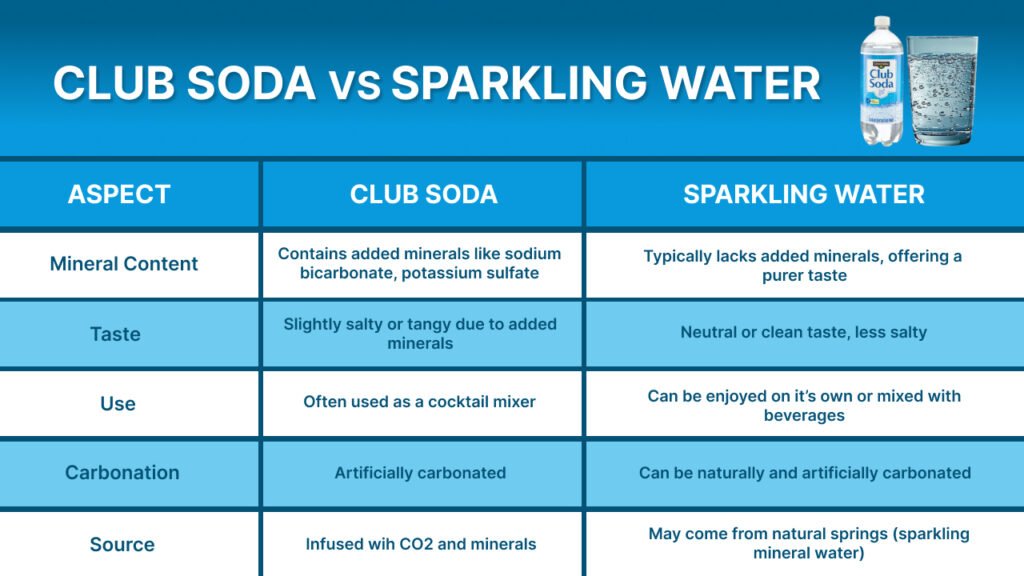
Club soda is manufactured carbonated water. It starts as plain tap water, then gets artificially carbonated and infused with potassium bicarbonate, potassium sulfate, or sodium chloride. Why? To mimic the taste of natural mineral water and give it a slightly salty, crisp bite.
Have you ever noticed that a gin and tonic tastes sharper with club soda than with plain seltzer? That’s the magic of those added minerals. They also help preserve the carbonation longer once you open the bottle, making it the go-to for mixing cocktails at parties.
So, if you order a vodka soda at a bar, you’re almost certainly getting club soda. It’s the behind-the-scenes worker that makes your drink feel more “cocktail” and less “water with bubbles.” Pretty cool, right?
Sparkling Water: The Purist’s Pick
Sparkling water, on the other hand, is a broader term. It can refer to naturally carbonated mineral water (like Perrier or San Pellegrino) or simply carbonated tap water with nothing added. The key here is minimal ingredients.
Natural sparkling mineral water comes from a protected spring, and it contains naturally occurring minerals like calcium, magnesium, and silica. That's why different brands have subtle, unique flavors—it's the geology of the source, not a recipe.
Then there’s seltzer, which is just plain water that’s been carbonated. It has zero added minerals or salts. It’s the purest, cleanest bubbly water you can get. Think of it as the blank canvas of the fizzy water world.
Fun Comparisons to Keep You Hooked
Let’s make this visual. Imagine club soda as a sports drink—it’s got a little electrolyte kick and a mineral-y finish. Sparkling water is more like a fresh glass of spring rain—clean, neutral, and refreshing without trying to be fancy.
 Sparkling Water vs Club Soda: Key Differences & Best Uses
Or picture this: club soda is the friend who always shows up with a party trick (those added minerals make it more stable for mixing). Sparkling water is the friend who just brings themselves and a good vibe. Both are great, but for different occasions.
If you take a blind taste test, you’ll notice club soda has a slightly sharper, more “salty” finish. Sparkling water often feels softer and more delicate on the tongue. That’s the flavor gap.
So, Which One Should You Choose?
It honestly depends on your mood and your mission. If you’re making a cocktail or just want a fizzy drink that holds its carbonation forever, reach for club soda. It’ll keep your drink lively from first sip to last.
If you’re just hydrating or want a clean, refreshing sip without any aftertaste, go for sparkling water or seltzer. It’s perfect for long days when you just want something light and uncomplicated.
And here’s a fun fact: tonic water is a completely different beast. It contains quinine and sweeteners, making it more like a soda than water. That’s a whole other blog post, though.
The Bottom Line (and a Little Curiosity)
Next time you’re at the store, grab both bottles and do your own taste test. It’s a tiny experiment that makes you feel like a beverage scientist. You’ll start noticing how the minerals change the mouthfeel.
The coolest part? This whole category of bubbly water exists because humans love texture in our drinks. We crave that pop, that tickle, that little fizz sound when we twist off the cap. Club soda and sparkling water are just two different ways to scratch that very same itch.
So, what will you pour into your glass tonight—the salty party helper or the pure, quiet bubble? Either way, you’re winning. Cheers to the bubbles, my friend.
