Difference Between Distilled And Reverse Osmosis

Ever stood in the water aisle at the grocery store, staring at bottles labeled “Distilled” and “Purified by Reverse Osmosis,” and felt like you needed a chemistry degree just...
Ever stood in the water aisle at the grocery store, staring at bottles labeled “Distilled” and “Purified by Reverse Osmosis,” and felt like you needed a chemistry degree just to pick one? You’re not alone. I’ve been there, scratching my head while my shopping cart rolled away. Let’s break it down over a virtual cup of coffee, no lab coat required.
What’s the big deal with water anyway?
Water isn’t just water—it’s a cocktail of minerals, chemicals, and sometimes even funny tastes. Think of tap water like a neighborhood potluck: everyone shows up—calcium, chlorine, maybe a little lead if the pipes are old. Distilled and reverse osmosis are just two different ways to kick the uninvited guests out of the party.
But why should you care? Because the water you drink touches your coffee, your pasta, your ice cubes, and even your humidifier. Picking the wrong type can ruin a perfect brew—or worse, leave a chalky film on your kettle.
Must Read
Distilled water: the drama queen of purification
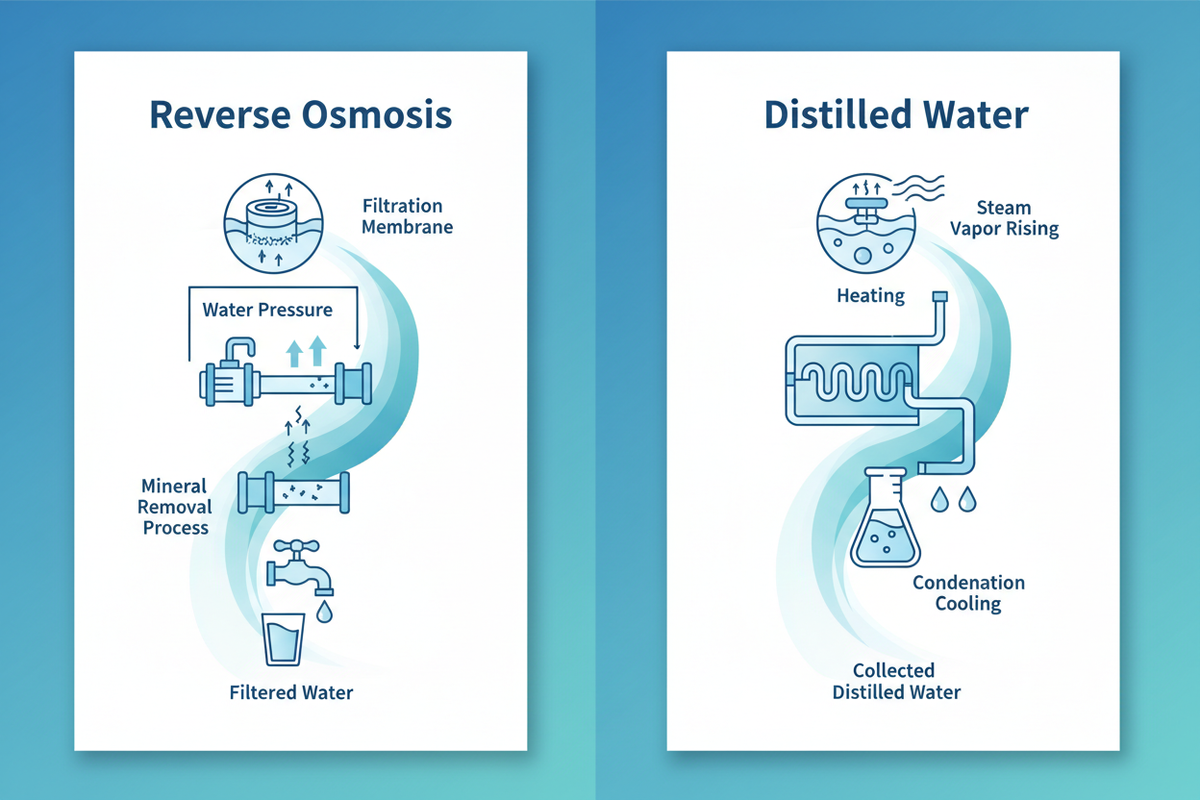
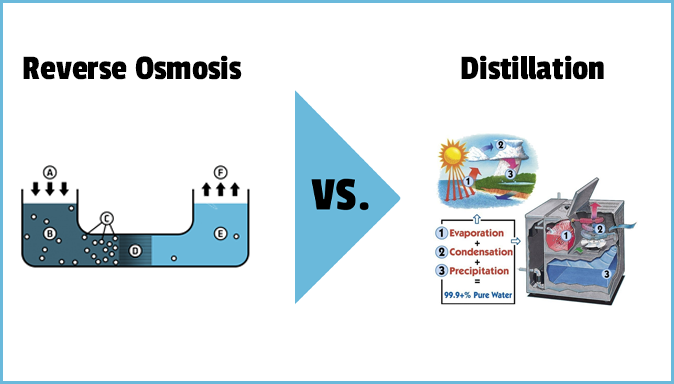
Distillation is the old-school, theatrical way to clean water. You boil the living daylights out of it, catch the steam, and let it condense back into liquid. It’s like evaporating the gossip and keeping only the truth—except here, the “truth” is pure H₂O.
I tried distilling water at home once. My kitchen smelled like a laundromat, and the glass jar fogged up like a cheap horror movie. But the result? Water so bare-bones it tastes like nothing. Perfect for car batteries and steam irons, but not great for drinking. Why? Because distillation strips away all the minerals—calcium, magnesium, the good stuff—leaving water so “clean” it can actually pull minerals from your body.
So, if you’re a humidifier owner or someone who fills a fish tank (and hates white crust), distilled is your buddy. For everyday sipping? Eh, it’s a little boring.
Reverse osmosis: the ninja of water filters
Reverse osmosis, or RO, is like a bouncer at a fancy club. It pushes water through a super-fine membrane that blocks almost everything—chlorine, lead, pesticides, even salt. It doesn’t boil anything; it just filters with attitude.
Picture your kitchen sink. Underneath, a little RO system is doing ninja work while you make breakfast. The water comes out clean, but not stripped bare. Why? Because many RO systems include a remineralizer step that adds back tiny bits of calcium and magnesium. That means it tastes crisp and fresh—like you just dipped a cup in a mountain stream, but without the hassle of hiking.
I installed an RO tap last summer, and my iced tea game changed forever. No more chlorine aftertaste. No more cloudy ice cubes. Just sweet, clear perfection.
So, which one wins for your daily life?
Let’s make this super practical. Distilled water is like that friend who’s great in emergencies—great for your iron, your CPAP machine, or a science experiment. But for drinking? It’s a little like eating plain white rice every day. Fine, but missing the flavor.
 home water distillation systems Archives - My Pure Water
Reverse osmosis water is the all-rounder. It’s excellent for drinking, cooking, and making coffee without scale buildup. If you’re a matcha latte lover or a soup simmerer, RO is your bestie. It keeps your appliances happy and your taste buds happier.
Think of it this way: distilled is for tools; RO is for taste buds. One is about purity at all costs; the other is about balanced clean deliciousness.
But wait—is there a catch?
Sure. Distilled water is cheap to buy (about a dollar a gallon) but energy-intensive to make at home. RO systems cost more upfront (think $150–300 for a basic under-sink unit) and waste some water during filtration. Worth it? For most homes, yes—because you stop buying plastic bottles forever.
Also, RO removes fluoride, which some dentists get twitchy about. If that worries you, just ask your dentist if you’re getting enough from toothpaste. Easy fix.
A smile-worthy story to seal it
Last Christmas, my aunt brought a jug of distilled water to the family dinner because “it’s the cleanest.” She made her famous spiced cider with it. It tasted like rain on cardboard. The next year, she used RO water from my filter. People asked for a second cup. That’s the difference. One is sterile; the other is satisfying.
So, when you’re standing in that grocery aisle, just remember: distilled is for machines; RO is for people. Unless you’re a sensitive steam iron—then go with your gut. But for the love of good tea and clear ice cubes, give reverse osmosis a try. Your taste buds will thank you, and your kettle won’t ghost you with limescale.
Now pour yourself a glass. Life’s too short for funny-tasting water. Cheers!
