Difference Between Distilled Water And Deionized

Let’s be honest: most of us don’t spend a lot of time thinking about water. We turn on the tap, it comes out, we drink it. Job done. But then you wander down the cleaning aisl...
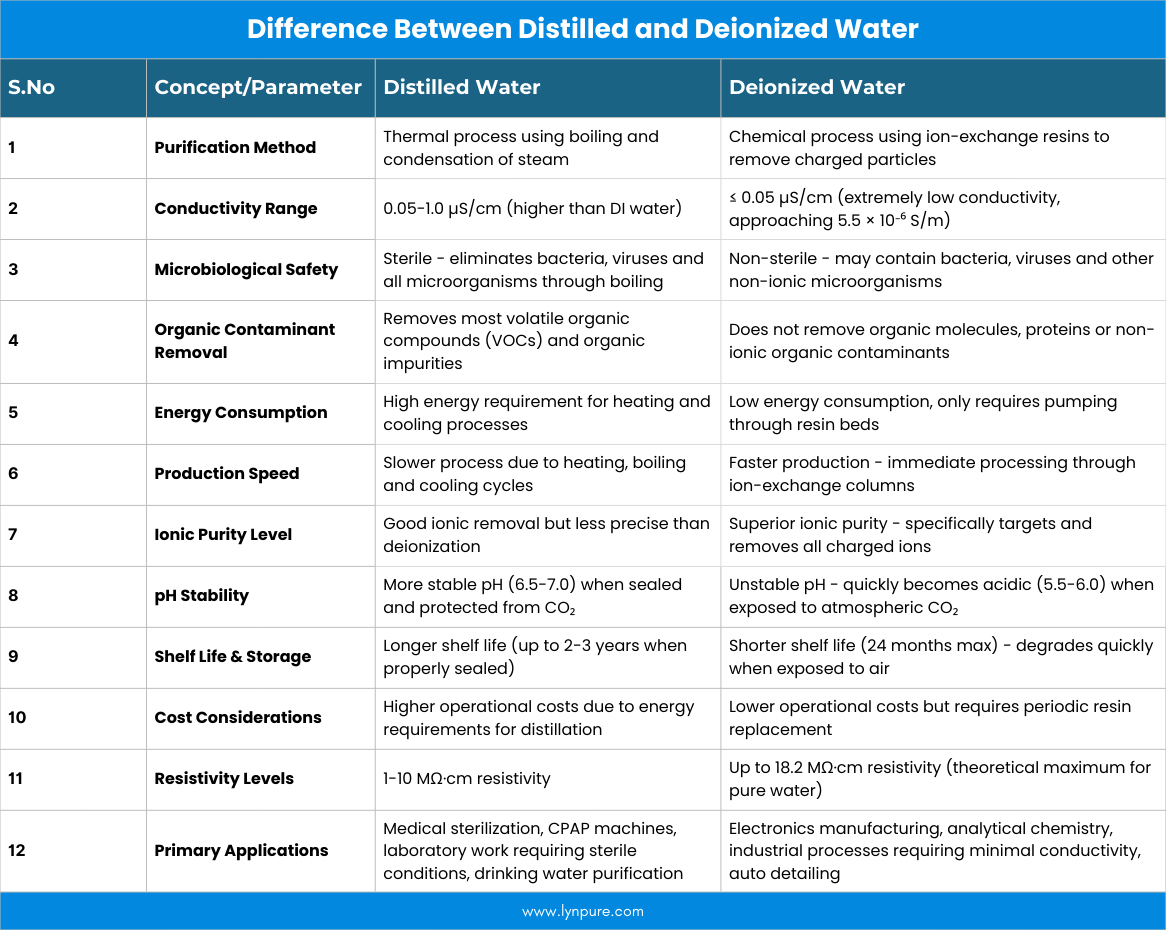
Let’s be honest: most of us don’t spend a lot of time thinking about water. We turn on the tap, it comes out, we drink it. Job done. But then you wander down the cleaning aisle at the grocery store, or you buy a fancy coffee machine, and suddenly you’re staring at jugs labeled “Distilled” and “Deionized.” You squint, you shrug, and you grab the first one. We’ve all been there.
Here’s the thing: distilled and deionized water are not the same, even though they both act like the fancy, slightly smug cousin of regular tap water. Think of tap water as a loud party at your house. It’s full of guests you didn’t exactly invite—minerals like calcium, magnesium, and sodium, plus a few stragglers like chlorine. Distilled water and deionized water are just two very different ways of kicking those guests out.
Distilled Water: The Boil-and-Catch Method
Distilled water is the old-school, patient way to get pure water. Imagine you’re making a big pot of pasta. You boil the water, and steam rises off it. Distillation is basically capturing that steam and turning it back into liquid. It’s like evicting all the party guests by making the whole house so hot they have to float away—then you catch them in a separate room.
Must Read
The result is water that’s extremely pure—almost all the dissolved solids (the minerals, the salts, the weird stuff) are left behind in the pot. This is why you see distilled water for things like car batteries, steam irons, and baby formula instructions. It’s water that won’t leave weird white crusty deposits on your expensive gear.
A funny thing about distilled water? It tastes a little flat. Ever had a sip and thought, “This water has no personality”? That’s because the minerals that give water its pleasant, crisp taste have been boiled away. It’s the friend who is technically perfect to be around, but you miss their bad jokes.
Deionized Water: The Bouncer with a Magnet
Deionized water is a whole different beast. Instead of using heat, it uses science magic. Specifically, it runs through special resins that act like super-powered magnets. These resins grab onto the dissolved salts and minerals (the “ions” in the water) and yank them away. Think of it as hiring a very efficient bouncer who just physically drags every unwanted guest out of the party.
Deionization is incredibly effective at removing charged particles. It can make water even more pure than distillation in some ways, especially for things like laboratory experiments or aquarium setups. If distilled water is the friend who leaves the party early, deionized water is the one who vacuums the floor on the way out—it’s almost too clean.
Here’s where it gets funny: deionized water can be a bit aggressive. Because it’s so pure and ion-free, it actually wants to grab ions from anything it touches. That means it can interact with your metal water bottle or even the glass you’re drinking from. It’s like the super-friendly person who just can’t stop touching your shirt.
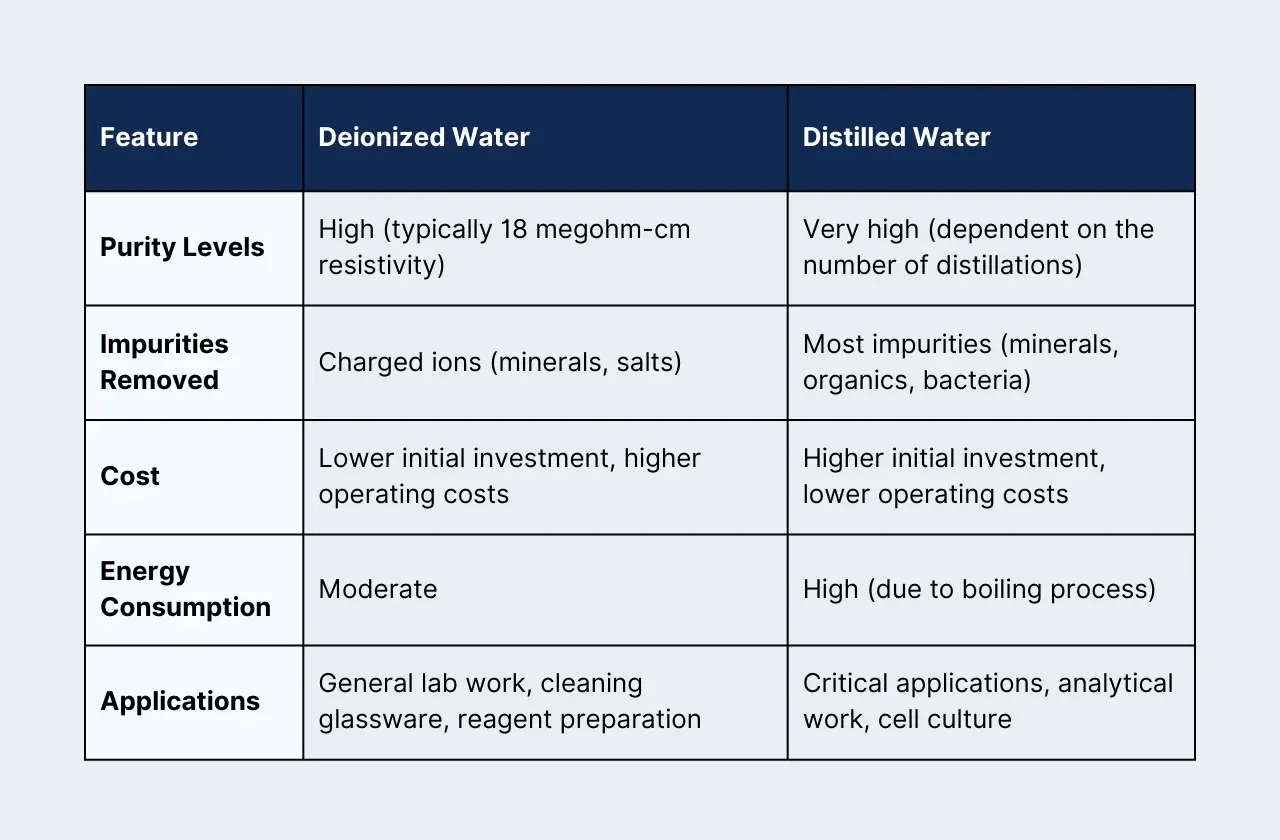 Is Deionized Water The Same As Distilled Water?
The Everyday Test
Let’s use a real-world anecdote. You clean your coffee maker. You use distilled water? Perfect. It won’t leave scale. You use deionized water? Also good. But if you accidentally leave deionized water in a copper pipe for a month, it can corrode the metal. Meanwhile, distilled water just sits there, minding its own business.
For drinking? Neither is your best bet long-term. Your body actually likes those little minerals—they’re good for your bones and your heart. Drinking distilled or deionized water all the time is like eating a plain cracker for every meal. It’s technically food, but where’s the fun? Tap water with a filter is usually the most balanced, happy medium.
The Big Takeaway
Distilled water is boiled. Deionized water is zapped with magnets. Both are super clean, but they get there by very different paths. Think of distillation as a slow, careful trip on a train, and deionization as a high-speed chase in a sports car. Both arrive at the station labeled “Pure,” but one took its time and the other was a little intense.
The next time you’re standing in that grocery aisle, just remember: if you need water that won’t leave residue and you want the simple, foolproof option, grab the distilled. If you need the ultimate, science-lab-level purity and you don’t mind a little bit of water sass, go deionized. And if you’re just thirsty, tap water is fine. Your kettle won’t judge you.
So relax. Water is water. Unless it’s the really picky kind. And now you know exactly why.
