Difference Between Distilled And Deionized Water

Let’s get one thing straight: water is not just water. Sure, it looks the same. It tastes the same (mostly). But behind the scenes, there’s a whole drama playing out between t...
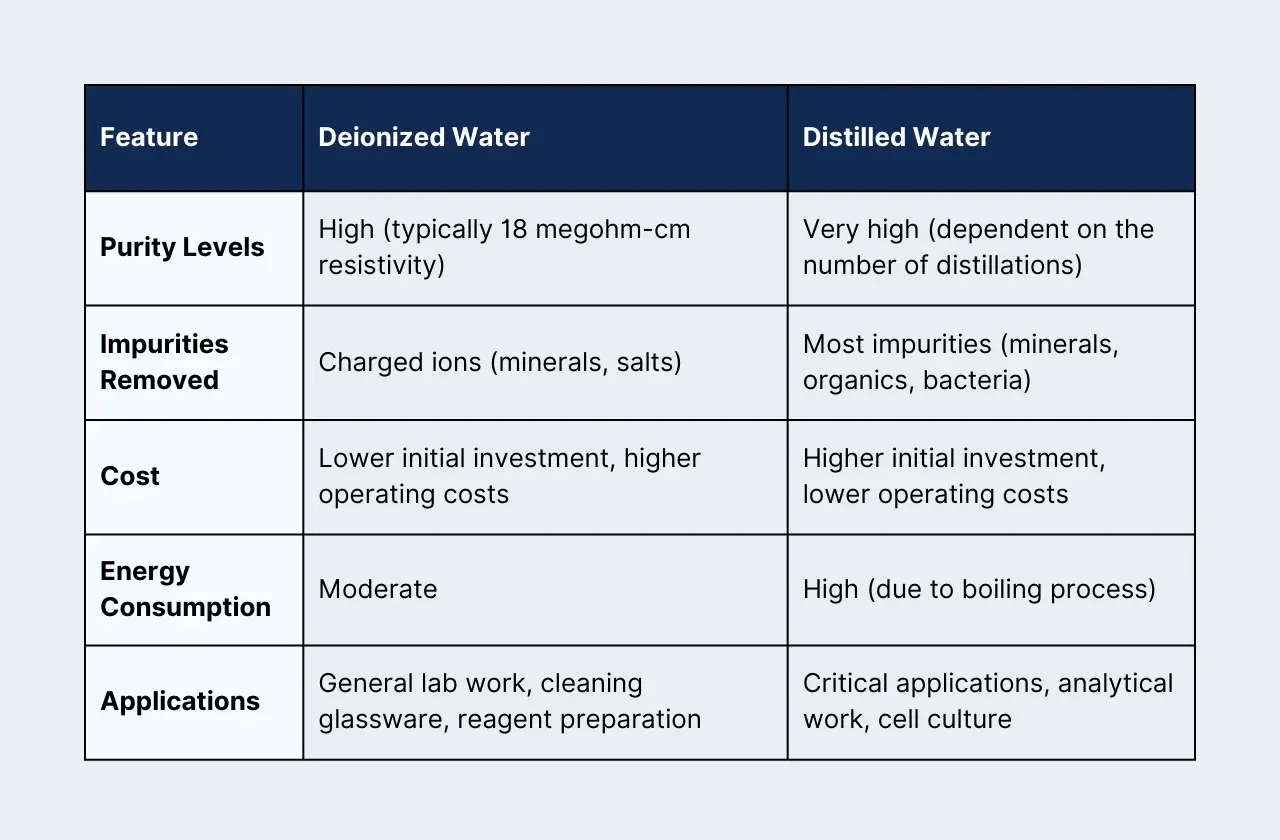
Let’s get one thing straight: water is not just water. Sure, it looks the same. It tastes the same (mostly). But behind the scenes, there’s a whole drama playing out between two fancy types: distilled and deionized. Think of them as the celebrity twins of the H₂O world. They look alike, but their personalities are totally different.
The Lowdown on Distilled Water
Distilled water is the old-school heavy lifter. Imagine boiling a pot of water and catching the steam. That steam? That’s distilled water. It’s like a water spa treatment: boil, evaporate, condense, done.
Boiling kills the bad guys—bacteria, viruses, the whole crew. But the real magic? It leaves behind minerals like calcium and magnesium. They stay in the pot like salty party guests who refuse to leave. You get pure, soft water that’s basically a ghost of its former self.
Must Read
Fun fact: Distilled water is great for your iron (the clothes iron, not your blood). No mineral buildup means no white crusty mess on your favorite shirt. It’s also what you use in lead-acid car batteries. Yes, your car drinks this stuff.
Enter Deionized Water
Deionized water is the hipster of the family. It doesn’t use heat. It uses science magic—specifically, ion exchange resins. These are like tiny magnets that grab charged particles (ions) and yank them out of the water.
Think of it as a bouncer at a club. “Sorry, calcium. Sorry, chloride. You’re not on the list.” Every salt and mineral gets kicked out. The water becomes a blank slate, almost freakishly pure. It’s so clean it can “steal” ions from the air or your skin. Creepy, right?
Quirky detail: Deionized water can actually conduct electricity poorly—until it gets dirty. Super-pure water is an insulator. But add a pinch of salt? Boom. It’s a conductor. That’s why labs use it for experiments. One stray ion ruins the whole show.
The Big Difference: How They Get Clean
Distillation uses heat. Boil, steam, cool. It’s like making rain in a jar. It removes pretty much everything—minerals, bugs, even some chemicals that boil at different temps.
Deionization uses charge. It swaps ions for hydrogen and hydroxide, which then combine to form pure water. But here’s the kicker: deionized water doesn’t remove bacteria or viruses. Only the charged particles. So it’s not sterile. You could grow a tiny slime colony in it if you left it out.
So, distilled is the germ-fighter. Deionized is the ion-hunter. They have different goals. One is thorough, the other is a specialist.
Which One Is Better? (Spoiler: Neither)
It depends on your weird hobby. Distilled water is your buddy if you’re a coffee snob. It makes your espresso taste cleaner—no mineral off-flavors. But some baristas hate it. They say it tastes “flat.” Too pure, they claim.
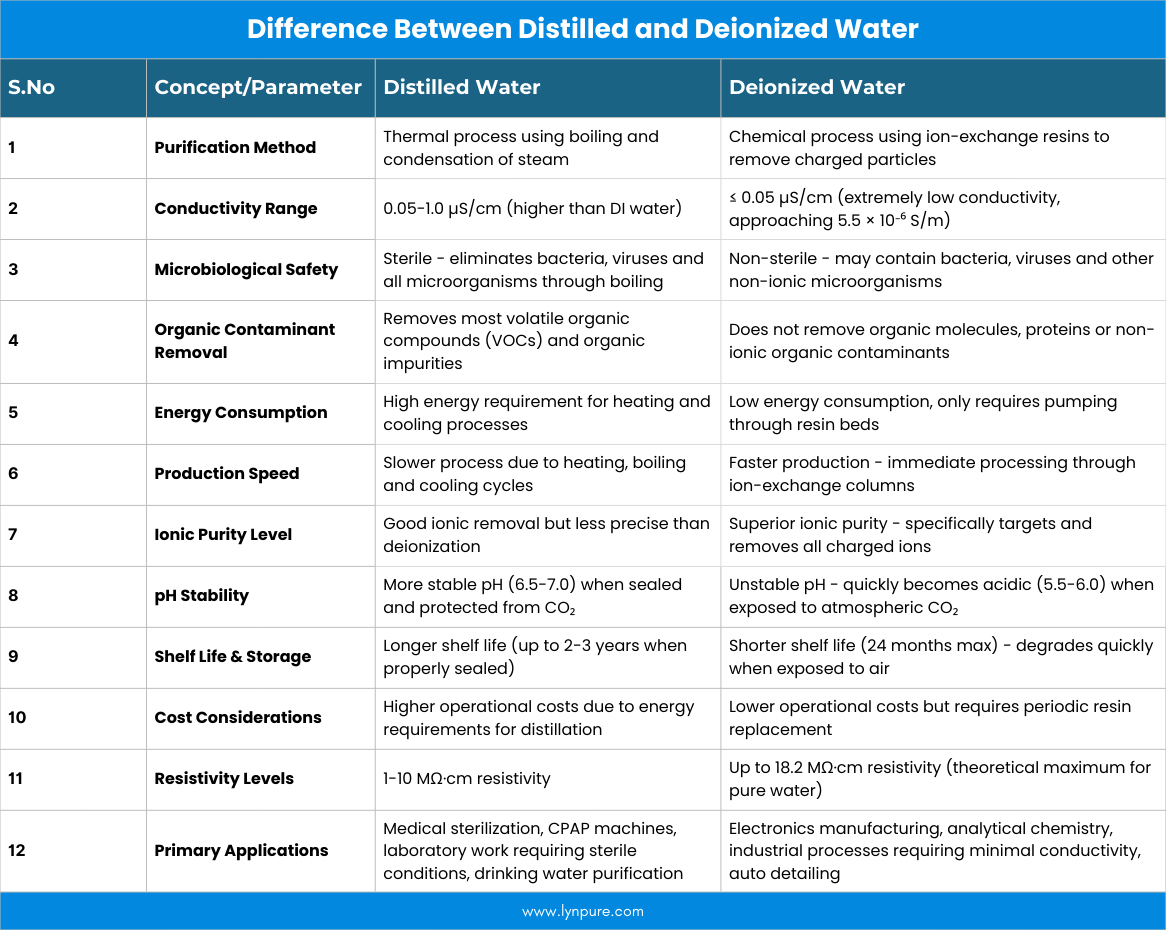 Distilled Water vs Deionized Water | Key Differences
Deionized water is the hero of car detailing. It leaves zero water spots on your paint job. That’s because there are no dissolved solids to leave white marks. It’s so pure that if you’re a fish keeper, you might use it to mix saltwater for your clownfish. But never for a freshwater tank—it would shock the fish.
Funny fact: If you drink distilled water exclusively, you might miss out on minerals. But honestly? You get those from food. So drink up. Just don’t store it in a metal container. It’s aggressive. It can corrode metal because it “wants” to grab ions from its surroundings. Yes, water can be a bully.
The Real World Test
Try this: Boil tap water until it’s gone. The white crust left behind is calcium carbonate. That’s what distillation removes. Now imagine water that’s so pure it can’t even hold a charge. That’s deionized. It’s like a ghost with a science degree.
Distilled water costs energy. You boil a lot of water to get a little. Deionized water costs resins. You regenerate them with acid and base—nasty chemicals. So neither is “free.” Both are expensive in their own way.
And here’s a juicy secret: Most “distilled” water you buy at the store might actually be deionized. Companies use reverse osmosis first, then deionize. It’s cheaper. So you might be sipping deionized water and calling it distilled. Plot twist!
Why This Topic Is Actually Fun
Because water isn’t boring. It’s a chemical chameleon. Distilled water is like a monk who meditated in a hot spring. Deionized water is a minimalist artist who hates clutter. They both achieve purity, but through completely different tempers.
Next time you see a bottle labeled “purified water,” you’ll raise an eyebrow. “Distilled or deionized?” you’ll whisper. And your friends will think you’re a genius. Or a nerd. Either way, you’ll feel powerful.
Finally, remember this: Real science is weird. We take perfectly good water and remove everything we can just to see what happens. That’s the spirit. Stay curious. Stay hydrated. And maybe avoid drinking deionized water straight—it tastes like nothing, and that’s strangely unsettling.
