What's The Difference Between Soft And Hard Water

Let’s be real: you probably don’t think about your water much. You turn on the tap, fill your glass, and move on with your day. But that clear liquid might secretly be wreckin...

Let’s be real: you probably don’t think about your water much. You turn on the tap, fill your glass, and move on with your day. But that clear liquid might secretly be wrecking your hair, your dishes, and your laundry.
Welcome to the quiet civil war happening in your pipes—the battle between soft water and hard water. It’s a clash of minerals, suds, and shiny surfaces. And once you know the difference, you’ll never look at a water stain the same way again.
Think of hard water as the heavy lifter. It’s packed with calcium and magnesium that it picks up while traveling through limestone and chalk deposits underground. Hard water is basically a mineral tour guide that got stuck in your showerhead.
Must Read
The Suds Test: A Tale of Two Bubbles
The easiest way to tell them apart? Soap. Hard water creates scum instead of lather—that annoying white film on your bathtub and skin. Soft water, on the other hand, turns soap into a creamy foam in seconds.
Ever felt like your shampoo just isn’t working? That’s likely hard water leaving a mineral layer on your hair. Soft water leaves your strands feeling squeaky clean and silky, almost like you just left a salon.
A fun little fact: that classic “squeaky” feeling on your skin after a soft-water shower? It’s actually the absence of minerals. Some people love it; others say it feels like you never quite rinsed off. The truth lives in your conditioner bottle.
Hard Water’s Greatest Hits: Limescale and Dull Laundry
Hard water doesn’t just annoy you—it actively builds a fortress in your appliances. Limescale crusts over your kettle, dishwasher, and coffee maker like it’s making a tiny Stonehenge. That white, chalky buildup is actually calcium carbonate, and it hates your espresso machine.
Your clothes suffer, too. Hard water binds with detergent to leave residues that make whites look gray and colors feel stiff. You aren’t imagining it—your favorite T-shirt feels like cardboard because of mineral deposits.
Even your glassware betrays you. Those cloudy spots after a washing cycle? That’s hard water filming your stemware with a mineral tuxedo you never asked for. It’s the equivalent of wearing a parka to a beach party.
Soft Water’s Smooth Moves
Soft water is the chill friend who makes everything easy. It’s been processed to remove excess calcium and magnesium, often through a salt-based ion exchange system. Your dishes dry spotless, your skin feels moisturized, and your pipes stay free of scale.
But it’s not all perfect. Soft water tends to be slightly sodium-rich, which some people notice in the taste—a faint hint of saltiness. If you’re on a low-sodium diet, you might want to check your system’s settings.
And here’s a weird curveball: soft water makes your soap too sudsy. You’ll use less detergent, shampoo, and dish soap because everything bubbles up so fast. Your wallet thanks you, but your foam obsession might feel betrayed.
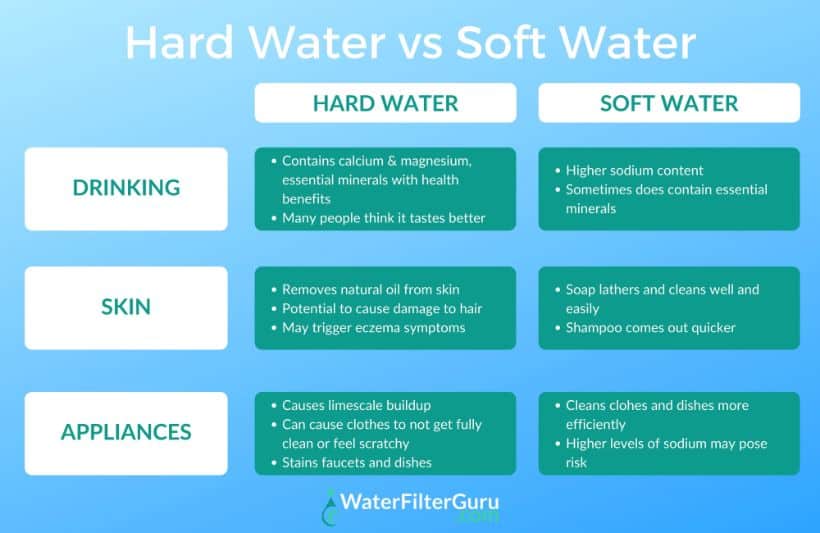 Difference In Hard Water And Soft Water | Explora Madeira
Where You Live Matters
Hard water rules in about 85% of American homes, especially in the Midwest and Southwest. Think Des Moines, Phoenix, or Las Vegas—places where water passes through deep rock layers. Soft water is rarer naturally, but common in coastal or volcanic regions like the Pacific Northwest.
Culturally, hard water has a legacy. The famous bathhouses of Budapest? They rely on mineral-rich thermal waters. And in the UK, that legendary “hard water” is blamed for both bad tea and beautiful skin. Go figure—the same stuff that ruins your kettle might be good for your glow.
A fun fact for trivia night: The ancient Romans actually noticed hard water’s effects. They built aqueducts to bypass it, and used lead pipes that kept their water soft. Yes, that lead eventually poisoned them, but hey—at least their hair was shiny.
Practical Tips to Win the Water War
If you suspect hard water, look for these signs: dry skin, brittle hair, white buildup on faucets, and laundry that feels rough. The fix starts with a simple test kit from a hardware store—it’s cheaper than a latte and tells you exactly what you’re dealing with.
For hard water, try a chelating shampoo once a week to strip mineral buildup from your hair. Add a water softener to your home’s main line, or use a filtered showerhead that reduces hardness. Your hair and coffee maker will send you a thank-you note.
For soft water lovers, watch your sodium intake if you have hypertension. A reverse osmosis filter for drinking water can remove the extra salt, giving you the best of both worlds: soft showers and clean, crisp hydration.
The Bottom Line: Embrace Your Element
At the end of the day, water is water—nature’s most adaptable resource. Hard water brings minerals that strengthen your bones (and your limescale). Soft water brings comfort and efficiency. Neither is evil; they’re just different personalities in your plumbing.
Reflection is simple: next time you shower, notice how your skin feels. When you pour a glass of tap water, taste the subtle difference. It’s not just hydration—it’s a geological story happening in your home. And the best part? You can always choose to soften it, filter it, or just let it flow.
So go ahead, test your water. Talk to your pipes. Your everyday life—from the bubbles in your sink to the shine on your hair—is waiting for that one small upgrade. Cheers to that perfect pour.
