Reverse Osmosis Vs Distilled Water For Humidifier

So, picture this: I’m sitting in my living room last winter, feeling smug because I finally bought a humidifier. My sinuses were singing, my plants were thriving—until a fine,...
So, picture this: I’m sitting in my living room last winter, feeling smug because I finally bought a humidifier. My sinuses were singing, my plants were thriving—until a fine, ghostly white dust started settling on every surface. It looked like a crime scene for my coffee table. That’s when I realized: the tap water I was using was basically a mineral party, and my humidifier was the unwilling DJ.
That white dust is the ghost of hard water—calcium, magnesium, and other dissolved solids. Your humidifier turns water into vapor, but it leaves the minerals behind, flinging them into the air. You might think, “No big deal,” until you’re breathing that stuff in or scrubbing it off your laptop screen. Fun times, right?
The two heavyweights: Reverse Osmosis vs. Distilled Water
So, you’ve got two fancy-looking solutions: reverse osmosis (RO) water and distilled water. They both brag about being “pure,” but they get there in completely different ways. And trust me, your humidifier is a picky eater—it cares about the how.
Must Read
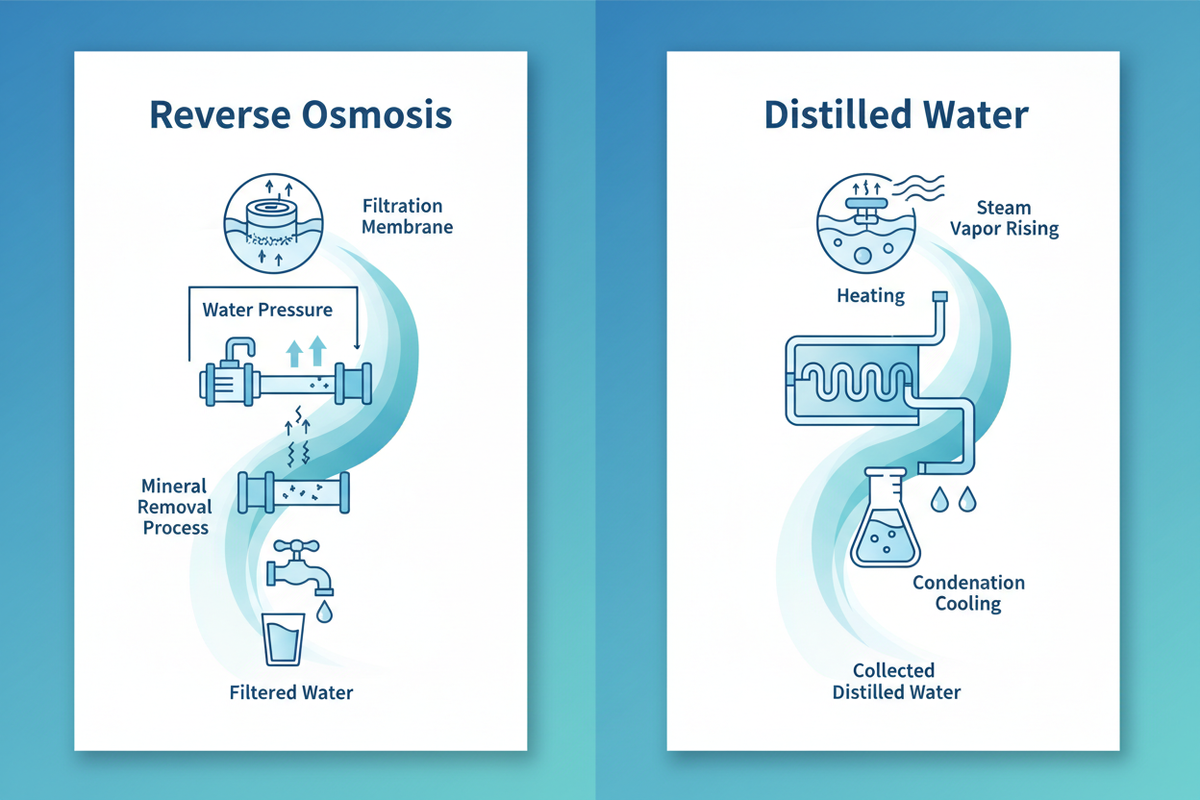
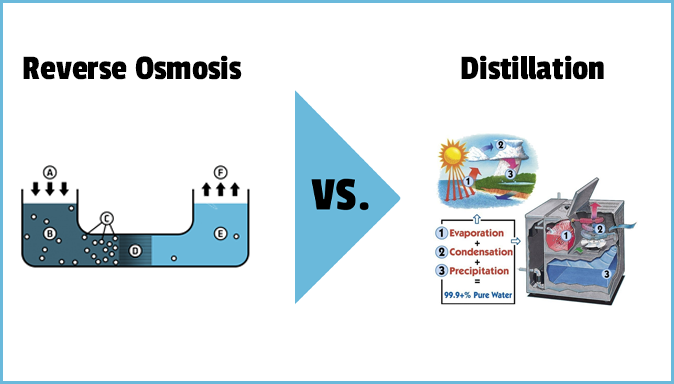
Let’s start with distilled water. It’s the old reliable. You boil the water into steam, collect the vapor, and let it condense back into liquid. The minerals? They stay behind in the pot, basically committing career suicide. The result is water that’s so pure, it’s almost boring—and your humidifier loves boring.
But here’s the kicker: distilling is slow and energy-hungry. You’ll listen to your countertop distiller gurgle for hours, using enough electricity to power a small tantrum. Plus, if you buy jugs of distilled water from the store, your car’s trunk will start to smell like a gym bag. No judgment, but it’s a vibe.
Enter Reverse Osmosis: The high-tech cousin
Reverse osmosis sounds like something from a sci-fi movie, but it’s actually a filtration process. It pushes water through a semipermeable membrane that’s so picky, it blocks most contaminants—including minerals, bacteria, and even fluoride. Think of it as a bouncer for your water. You get ultra-pure H2O without the boil-and-condense drama.
The biggest perk? RO systems produce water on demand. No waiting for a machine to burp out a gallon. You can hook one up under your sink and fill a pitcher in minutes. Your humidifier will thank you by not spewing chalk dust everywhere. Your furniture will also thank you, but it doesn’t have a voice, so I’m speaking for it.
But—and there’s always a but—RO systems waste water. For every gallon of pure water you get, about 2-4 gallons of “concentrate” (basically, rejected mineral soup) go down the drain. If you live in a drought-prone area, that might make you cringe harder than stepping on a Lego.
The humidifier showdown: Which one wins?
Okay, let’s get real about your humidifier. There are two main types: ultrasonic and evaporative. This matters because your water choice changes the game. Ultrasonic humidifiers vibrate the water into a fine mist. They are notorious for that white dust if you use tap or even filtered water. Distilled or RO water? Problem solved. Poof.
Evaporative humidifiers use a wick and a fan. They are less fussy about minerals because the salts stay trapped in the wick. But that means you’ll be replacing wicks more often, which is like buying a fancy coffee machine and then spending your life cleaning it. Your mileage may vary.
 Reverse Osmosis versus Distilled Water - My Pure Water
So, if you own an ultrasonic humidifier—like me and half the planet—pure water isn’t a luxury, it’s a necessity. Otherwise, you’re just redecorating with dust.
Cost, Convenience, and the “But Mom” factor
Let’s talk money. A jug of distilled water costs around $1–$2 per gallon. A good under-sink RO system runs you $150–$400 upfront, plus filter replacements every 6–12 months. If you run your humidifier nightly, distilled water will drain your wallet faster than a streaming subscription you forgot about. RO is an investment that pays off in the long run, if you commit.
But convenience? RO wins, hands down. You don’t have to lug jugs from the store or babysit a distiller. You open the faucet, and bam—pure water. It’s the difference between ordering takeout and being a short-order cook. No shade to cooks, but your lazy self gets it.
One more thing: RO water tastes… flat. It’s too pure. Some people hate that. But for a humidifier? That flatness is a feature, not a bug. Your machine doesn’t care about taste—it just wants to not choke on mineral build-up.
The final verdict (and a plot twist)
If you’re asking me—the guy who spent a month scrubbing white dust off his bookshelf—go with reverse osmosis. It’s more upfront effort, but it’s the kinder, smarter choice for daily use. Distilled water is great for occasional use or if you have a tiny humidifier and a strong back for carrying jugs.
Plot twist: You can actually use tap water filtered through a basic Brita, but only if you have an evaporative humidifier and you’re feeling rebellious. Most Brita filters don’t remove enough minerals to stop ultrasonic dust. I tried it. The dust laughed at me.
So here’s my final, slightly ironic advice: treat your humidifier like a spoiled goldfish. Give it the purest water you can, clean it regularly, and don’t overthink it. Your sinuses, your plants, and your future self (who won’t be scrubbing furniture) will send you a thank-you note. Now go hydrate your air, you beautiful moisture-loving weirdo.
