Do You Need To Remineralize Reverse Osmosis Water

So, you finally got a reverse osmosis (RO) system. Fancy! You’re sipping water that’s been stripped of everything but H₂O. It’s pure. It’s clean. It’s basically the water equi...
So, you finally got a reverse osmosis (RO) system. Fancy! You’re sipping water that’s been stripped of everything but H₂O. It’s pure. It’s clean. It’s basically the water equivalent of a blank stare.
But then someone whispers: “You need to remineralize that stuff.” Cue the panic. Is your water too clean? Are you about to turn into a deflated raisin? Let’s chat, friend. Grab your mug (or your fancy glass) and let’s sort this out.
First, what did RO actually do to your water?
Reverse osmosis is a total overachiever. It pushes water through a super-fine membrane that blocks everything— minerals, pesticides, fluoride, even most bacteria. What comes out is almost distilled water.
Must Read
It’s glorious for coffee, tea, and keeping your ice cubes clear. But that purity comes with a side of controversy.
The great “empty water” debate
Some folks say RO water is “dead” or “aggressive.” They claim it pulls minerals right out of your bones. Sounds scary, right?
Here’s the truth: your body doesn’t absorb minerals from water. It gets them from food. Broccoli, nuts, cheese—that’s your mineral VIP lounge. Water is just the delivery driver.
So no, RO water won’t make your skeleton dissolve. Calm down, science fiction fans.
Okay, but taste matters. A lot.
Have you ever tasted perfectly pure water? It’s… weird. Flat. Kind of like drinking a cloud’s sad cousin. Your taste buds are used to a bit of calcium and magnesium for body.
That’s why “mineral water” brands brag about their volcanic rock filtration. It’s not for health—it’s for flavor. RO water can taste hollow, like a joke with no punchline.
If you’re making espresso, that hollowness kills the extraction. But for daily gulping? You might not even notice.
The pipe problem (don’t ignore this)
Here’s where it gets real. Pure RO water has zero dissolved solids. That makes it slightly acidic and hungry. It wants to steal minerals from anything it touches.
If your plumbing is made of copper or old pipes, RO water can leach metals into your drink. Not great. Remineralization adds back just enough calcium to make the water “stable.”
 WaterSeer.org - Water Filtration & Purification Expert
Think of it as giving your water a chill pill. It stops being a kleptomaniac.
So, do you need to remineralize?
Short answer: No, for your health. Maybe, for your taste and pipes.
Long answer: If you’re eating a balanced diet, RO water won’t hurt you. The World Health Organization even says the mineral contribution from water is negligible. You’re not going to keel over from a calcium deficiency.
But if you’re the type who notices flavor nuance—or you have old copper pipes—adding minerals is smart. It’s like putting salt in a bland soup.
How to do it without a chemistry degree
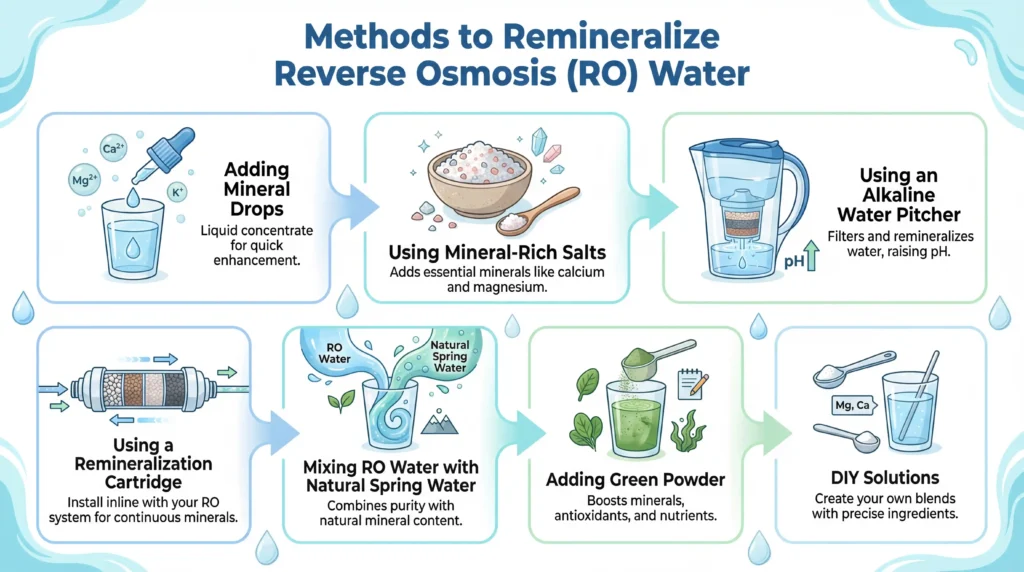
Easy peasy. You can buy RO remineralization filters that attach to your system. They’re small cartridges filled with calcium and magnesium media. The water flows through, picks up a bit of sparkle, and emerges tasting like mountain spring water.
Or, go old school: drop a pinch of Himalayan salt into your glass. Yeah, really. It has trace minerals. Your taste buds won’t scream “salt,” I promise.
Another hack? Store your RO water in a glass pitcher with a chunk of natural limestone. It’s been done for centuries. Fancy, rustic, and oddly satisfying.
The final sip
Do you need to remineralize? Only if you want your water to taste more like a hug and less like a lab experiment. It’s not a health mountain. It’s a flavor and pipe-consciousness hill.
Drink your RO water as-is, and you’ll be fine. Add some minerals, and you’ll feel a tiny bit fancy. Either way, you’re hydrated, and that’s the win.
Now, go forth, hydrate, and remember: water is water, whether it’s naked or wearing a mineral necklace. Cheers, you beautiful hydrator!
