Whole House Water Filter For Chlorine And Fluoride

So, you’ve finally decided to take on the whole house water filter thing. Not just any filter, but the one that kicks chlorine and fluoride to the curb. Let’s be real—you’re a...

So, you’ve finally decided to take on the whole house water filter thing. Not just any filter, but the one that kicks chlorine and fluoride to the curb. Let’s be real—you’re about to turn your home into a hydration sanctuary, and your tap water is about to get a serious promotion.
You know the drill. You turn on the shower, and it smells like a swimming pool that lost its way. Your skin feels like it’s been through a chemical peel you didn’t ask for. That’s chlorine, my friend, doing its disinfectant dance on your epidermis. And fluoride? It’s the quiet kid in the back who’s been in your water since the 1940s, supposedly for your teeth, but honestly, you’re not sure you signed up for that.
The Shower That’s Not a Science Experiment
Picture this: you step into the shower, and instead of that aggressive chemical aroma, you just smell water. Like, clean, neutral, doesn’t-make-you-cough water. It’s the difference between a spa and a lab. Your skin doesn’t tighten up like a drum, and your hair stops feeling like straw that’s been electrocuted.
Must Read
I remember the first week after we installed ours. My wife looked at me and said, “Did you change the conditioner? My hair is… soft?” Nope. It was the filter. She almost hugged the plumbing. That’s the kind of victory you don’t expect from a pipe under your house.
Why Chlorine Is Like That Overenthusiastic Guest
Chlorine is that party guest who shows up, kills all the bacteria (good job!), but then refuses to leave. It hangs around in your hot water, vaporizes into steam, and you breathe it in while showering. Not ideal. Studies have linked that to respiratory stuff, but let’s keep it simple: if your bathroom smells like a municipal pool, something’s off.
A whole house filter traps the chlorine before it gets to every faucet. That means your morning coffee doesn’t taste like a chemistry set. Your dog’s water bowl doesn’t have that weird aftertaste. Even your ice cubes get a glow-up. It’s the quiet hero of your home.
But What About Fluoride? The Controversial Squatter
Fluoride is a whole different beast. It’s added to municipal water to fight cavities, and for decades, we just accepted it. But now? People have opinions. Some love it, some think it’s a bit much. The truth is, you probably ingest plenty from toothpaste and dentist visits. Having a filter that reduces it gives you the choice. Free will, baby.
Our filter uses activated alumina or catalytic carbon, not just a Brita jug. You can’t remove fluoride with a $20 pitcher. That’s like trying to catch a fish with a butterfly net. A whole house unit actually works—it’s the heavy artillery of water filtration.
The Installation: It’s Not as Scary as It Sounds
I’ll be honest: the thought of cutting into main water lines made me sweat. But many companies sell units that a plumber can install in two hours. Or, if you’re handy (I am not), you can DIY it. One guy on YouTube did it with a crescent wrench and some swear words. It’s doable.
After installation, you’ll run the water for a bit to flush the system. Don’t panic if it spits out some black stuff at first—that’s just carbon dust. It’s like your filter saying, “I’m awake, let me clear my throat.” Then it’s smooth sailing.
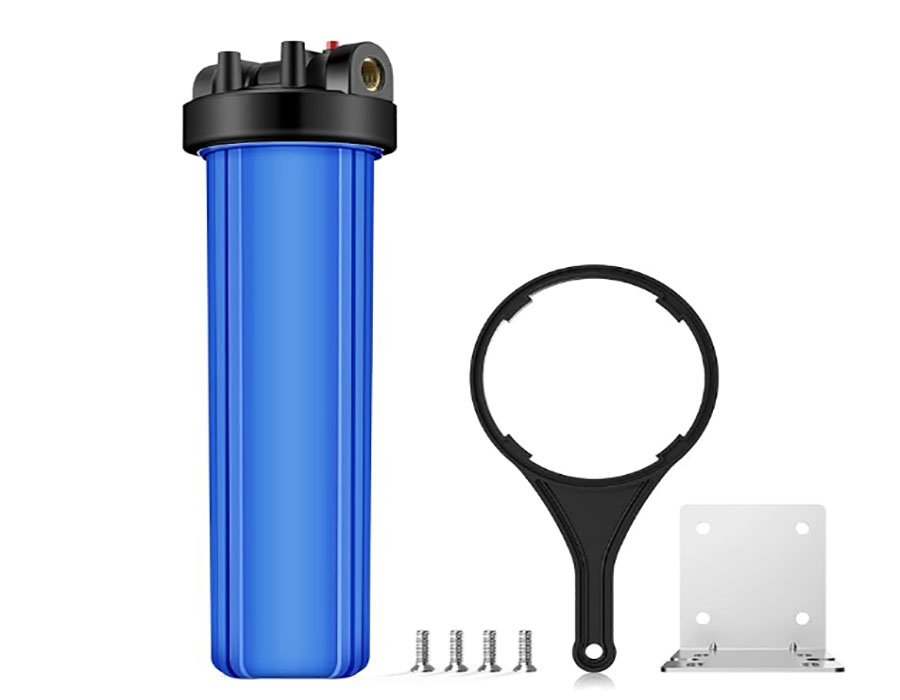 whole house water filter that removes chlorine and fluoride Reverse
What You Actually Notice Day-to-Day
You know how your tap water sometimes leaves a white film on glasses? That’s usually calcium, but the whole house filter doesn’t soften water (that’s a separate thing). What it does is make every drop taste like it came from a mountain spring. Your tea looks clearer. Your pasta cooks in water that doesn’t smell like a lab.
The real win is the shower experience. No more red eyes after a long rinse. No more dry, itchy skin that screams for lotion. You’ll actually look forward to washing your hands because the water feels silky, not harsh. It’s a small luxury that adds up fast.
Maintenance: The “Oh Yeah” Part
Filters need changing. That’s the fine print. Most whole house units have a sediment pre-filter that you swap every 3–6 months. It’s like a Brita on steroids. If you ignore it, the water quality drops, but the unit doesn’t explode. It just gets sad. Set a calendar reminder so you don’t forget.
The big media tanks (where the magic happens) last 1–2 years. It’s not a huge cost—maybe a couple hundred bucks every year or two. Compare that to the money you’ll save on bottled water, body lotion, and expensive hair products. Your wallet will nod in agreement.
The Bottom Line: Is It Worth It?
If you have city water (not well water), and you’ve ever thought, “Why does my house smell like a swimming pool?” then yes. It’s worth it. You’re basically telling your plumbing, “Hey, we’re going upscale.” The investment is a few hundred to a thousand dollars installed, but it pays for itself in comfort and sanity.
Sure, you can keep juggling those awkward 5-gallon water bottles at the grocery store. Or you can just turn on the tap and get perfect water anywhere in your house. The choice is yours. But honestly, once you go whole house, you’ll wonder how you ever lived with water that tasted like a handshake and a promise.
So go ahead. Give your water a makeover. Your skin, your hair, and your morning coffee will send you a thank-you note. You might even start laughing at those tiny pitcher filters. “Aw, look at the little guy,” you’ll say. “He tries so hard.” Let the whole house handle it. You’ve got better things to do.
