Commercial Reverse Osmosis Water Filtration System

So the other day, I’m at this tiny coffee shop that claims to have the “best espresso in town.” I take one sip, and it tastes… flat. Sad, even. The barista shrugs and mutters...

So the other day, I’m at this tiny coffee shop that claims to have the “best espresso in town.” I take one sip, and it tastes… flat. Sad, even. The barista shrugs and mutters something about the city’s hard water killing the flavor. I almost cried into my cup. That’s when I realized: we’re all just slaves to whatever comes out of the municipal pipe. (Seriously, why do we accept this?)
That sad espresso got me thinking about what happens when you scale up the water problem. If a tiny coffee shop struggles with tap water, imagine a factory, a hospital, or a brewery trying to produce consistent quality. The solution isn’t a fancy pitcher filter—it’s a Commercial Reverse Osmosis Water Filtration System. Yes, that’s the big, shiny, industrial cousin of the filter under your sink.
What is this beast, really?
Think of a RO system as a bouncer for your water. It’s so strict that it rejects almost everything: lead, chlorine, arsenic, fluoride, and even those microscopic ninjas like bacteria. It uses pressure to push water through a semi-permeable membrane that makes a colander look like a Swiss cheese. (I know, “semi-permeable” sounds like a term from a bad sci-fi movie, but it’s real.)
Must Read
Commercial systems are just these bouncers on steroids. They can handle thousands of gallons per day. We’re talking about machinery that sits in a mechanical room, humming away, turning muddy well water into something you’d bottle and sell to influencers.
Why your business needs one (even if you don’t know it yet)
Let’s be real for a second. Water is the most ignored ingredient in most products. A restaurant spends months perfecting a sauce, but uses water that tastes like a swimming pool. A microbrewery obsesses over hops, but ignores the 95% of its beer that is… water. That’s insane. (It’s like building a race car with bicycle tires.)
A commercial RO system fixes that. It gives you a blank canvas. Your coffee won’t have that metallic aftertaste. Your soup will taste like vegetables, not the pipes they traveled through. And your ice cubes will be clear, not cloudy. (Parisian chefs pay top dollar for clear ice, by the way. Not kidding.)
There’s also the equipment longevity angle. Hard water builds up scale inside boilers, espresso machines, and dishwashers. That scale is like cholesterol for your equipment—eventually, it kills it. A commercial RO system strips out the calcium and magnesium that cause that white crust. Your machinery will last longer, and you’ll stop paying for emergency plumber visits at 2 AM.
The dirty little secret: the waste water
Okay, I’m not going to lie to you. RO systems waste water. For every gallon of pure water they produce, they might send 2 to 4 gallons down the drain. That’s the brine—the concentrated stuff that gets flushed away. (Yes, it hurts a little to think about it.)
But modern commercial systems are getting smarter. Many now have recovery pumps and recycling loops that slash that waste ratio. Some even capture that reject water and use it for cooling towers or irrigation. So don’t let the environmental guilt trip you—look for a system with high recovery efficiency.
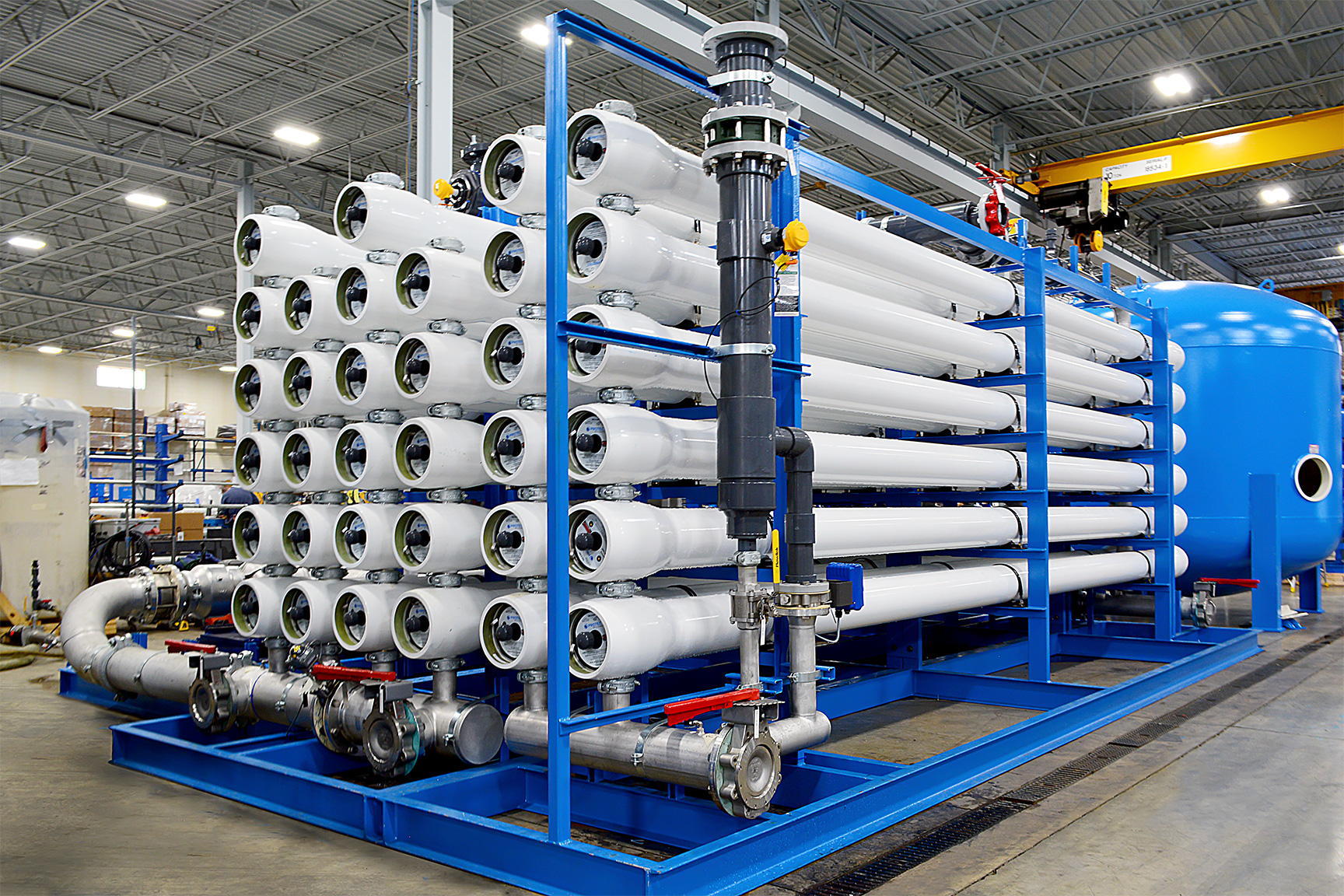 1000-GPM Reverse Osmosis (RO) System | MARLO
What to look for when you go shopping (and you will)
First, flow rate is king. Don’t guess. Calculate how many gallons you need per hour. A bakery using water for dough is different from a car wash spraying down SUVs. Over-spec it, because demand always grows. (You’ll thank me later when a new espresso machine arrives.)
Second, the membrane quality. Thin-film composite (TFC) membranes are the gold standard. They last longer and reject more contaminants. Cheap cellulose acetate membranes? They’re like using a paper towel to stop a flood. Just don’t.
Third, pre-filtration is non-negotiable. Your RO membrane costs hundreds of dollars. If you feed it dirty water full of sediment, it will clog in a week. Get a sediment filter and a carbon block before the water even touches the RO membrane. Protective gear, people!
The final sip (of that perfect water)
I went back to that coffee shop a week later. They had installed a commercial RO system. The espresso was actually good. Smooth, bright, with no bitter finish. The barista looked smug. (He had every right to be.)
So, here’s the ironic thing: we spend fortunes on gadgets that do fancy tricks, but we ignore the most basic element. Water. A commercial reverse osmosis system is not glamorous. It’s a box of pipes and membranes. But it’s the silent hero of every great glass of water, every perfect batch of IPA, and every soup that tastes like love. Get one. Your taste buds—and your bottom line—will send you a thank you note.
Now go drink some good water. You’ve earned it.
