Is Deionized Water The Same As Bacteriostatic Water

So, you’re staring at two bottles on a shelf. One says “Deionized Water.” The other says “Bacteriostatic Water.” And you’re thinking, “Wait… aren’t they just fancy names for w...
So, you’re staring at two bottles on a shelf. One says “Deionized Water.” The other says “Bacteriostatic Water.” And you’re thinking, “Wait… aren’t they just fancy names for water?” I’ve been there, friend. It’s like ordering a “flat white” vs. a “latte” and wondering if the barista is just messing with you.
Let’s cut to the chase: No, they are not the same thing. They are not twins. They’re more like distant cousins who show up to the same family reunion but can’t stand each other. One is a super-pure rebel. The other is a germ-fighting ninja.
What’s the Deal with Deionized Water?
Picture water as a VIP party. Normal tap water is the crowded dance floor—full of minerals, salts, and random ions bumping into each other. Deionized (DI) water is the bouncer who kicks out all those ions. Gone. No calcium, no magnesium, no sodium. Just pure H₂O molecules doing the cha-cha.
Must Read
But here’s the kicker: DI water is not sterile. Shocking, right? It’s super pure in terms of chemical junk, but bacteria can still survive in it. Think of it as a perfectly clean kitchen floor—until a stray crumb (or microbe) lands on it. DI water is great for car batteries, lab experiments, or your iron. Not for injecting into your body.
And Bacteriostatic Water?
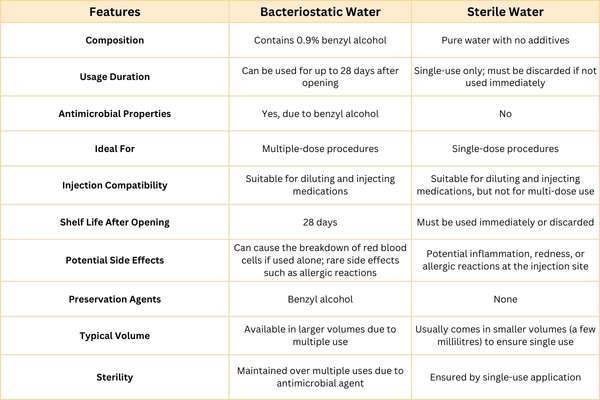
Now, bacteriostatic water is a whole different flavor. This stuff is basically sterile water that’s been spiked with a tiny amount of benzyl alcohol. That alcohol is like a security guard that says, “No bacteria allowed. Ever.” It stops germs from growing, even after you’ve opened the bottle.
Doctors mix this with medications for injections. It’s the water you use when you absolutely, positively cannot have any little critters tagging along. If DI water is the clean freak, bacteriostatic water is the germaphobe with a hand sanitizer dispenser mounted on their hip.
The Big Difference (Spoiler: It’s Not Subtle)
Here’s where it gets real. Bacteriostatic water is sterile and self-preserving. You can poke a needle into it multiple times (within reason) and it won’t grow mold. Deionized water? If you leave it open on the counter, it’ll be a bacterial rave by tomorrow. Gross but true.
Also, DI water can sometimes pull minerals from the air or the container it’s in. It’s so pure that it gets aggressive—kind of like that friend who’s “too nice” and accidentally insults you. Bacteriostatic water just chills, alcohol doing its job quietly.
Can You Swap Them?
Let me stop you right there. Do not, under any circumstances, use deionized water for injections. Repeat after me: “I am not a mad scientist.” Injecting non-sterile DI water is asking for infection, inflammation, or a very angry doctor visit. It’s like using tap water in a fancy espresso machine—sure, it’ll work once, but the machine will hate you.
On the flip side, you can technically use bacteriostatic water in a car battery. But why would you? It’s expensive, and the benzyl alcohol won’t do anything magical under the hood. Save your money.
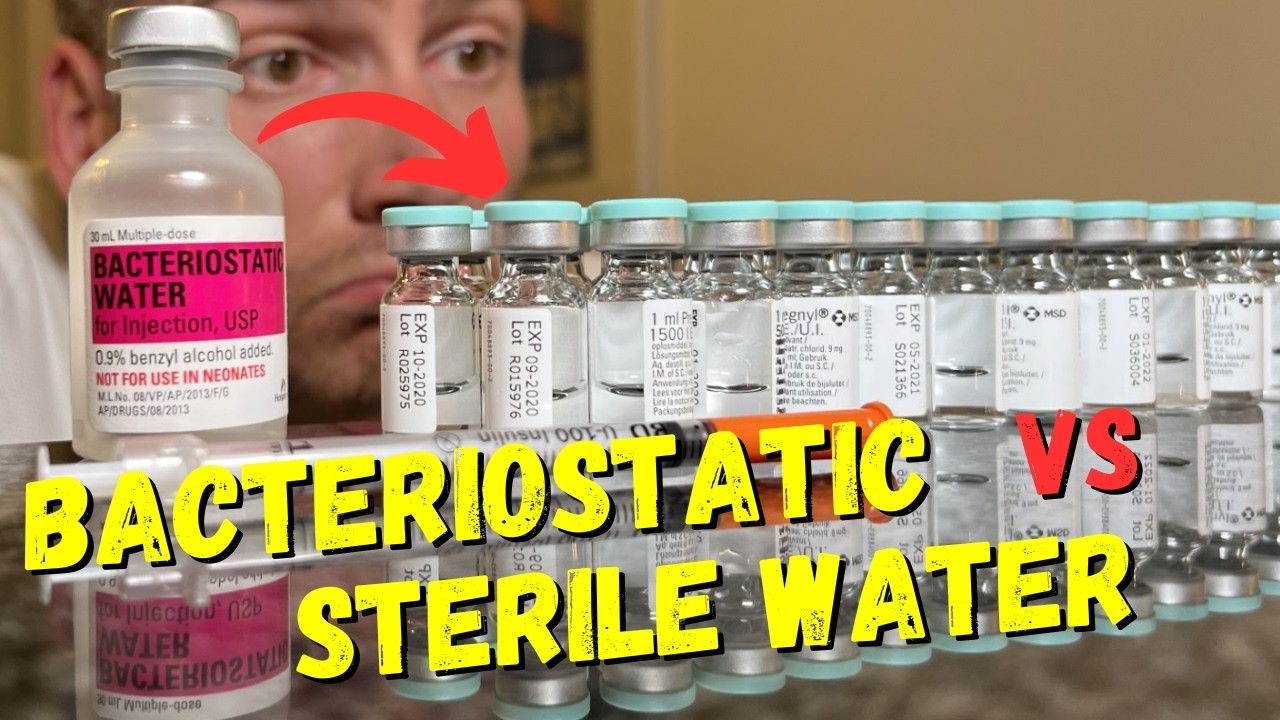 Bacteriostatic vs Sterile Water: Which One Should You Use? - YouTube
The Coffee Shop Analogy
Okay, imagine your favorite coffee shop. Deionized water is the barista who filters the water to remove all impurities. It makes a perfect cup of pour-over coffee. Bacteriostatic water is the barista who also sprays the counter with Lysol every five minutes. Both care about quality, but one is obsessed with cleanliness.
Which one do you want for your morning brew? The filtered one (DI). Which one do you want for a syringe full of medicine? The Lysol-spraying one (bacteriostatic). Easy choice.
What About Storage?
This is where things get hilarious. Deionized water is best stored in a sealed glass or plastic container, away from air. It will literally steal ions from the bottle over time. Bacteriostatic water? Just keep the cap on, and you’re golden. It’s like the low-maintenance friend who’s fine with leftovers.
But here’s the weird part: once you open a bottle of bacteriostatic water, you usually have about 28 days before it’s considered “used.” The alcohol evaporates slowly, and eventually, it’s just fancy water. Deionized water? Once opened, use it or lose it—fast. Bacteria don’t need an invitation.
So Which One Wins?
Here’s the truth: they’re both winners in their own weird, watery way. Deionized water is the perfectionist. It removes everything that makes water “hard” or conductive. It’s the choice for labs, manufacturing, and keeping your iron from exploding. Bacteriostatic water is the guardian. It keeps things safe for human tissue, specifically for mixing with medications.
Do not confuse the two, or you’ll have a bad time. I once saw a friend try to use DI water for a medication vial. We are no longer friends. (Just kidding, but he had to dump the whole thing.)
The Final Sip
At the end of the day, water is water… until it’s not. If you need to inject something, grab the bacteriostatic. If you’re topping off a battery or doing a science experiment, deionized is your pal. And if you’re just thirsty? Honestly, grab a glass of tap water. Your body already has everything it needs.
So, next time you see those two bottles, smile. You know the secret handshake now. And if someone tries to tell you they’re the same? Buy them a coffee, and gently set the record straight. We’ve got your back.
