Automatic Shut-off Valve For Reverse Osmosis Systems

You know that satisfying click when you turn off a faucet? Your reverse osmosis system craves that same exact feeling, but for its own sanity. Inside that under-sink labyrinth...
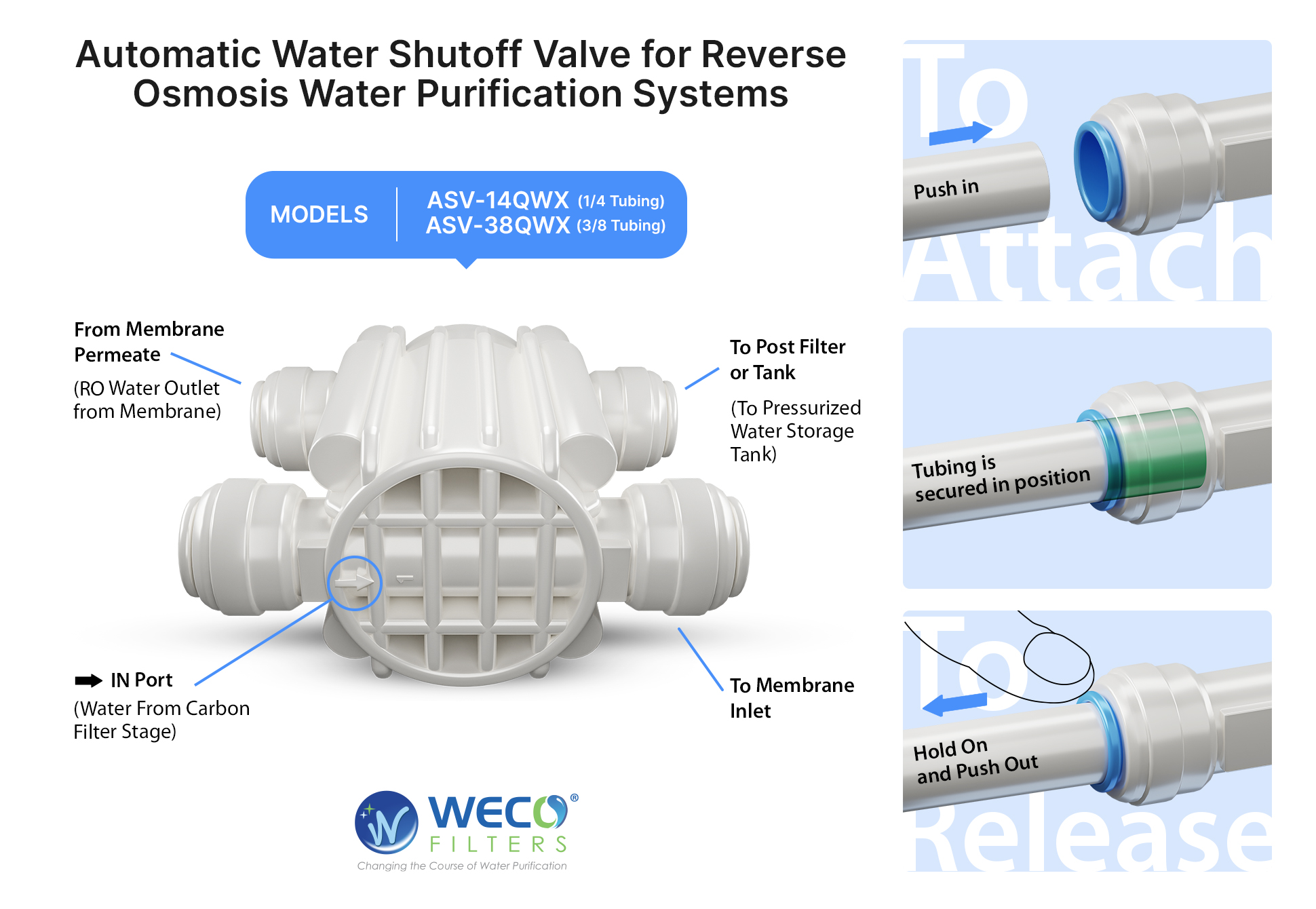
You know that satisfying click when you turn off a faucet? Your reverse osmosis system craves that same exact feeling, but for its own sanity. Inside that under-sink labyrinth of tubes and filters, a tiny hero works silently: the automatic shut-off valve (ASV). It’s the unsung bouncer of your water purification club, deciding when the party starts and, more importantly, when it absolutely must stop.
Without this valve, your RO system would be like a bartender who never cuts anyone off. It would keep producing water until it fills the storage tank, then keep working against itself, wasting gallons of wastewater in a constant, futile loop. That’s not just thirsty; that’s financially reckless. The ASV saves your water bill, your sanity, and your home’s plumbing from a slow, expensive tantrum.
The Zen of Pressure: How It Actually Works
Think of your RO system as a tiny, high-pressure spa for water molecules. The ASV is the spa’s manager who checks the guest list. When your storage tank is empty, pressure is low, and the valve says, “Let the purification flow!” As the tank fills, pressure builds, and the valve gently pushes a diaphragm to block the flow. No fancy electronics, just physics doing its quiet dance of backpressure and springs.
Must Read
It’s a beautifully simple mechanism, like a seesaw that knows exactly when to stop. In fact, most ASVs are mechanical, meaning they rely on water pressure alone. No batteries, no Wi-Fi, no firmware updates that brick your filtration at 3 AM. Just pure, elegant, analog reliability that would make a 1970s Volvo engineer nod in approval.
Fun fact: A standard RO system without an ASV can waste up to three times more water than one with it. That’s like leaving your car running in the driveway all day just to listen to the radio.
Your System’s Secret VIP: The Check Valve Connection
Here’s the backstage gossip: your ASV works best when paired with a check valve. This little one-way door stops water from flowing backwards into the membrane. Without it, pressure equalizes, and the ASV gets confused—like a GPS in a tunnel. It might not shut off properly, leaving the system running constantly. It’s a small, $5 part that saves you from a $500 headache.
Many modern RO kits come pre-assembled with both valves, but if you’re upgrading an older system, check your package. Pro tip: Listen for a faint hissing or trickling sound after the tank is full. If you hear it, your valve might be failing, or the check valve is ghosting you.
Installation: Easier Than Assembling IKEA Furniture
Worried about turning into a plumber? Relax. Most ASVs are designed as push-fit connections. You cut the tubing, push it in until it clicks, and you’re basically done. It’s the same technology used in fish tanks and high-end espresso machines, so it’s tested for daily abuse. The hardest part is remembering which tube is for “in” and which is for “out”—just look for the arrow molded into the plastic.
If you’re the type who watches a two-minute YouTube tutorial then claims expertise, you’ve got this. Just don’t use petroleum-based lubricant on the O-rings; it’ll degrade the plastic. Use a dab of water or silicone grease instead. Your future self—who isn’t mopping a kitchen flood—will thank you.
Troubleshooting the Drama
Sometimes your ASV acts like a moody celebrity. If it won’t shut off, check the feed water pressure. Most valves need at least 40 PSI to operate. Too low, and the diaphragm can’t flex. Too high—over 80 PSI—and you risk cracking the housing. Grab a cheap pressure gauge from a hardware store; it’s the thermostat for your system’s comfort zone.
 Understanding the Diagram of a Reverse Osmosis Auto Shut Off Valve
Another classic drama: the valve sticks closed. This often happens after a power outage or if sediment clogs the tiny internal ports. A quick flush by opening the faucet and running water for 30 seconds usually resets it. If that fails, soak the valve in warm vinegar for an hour to dissolve mineral buildup. It’s basically a spa day for your plumbing.
Cultural Footprint: The Water-Saving Movement
In California, where water conservation is practically a sport, the ASV is a hometown hero. It’s estimated that widespread use of automatic shut-offs in RO systems could save hundreds of millions of gallons annually. That’s enough water to fill every bathtub in Los Angeles twice—or water a very thirsty avocado farm for a week.
There’s even a quiet fan community online. On Reddit’s r/WaterTreatment, users share stories of their “valve epiphanies”—that moment when they realized their system was running 24/7 for six years without them knowing. One user famously said, “My wallet cried, but my plants thrived.” The ASV turns a wasteful system into an eco-friendly ally.
Fun fact: The modern ASV design is inspired by antique steam engine regulators. So every time your RO system shuts off, you’re witnessing a 200-year-old steam punk innovation in your sink.
Practical Tips for the Modern User
Tip One: Replace your ASV every 3–5 years. They’re cheap (under $30) and insurance against a slow leak that can warp your cabinet floor. Mark it on your calendar next to “change furnace filter” and “pretend to review insurance policy.”
Tip Two: If you have a tankless RO system, you don’t need an ASV. These systems produce water on demand and shut off automatically via a different mechanism. Check your manual; don’t buy parts you don’t need.
Tip Three: Before winter travel, bleed the pressure from your tank to reduce stress on the ASV. Turn off the supply, open the faucet, and let the system empty. This prevents the valve from being forced open by expanding ice if you live in a freezing climate.
Reflection: The Quiet Check-Ins of Daily Life
An automatic shut-off valve does something remarkable without any fanfare—it knows when to stop. In a world that constantly tells us to do more, produce more, and push harder, that’s a radical act of wisdom. It reminds us that a system is only healthy when it has a boundary, a moment of stillness. Whether it’s your RO system, your workday, or your weekend, honoring the moment of “full” is a small act of self-care. So next time you fill a glass from your tap, pour one out for the little valve that knows exactly when to say “enough.” It’s the quiet genius that keeps your life flowing smoothly, one drop at a time.
