Whole-house Water Filtration Reverse Osmosis Systems

So, you’re thinking about your home’s water. Maybe you’ve noticed a weird taste, or your showerhead is crying because of limescale. Either way, welcome to the wild world of wh...

So, you’re thinking about your home’s water. Maybe you’ve noticed a weird taste, or your showerhead is crying because of limescale. Either way, welcome to the wild world of whole-house water filtration and reverse osmosis—your water’s new best friends.
Let’s be real: tap water is perfectly safe in most places. But safe doesn’t always mean delicious. There’s a big difference between “won’t kill you” and “makes your morning coffee sing like a Broadway star.”
The Difference: Whole-House vs. Under-Sink Showdown
First, let’s clear up a huge confusion. A whole-house water filtration system is like a bouncer for your entire home. It catches sediment, chlorine, and big dirt particles before they get to your faucets, showers, and washing machine.
Must Read
Think of it as a giant sponge that politely says “No, thank you” to rust, dirt, and that swimming-pool smell. Your skin will thank you—no more itchy, dry winter skin from chlorinated showers.
But a whole-house system isn’t magical. It doesn’t remove dissolved junk like lead, arsenic, or microscopic contaminants. That’s where our fancy friend, Reverse Osmosis, steps onto the stage.
Reverse Osmosis: The Overachiever of Water Purification
Reverse osmosis (RO) is basically a water snob. It uses pressure to force water through a super-duper fine membrane. It’s so picky it blocks everything except H2O molecules.
We’re talking 99% of dissolved solids, heavy metals, fluoride, pesticides, and even those tiny plastic bits nobody wants to think about. It’s like having a personal water butler who says, “Only the best for you, my human.”
But here’s the catch—a standard under-sink RO system usually only serves one faucet. Great for drinking, terrible for filling up a bathtub. So, how do you get RO water from every tap in your house?
Enter the Beast: Whole-House Reverse Osmosis
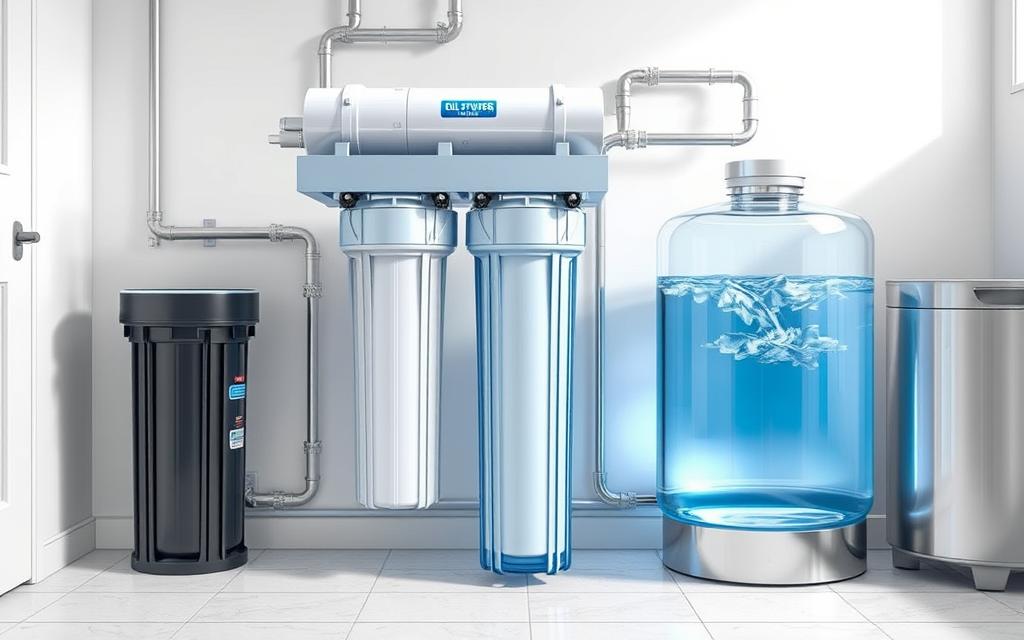
A whole-house reverse osmosis system is exactly what it sounds like: an absolute unit. It’s a large-scale RO system installed at your main water line. It purifies all the water entering your home—every shower, every toilet, every garden hose.
Yes, even your toilet gets filtered water. Your toilet will feel like royalty. (Don’t worry, it won’t get a big head.) This setup is a game-changer if you live somewhere with hard, metallic-tasting water or well water that smells like a science experiment.
The trade-off? These systems are big, expensive, and they produce a bit of wastewater. Think of it as the price for water so pure it makes bottled water jealous.
Wait, Is It Worth It? (Spoiler: For Some People, Heck Yes)
Let’s be honest—whole-house RO is overkill for most city-dwellers. If your water is already pretty good, you’re buying a Ferrari to drive to the grocery store. A simple carbon filter and an under-sink RO might be plenty.
But if your water tastes like a rusty spoon? If your skin breaks out from tap water? If you have a well with high nitrates or heavy metals? Then yes, a whole-house RO system is the hero you deserve.
You’ll never buy bottled water again. You’ll also notice your coffee, iced tea, and even plain water taste crisp, like a mountain stream that went to finishing school.
The Practical Bits: Installation, Maintenance, and Plumbing Shenanigans
Installing a whole-house RO system is not a weekend DIY project. It requires a plumber, a drain line, and often a separate storage tank. These are serious machines.
 Best Whole House Reverse Osmosis Water Filter Guide
Maintenance is manageable: change the sediment and carbon pre-filters every 6-12 months, and replace the RO membrane every 2-3 years. If you forget, your water will slowly turn back into “meh” territory—but no explosions, promise.
Also, be aware that RO systems strip out beneficial minerals like calcium and magnesium. Some people add a remineralization filter afterward because they miss their water having a little… personality.
The Water Waste Factor (Don’t Panic)
Traditional RO systems waste about 3-4 gallons of water for every 1 gallon of filtered water. Sounds terrible, right? But modern tankless or high-efficiency RO systems waste much less—closer to 1:1.
That “waste” water isn’t toxic; it’s just slightly concentrated with minerals. You can use it to water your non-edible plants or wash your car. Think of it as water with a little extra attitude.
If you live in a drought-prone area, do your homework and get a high-efficiency model. Your conscience—and your water bill—will feel better.
Should You Get Both? Whole-House Filtration + RO
Many smart homeowners install a whole-house carbon filter (to protect pipes and appliances) plus a dedicated under-sink RO system for drinking water. It’s the Goldilocks solution: not too extreme, not too basic, just right.
But if you have serious water issues (like high levels of arsenic or lead), the whole-house RO is a legitimate lifesaver. You’ll have the cleanest water on the block. Your plants will grow like they’re on steroids.
Just remember: you don’t need to give your toilet Evian-level water. But hey, if you’ve got the cash and the space, why not treat your plumbing to a spa day?
A Fun Little Reality Check
Here’s the truth: your water is probably fine. But “fine” is not the same as “amazing.” A whole-house filtration system (with or without RO) transforms “fine” into “wow, I’m drinking a cloud.”
And honestly, after you install it, you’ll start noticing weird things—like how much better your pasta tastes, or how your hair feels softer. You’ll become one of those people who brings a water bottle to parties and talks about pH levels. Embrace it.
The Uplifting Conclusion (Smile Guaranteed)
So here’s the bottom line: you don’t have to be a fancy water expert to enjoy crystal-clear, delicious water from every tap. Whether you go whole-house, under-sink, or both, you’re making a choice to treat yourself like the royalty you are.
Imagine coming home after a long day, turning on the faucet, and filling a glass with water so pure it tastes like a hug from a glacier. That’s not just hydration—that’s a little everyday luxury.
And the best part? You never have to worry about a weird aftertaste again. No more plastic bottles, no more scrubbing crusty showerheads, no more side-eyeing your tap. Your water will be the MVP of your home. Go ahead, take a sip. You’ve earned it. 😊
