What Should The Hardness Level Be On A Water Softener

Let’s be honest: when you first got a water softener, you probably just wanted to stop feeling like you were showering in chalk. You know the drill—that squeaky-clean feeling...
Let’s be honest: when you first got a water softener, you probably just wanted to stop feeling like you were showering in chalk. You know the drill—that squeaky-clean feeling that actually makes your skin drier than a stand-up comic’s wit. But then reality hits: you have to set the hardness level. And suddenly, you’re staring at a little digital screen, wondering if you’re about to turn your home into a salty swimming pool or leave your dishes looking like a crime scene.
It’s like choosing the right amount of seasoning for a dish. Too little salt, and your pasta is sad. Too much, and you might as well be eating a salt lick. So, what should the hardness level actually be? The short answer: it depends on your water’s personality, which you can discover with a simple test kit.
First, you need to know your enemy. Grab a glass of tap water and imagine it’s a criminal lineup. Hard water is the sneaky villain hiding calcium and magnesium, making your pipes groan and your soap scum multiply like bad rumors. That’s the guy you’re trying to kick out of your house.
Must Read
The Sweet Spot: Not a Rock, Not a Soup
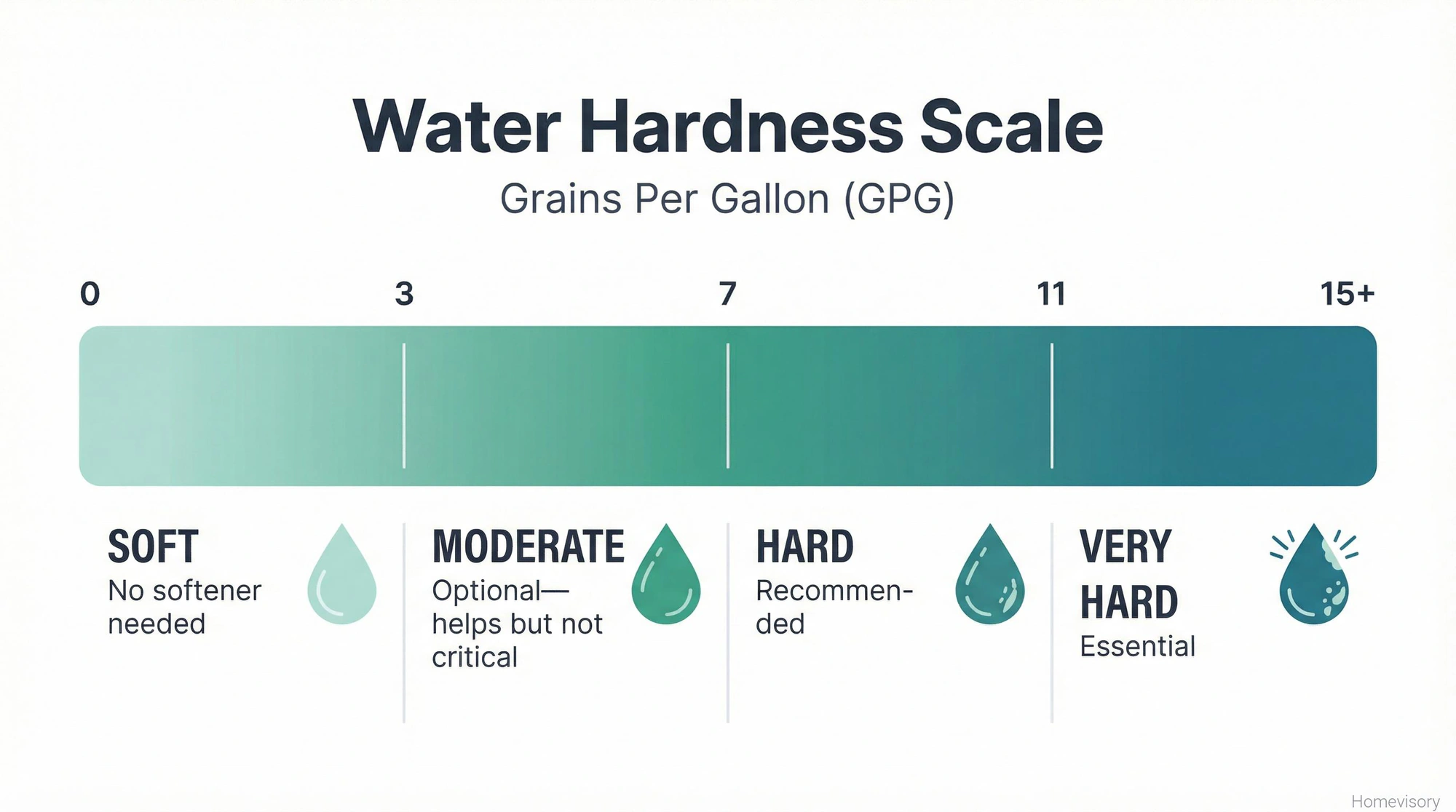
Experts usually say a water softener should output water between 0 and 20 grains per gallon (GPG) of hardness. But here’s the kicker: you don’t want it at zero. That’s like trying to wash your hands with distilled water—it feels weirdly slippery and leaves your skin begging for moisture. A reading of 1 to 7 GPG is that Goldilocks zone where your dishes sparkle and your hair doesn’t look like you stuck a fork in an electrical socket.
Think of it like this: zero hardness is like a hotel swimming pool where you can’t stop floating. Slight hardness is that perfect glass of filtered water from a fancy restaurant. Your goal is the restaurant water, not the pool. Most softeners let you dial in a number between 1 and 10 on the bypass valve, which corresponds to the hardness level you want to remove.
The Great Salt Panic
I once set my softener to maximum hardness removal because I wanted shiny silverware. Bad move. The water came out so soft that my soap wouldn’t rinse off, and I felt like I was washing dishes with a non-stick coating. My wife said the shower water felt “like trying to grab a greased pig.” Lesson learned: aggressive softening is like putting a turbo engine on a minivan—impressive, but you’ll crash into a pile of salty regret.
Here’s the funny part: your water softener doesn’t know if you have a big family or just you and your cat, Mittens. A household of four will use more water and need a higher regeneration frequency. A single person might need a lower hardness setting, like 4 GPG, to avoid over-softening and wasting salt. It’s like buying groceries: feed a crowd, you buy bulk. Feed yourself, you buy that adorable single avocado.
How to Find Your Magic Number
Do yourself a favor and buy a water hardness test strip from your local hardware store. It’s cheaper than a fancy coffee and takes ten seconds. Dip it, match the color, and suddenly you know if your water is “hard” (above 7 GPG) or “nuclear-hard” (above 15 GPG). If your test strip turns dark purple, you might have medieval castle plumbing.
 The Hard Truth about Water Softeners — Hunter Plumbing
Once you know the number, set your softener to about 5 to 10 GPG less than your raw water. For example, if your water comes in at 18 GPG, aim for an output of 8 or 9 GPG. Don’t aim for zero—leave some minerals in, like leaving a few crumbs on a plate so it doesn’t feel lonely.
The Two-Week Rule
After you set the level, give it two weeks. Your skin will adjust, your pipes will adjust, and your coffee machine will stop looking like a fossil exhibit. If your hair feels like wet hay, turn the hardness up a notch. If your soap still isn’t lathering, turn it down. It’s a dance, and you’re the awkward partner stepping on toes.
And if you have a water filtration system too? Don’t panic. Just make sure the softener comes first. You don’t want your filter fighting the minerals—that’s like trying to dry dishes with a wet towel.
Final Reality Check
The perfect hardness level isn’t a fixed number; it’s a vibe. If your water tastes good and your laundry doesn’t feel like sandpaper, you’ve nailed it. If you start growing gills from the saltiness, you’ve gone too far. Your softener is a tool, not a magician—it can’t make your teenage son’s socks less stinky.
Remember: your water softener is a team player, not a dictator. Turn that dial with confidence, and if all else fails, drink a glass of tap water and ask yourself: “Does this taste like actual water, or like a science experiment?” When it tastes like nothing special, you’ve won. Now go enjoy your non-scaling, squeaky-clean life. You earned it.
