Ultraviolet Disinfection System For Treating Protozoa

Imagine you’re a protozoan. You’re tiny, you’re squishy, and you’ve just hitched a ride in someone’s drinking water. Life is good—until a rogue ultraviolet (UV) light shows up...
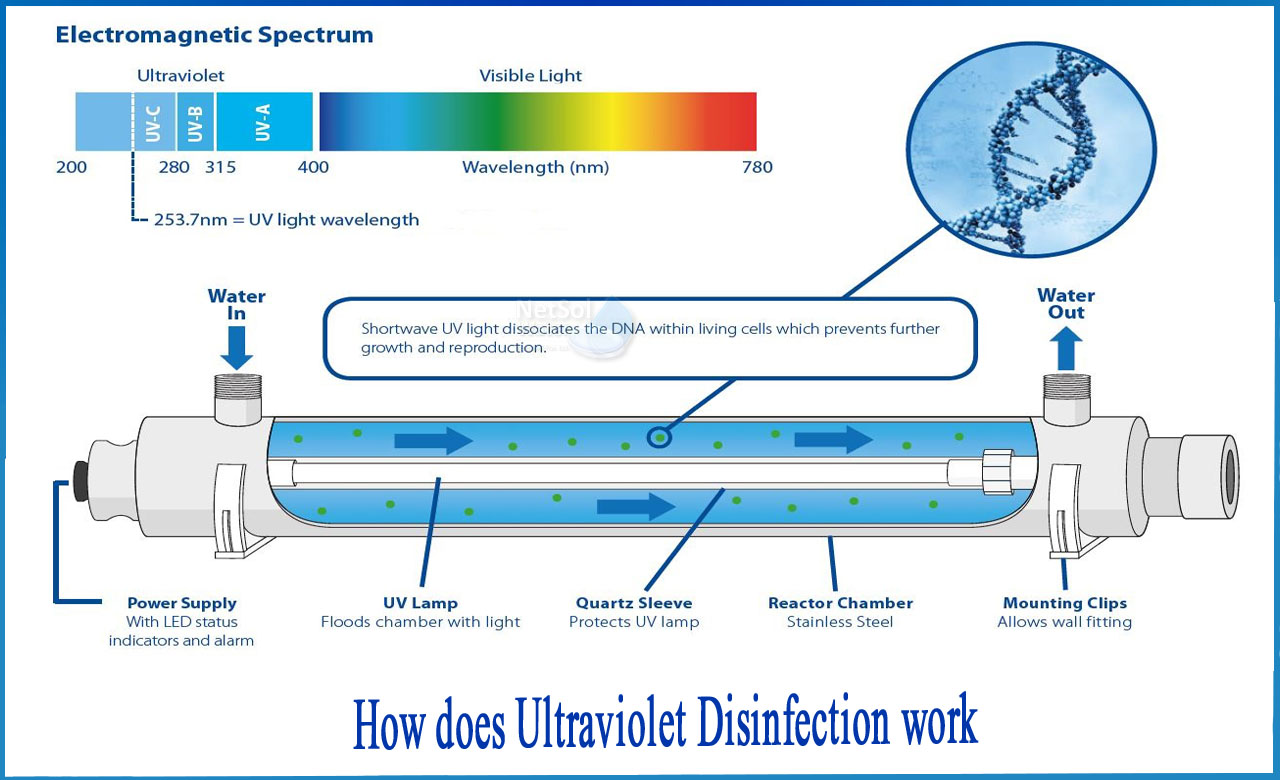
Imagine you’re a protozoan. You’re tiny, you’re squishy, and you’ve just hitched a ride in someone’s drinking water. Life is good—until a rogue ultraviolet (UV) light shows up like a bouncer at a microscopic rave. That, my friends, is the essence of ultraviolet disinfection, the water treatment tech that turns protozoa into crispy little ghosts.
Protozoa—like the infamous Giardia and Cryptosporidium—are the “roommates from hell” of the microbial world. They’re tough, they’re resilient, and they cause diarrhea that makes you question every life choice you’ve ever made. Cryptosporidium is so stubborn that it survived a 2019 study where scientists blasted it with enough UV to fry an egg. Spoiler: the egg was toast, the protozoan was not. But UV systems finally cracked the code.
How? By hitting these little jerks with ultraviolet-C (UVC) light—the same wavelength that gives sunburns a bad name. UVC scrambles their DNA like a toddler tossing a puzzle. No DNA repair? No reproduction. And without reproduction, a protozoan is just a sad, single-celled blob with zero career prospects. “But wait,” you might say, “can’t they just multiply in the dark?” Nope. UV light is the kryptonite to their Superman act—only with less capes and more waterborne misery.
Must Read
Why Protozoa Need a Sunburn—And Fast
Here’s a fun fact: chlorine, the gold standard of water disinfection, barely tickles certain protozoa. Cryptosporidium has a protective shell tougher than a two-dollar steak. You could dump a swimming pool’s worth of chlorine on it, and it’d probably ask for a side of chips. Meanwhile, UV light bypasses the armor entirely. It doesn’t care about shells—it goes straight for the genetic guts.
Think of UV as the microwave of disinfection. You don’t need to boil the water for ten minutes (which protozoa hate, by the way—they’re drama queens about heat). A few seconds under UV, and their DNA unravels like a cheap sweater. “But what about poop particles?” you ask. Great question. Protozoa travel in fecal matter—it’s their Uber. UV systems don’t filter them out; they just annihilate their will to live. No filter to clog, no chemicals to store, just pure, savage light.
The Surprising Part: It’s Actually Cheap
You’d think a device that murders microscopic monsters would cost as much as a luxury spa treatment. But modern UV systems run on roughly the same electricity as one lightbulb. A 2023 study from the University of Waterloo calculated that UV treatment costs less than a penny per 10 gallons. That’s cheaper than a single sad-eyed garbage bag from the grocery store. “So why isn’t every tap in the world UV-equipped?” Because humans love sticking with what’s familiar, even if it gives them Montezuma’s Revenge.
Here’s where it gets wild: UV disinfection doesn’t change the taste of your water. Unlike chlorine, which makes your morning coffee taste like a public pool, UV leaves zero chemical footprint. It’s like the ninja of water treatment—silent, invisible, and deadly to parasites. But ninjas have a weakness: they need clear water to work. If your water is muddy, the UV light bounces off sediment like a drunk at a laser tag arena. The fix? A simple pre-filter. Boom—crystal clear, protozoa-free hydration.
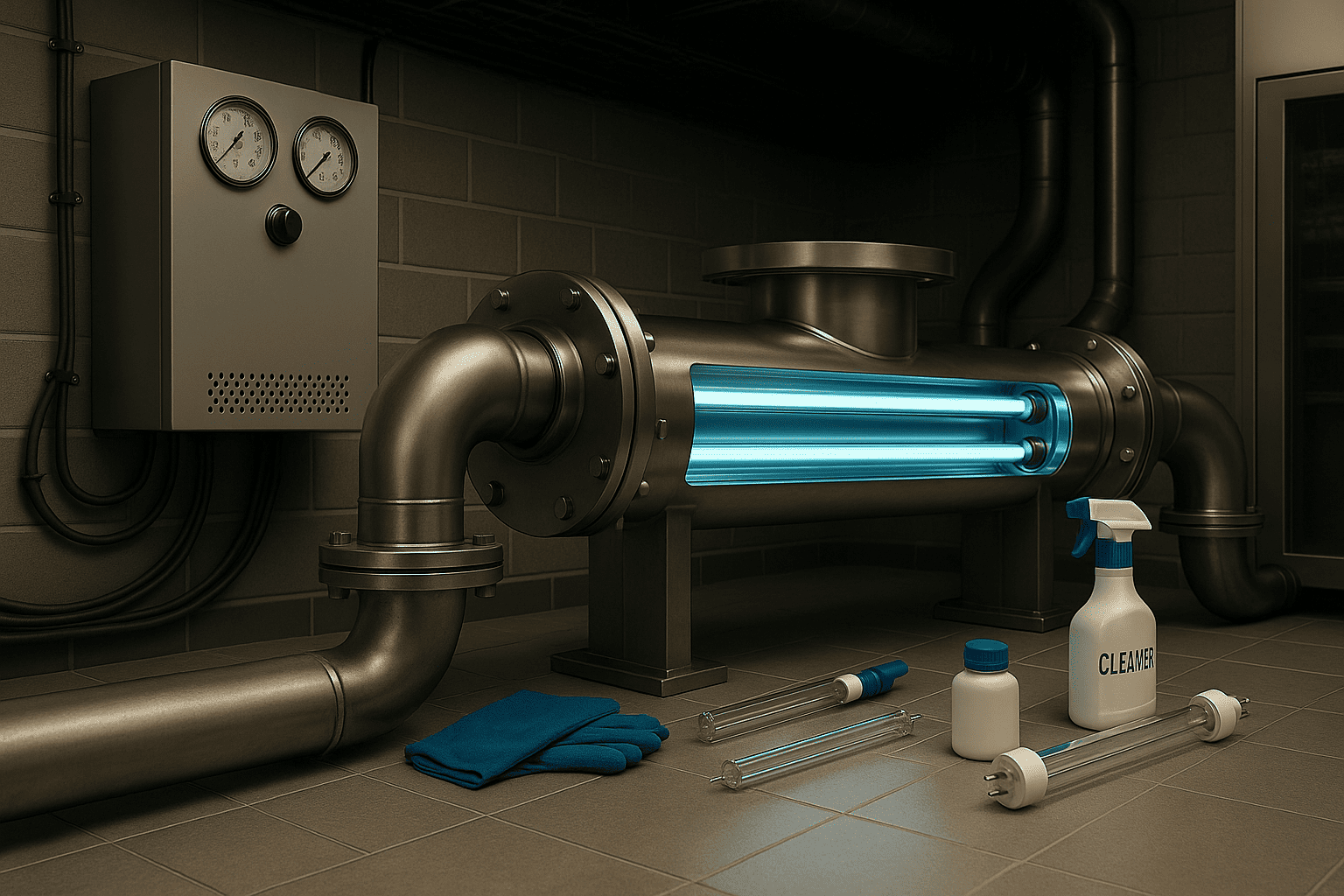 UV Disinfection System Maintenance in Wastewater - UVL
But Does It Kill Everything?
Short answer: No, and that’s fine. UV light is fantastic for protozoa, bacteria, and viruses. But it leaves behind some harmless microorganisms—your friendly neighborhood bacteria that help with digestion. “So you’re telling me UV is picky?” You bet. It’s the circle-of-life filter: it kills the bad guys and gives a free pass to the good guys who live on your skin. You know who doesn’t get a pass? Giardia. That parasite is so dramatic it once delayed a 2020 marathon in Sweden because 200 runners got infected from a single water station. UV would’ve stopped that faster than you can say “Porta-Potty shortage.”
And here’s the kicker: UV systems are now small enough for your kitchen sink. Companies like Hydro-Pro and Crystal Blue sell countertop units that look like a sleek sci-fi water cooler. They plug into your faucet, hum quietly, and turn your tap water into a protozoa-free zone. It’s the home security system for your intestines. One reviewer joked, “I used to give my water the side-eye. Now I give it a nod of respect—after blasting it with UV.”
The Future: UV Wars
Scientists are now designing solar-powered UV systems for developing countries. A 2022 trial in Kenya showed these devices cut childhood diarrhea by 45% in six months. That’s 45% less crying, 45% fewer hospital visits, and 45% more time for parents to ask, “Who left the toilet seat up?” The same tech is being miniaturized for backpacking bottles. Imagine drinking from a stream and not spending the next week in a tent with a camp shovel—that’s the dream UV delivers.
So next time you take a sip of water, remember: there’s an invisible army of UV photons doing push-ups to protect your gut. They have no mercy, no coffee breaks, and no patience for protozoa. If you ever meet a parasite in a bar—and I hope you don’t—tell it that UV is waiting. It’ll understand. Probably while glowing.
