Reliable Di Water Systems For Healthcare Applications

Ever wonder what’s in that sparkling clean water at the hospital? Hint: it’s not just tap water. It’s ultra-pure DI water—and it’s basically a tiny, hardworking superhero. Yo...
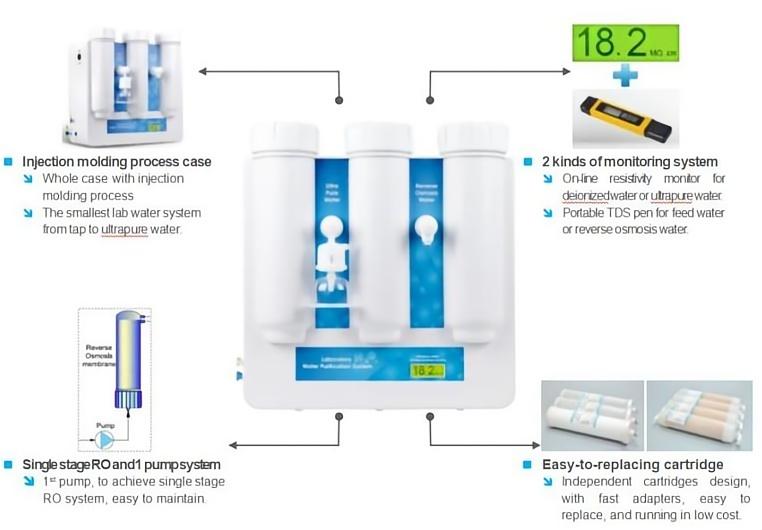
Ever wonder what’s in that sparkling clean water at the hospital? Hint: it’s not just tap water. It’s ultra-pure DI water—and it’s basically a tiny, hardworking superhero.
You know, DI stands for deionized. Fancy word for “we zapped all the ions out.” Think of it as water that went to boot camp and came back pristine.
Why Hospitals Are DI Water’s Biggest Fan
Healthcare runs on this stuff. It’s used in sterilizers, lab tests, and even kidney dialysis machines. Without it, yikes—think rusty pipes, weird reactions, or bad patient outcomes.
Must Read
Fun fact: a single drop of impure water can ruin an entire batch of lab results. That’s like putting ketchup on a wedding cake—just wrong.
DI water is so pure, it conducts electricity almost like a glass of air. Yeah, it’s weird. It’s also why you can’t drink it straight (it’s too thirsty for your body’s minerals).
The Quirky Science Behind the Clean
How do you make water this fussy? Simple: you run it through resin beads. These beads act like tiny magnets, grabbing calcium, magnesium, and other ions as they zoom by.
Picture a bouncer at a club. The beads say, “Sorry, ions—no entry.” Only the pure H2O gets through. It’s a molecular VIP list.
One funny detail: the resins eventually get exhausted from all that grabbing. When they’re full, the system has to “regenerate” them—like napping after a huge buffet.
Why Reliable Systems Are a Big Deal
Hospitals can’t afford a dropout. A failing DI system means surgery delays, broken analyzers, or gasp—a coffee machine that spits out sludge. (Okay, not that last one, but still.)
Reliable systems use real-time monitors. They buzz, beep, or text you if purity falls below 18.2 megohm-cm. That number is the gold standard—pure enough to make a chemist weep.
And get this: some systems self-clean with UV light. It’s like giving the water a spa day, except it’s fighting bacteria instead of relaxing with cucumbers.
Funny Facts to Impress Your Friends
Did you know DI water is used to rinse surgical tools? That’s so no mineral residue remains to infect a patient. Literally scrub nurse approved.
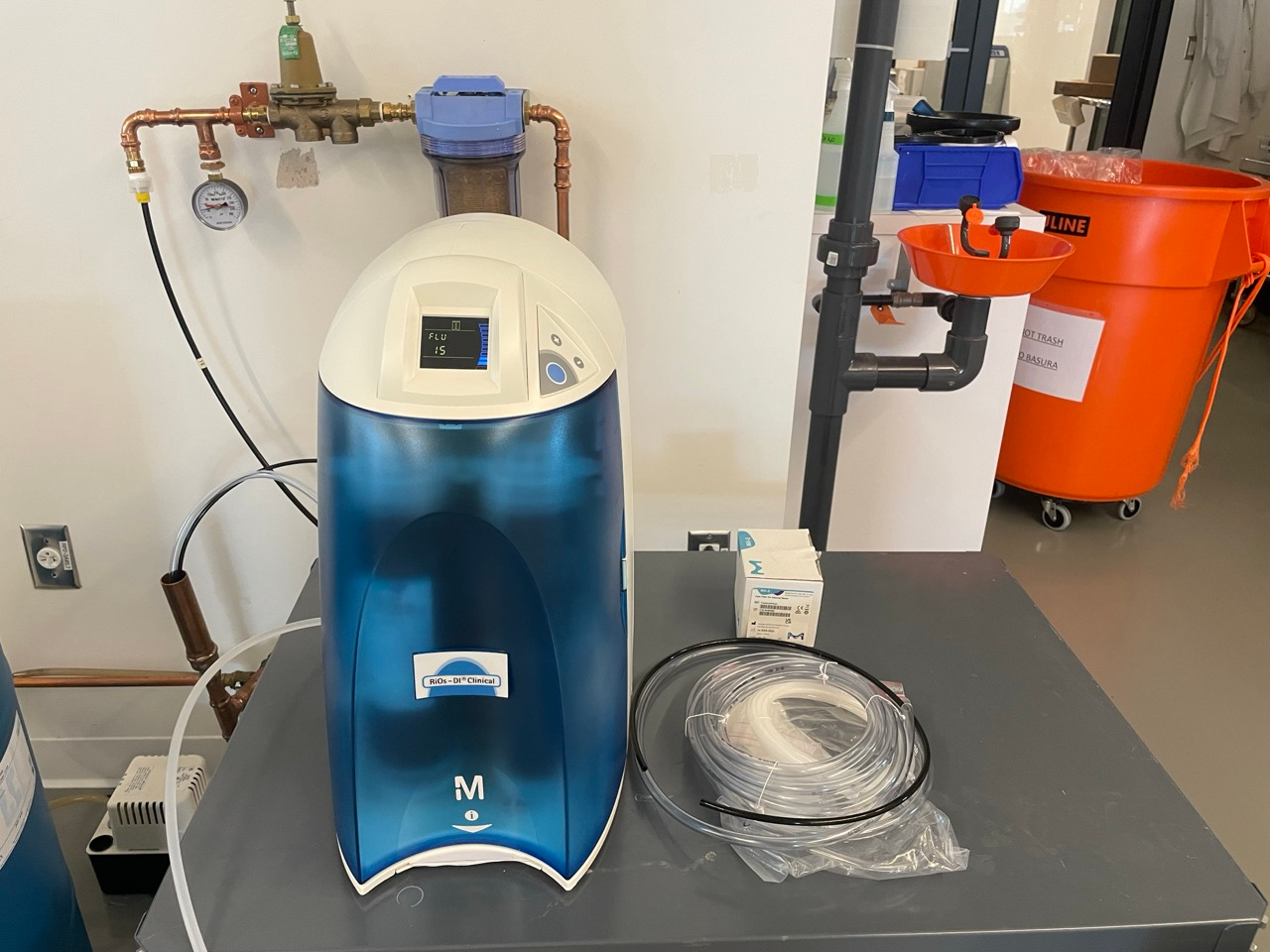 Merck Millipore RIOS-DI Clinical Water Purification System | LabX.com
Another wild one: some hospitals use it to fill humidifiers in NICU incubators. Preemies get a spa-like mist, minus the chlorine taste. It’s adorable and scientific.
And here’s a party trick: if you drop a metal wrench into DI water, nothing happens. No rust, no reaction. It’s like the wrench is in a friendly, non-judgmental pool.
The Hidden Heroes: Installation and Maintenance
Installing a DI system is like building Lego for adults. You’ve got pipes, tanks, sensors, and a control panel that looks like a spaceship dashboard. Nerdy? Yes. Fun? Very.
Maintenance is equally quirky. Technicians use conductivity meters that look like magic wands. They wave them over the water and—beep—they know if it’s pure enough.
One dude told me he once found a dead mouse in a storage tank. That’s why you need filters before the DI step. Lesson: nature is messy.
Why You Should Care (Even If You’re Not a Nurse)
Next time you get a blood test, thank DI water. It’s the silent partner in your good health. It doesn’t ask for thanks—just a steady flow of electricity-free molecules.
Plus, DI water systems are surprisingly green. They recycle waste stream back into the supply, saving thousands of gallons a year. That’s like your car running on recycled coffee—eco and cool.
So, the next time you see a bottle labeled “purified water,” remember: it’s not just fancy. It’s lifesaving. And a littlebit weird.
And if you’re ever at a hospital, ask to see the DI system. Just don’t touch anything. Those pure water droplets are not for drinking—they’re for science.
And maybe for a very, very clean coffee maker. But that’s just my theory.
