Difference Between Distilled Water And Deionized Water

Let’s be honest: when you first heard “distilled water” and “deionized water,” you probably pictured two very serious scientists in lab coats nodding at each other. Not exactl...
Let’s be honest: when you first heard “distilled water” and “deionized water,” you probably pictured two very serious scientists in lab coats nodding at each other. Not exactly thrilling stuff, right? But hold on—this isn’t just chemistry class trivia. Understanding the difference can actually make your coffee taste better, save your kettle from scale, and even make you feel like a secret kitchen wizard. Ready to dive in? Let’s go!
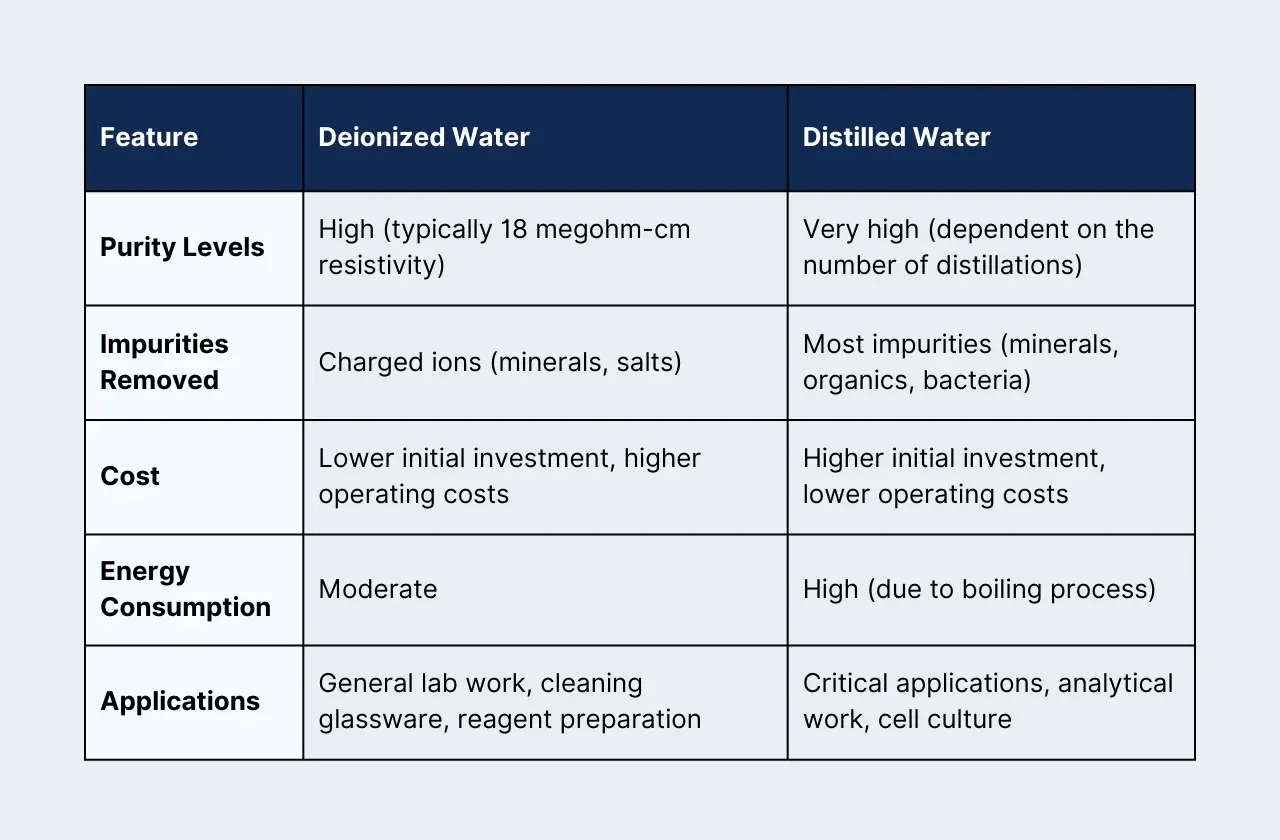
At their core, both distilled and deionized water are incredibly pure. They’ve kicked out the impurities—minerals, salts, and other unwanted guests. But here’s the fun twist: they use totally different methods to get there. Think of it like cleaning your house: you can either steam-clean everything (distillation) or use a super-powered magnet to yank out every speck of dust (deionization). Two paths, one sparkling goal.
Distilled Water: The Old-School Classic
Distillation is the original purification method—ancient, reliable, and honestly a little dramatic. You boil water until it turns into steam, then catch that steam and cool it back into liquid. All the heavy minerals, bacteria, and salts stay behind, left in the pot like soggy party crashers. Poof! They’re gone.
Must Read
What you get is water that’s almost too pure for its own good. It’s fantastic for steam irons, car batteries, and medical uses where you want zero mineral interference. But here’s the kicker: distilling takes a lot of energy. Boiling water for hours isn’t exactly eco-friendly or quick. And your electric bill? Not thrilled.
Still, there’s something satisfying about knowing you’ve literally “evaporated” the impurities. It’s like alchemy, but for your morning tea. Just be warned—distilled water tastes flat to some people. Why? Because those trace minerals that give water its “zip” are gone. Flat water, flat personality? Maybe. But it sure is clean.
Deionized Water: The High-Tech Wizard
Deionization (DI) is the modern superstar. No boiling, no steam. Instead, water flows through special resins that act like super-attractive magnets for ions—the charged particles in minerals like calcium, magnesium, and sodium. Snap! They’re trapped. What flows out is water that’s even purer than distilled in some ways.
Here’s where it gets cool: DI water is a champion at removing dissolved salts that distillation sometimes leaves behind. That’s why labs, pharmaceutical companies, and even car detailers love it. Want perfect, streak-free windows? Deionized water is your secret weapon. No spots, no residue. Just gleam.
But—yes, there’s a “but”—DI water is aggressively pure. It will literally try to steal ions from whatever it touches, including metal pipes or your skin. That’s why you don’t drink it as your daily go-to. Your body needs those minerals, right? So DI is more for equipment, not for sipping.
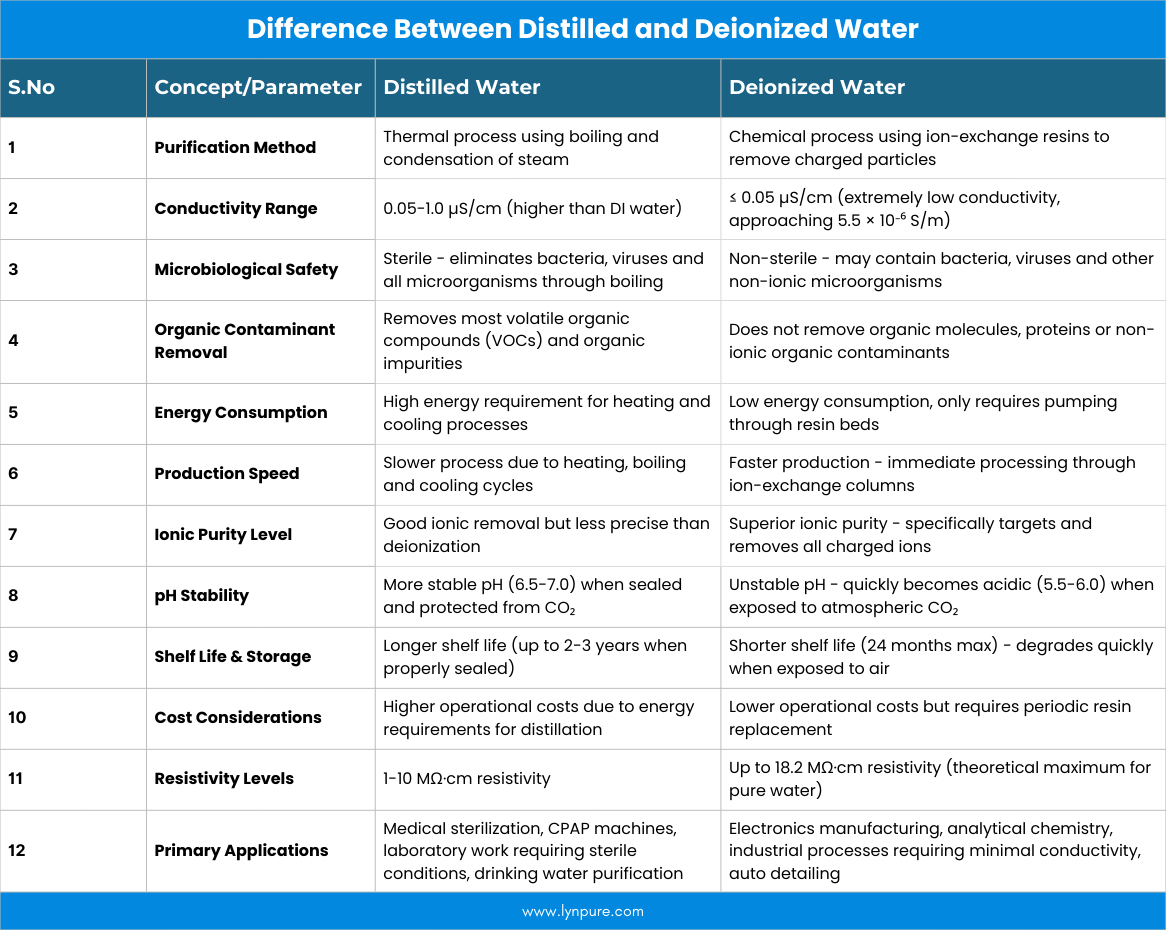 Distilled Water vs Deionized Water | Key Differences
The Big Showdown: Which One Wins?
So, distilled vs. deionized—who takes the crown? Spoiler: it depends on your mission. Need water for a lab experiment where even a speck of salt ruins everything? Go deionized. Need water for a steam iron that won’t clog with scale? Distilled is your buddy. Different tools for different jobs.
Here’s a fun fact: you can actually have water that’s both distilled and deionized. That’s called “Type 1” water, and it’s the purest stuff on Earth. It’s used in cutting-edge science and… honestly, it’s overkill for your coffee maker. But isn’t it cool that something so clean exists?
Don’t stress about choosing the “perfect” one. Most of us can be happy with regular tap water for everyday drinking. But now you know: if you ever need water that’s practically naked—no minerals, no ions, no drama—you’ve got two ways to get it. And that knowledge? That’s power.
So next time you see a bottle labeled “distilled” or “deionized,” give it a little wink. You know the story behind the sparkle. And maybe, just maybe, you’ll feel a tiny bit more like a water-savvy superhero.
Here’s the uplifting part: life is full of these hidden differences—small things that make a big impact when you understand them. Whether you’re boiling water into steam or zapping away ions, the journey matters. Keep asking questions. Keep being curious. Because every time you learn something new—even about something as simple as water—you’re making the world a little brighter. Cheers to that.
