How Often Should I Replace My Refrigerator Water Filter

Let’s be honest: your refrigerator’s water filter is probably the most forgettable member of your kitchen team. It’s like that friend who shows up to the party, stands quietly...
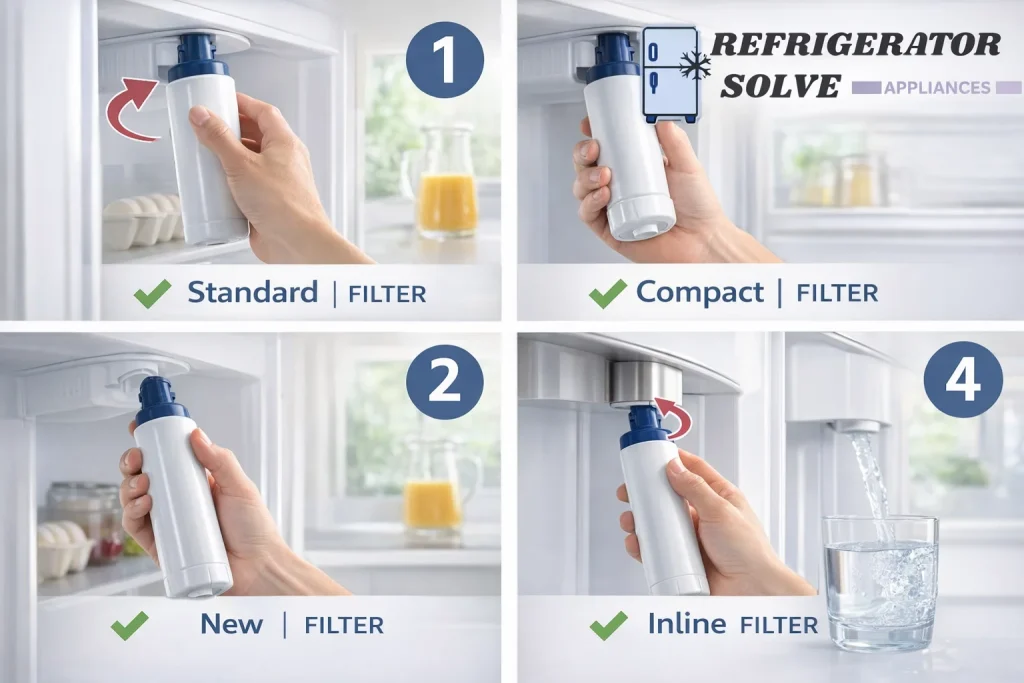
Let’s be honest: your refrigerator’s water filter is probably the most forgettable member of your kitchen team. It’s like that friend who shows up to the party, stands quietly in the corner, and then leaves without saying goodbye. You only remember it exists when the water starts tasting like you’re licking a wet cardboard box. That, my friend, is the universal signal: it’s time for a chat about replacement.
The Manufacturer’s Fairy Tale (and Why You Should Ignore It)
Every fridge manual chirps a perfect little tune: “Replace filter every six months!” Yeah, sure. And I’m supposed to floss every day too. In reality, that number is a marketing dream, not a kitchen reality. Your water quality—and your filter’s lifespan—depend on how much crud is in your local tap water.
If you live somewhere with water so hard it could arm-wrestle a diamond, that filter is going to tap out early. Think of it like a sock: one dip in muddy water, and it’s done. If your water is relatively soft and clean, you might stretch that six-month rule to nine or even twelve months without turning your ice cubes into weird, chalky lozenges.
Must Read
The “Taste Test” – Your Irreplaceable Judge
Here’s the most scientific method I know: fill a glass, take a sip, and ask yourself, “Do I want to drink this, or would I rather lick a rusty fence?” If the water tastes like a memory of old lettuce, it’s time. Don’t overthink it. Your taste buds are the only expert that matters.
That weird, metallic, or “dirty aquarium” flavor is the filter shouting, “I’m full! I can’t trap any more weirdness!” It’s basically a sponge that’s soaked up every pesticide, chlorine burp, and mineral hanger-on from your pipes. Once it’s saturated, it starts releasing that gunk back into your water. Gross, right?
The Visual Clues: A Drama Unfolds
Sometimes your fridge gives you a drama queen warning. If the water stream has slowed to a sad, dribbly whimper—like a toddler who’s been told “no” one too many times—your filter is clogged. It’s trying, bless its heart, but the pores are all stuffed up with calcium and silt.
Other times, that little red or orange light on your fridge panel starts blinking. Look, that light is smarter than you think. It’s not just a nag—it’s a built-in timer. If yours has one, obey it. It’s literally counting the gallons. Ignoring it is like ignoring a check engine light because you think the car sounds “interesting.”
The “Weird Ice Cubes” Incident (A Personal Story)
Last summer, I discovered my ice cubes had developed a personality—specifically, a faint, powdery, gray “dust” on top. I thought my freezer was haunted. Nope. The filter was so old that the carbon block had started to break down. My ice was literally shedding filter particles. I was basically making ice from a broken Brita. Please, don’t let that be you.
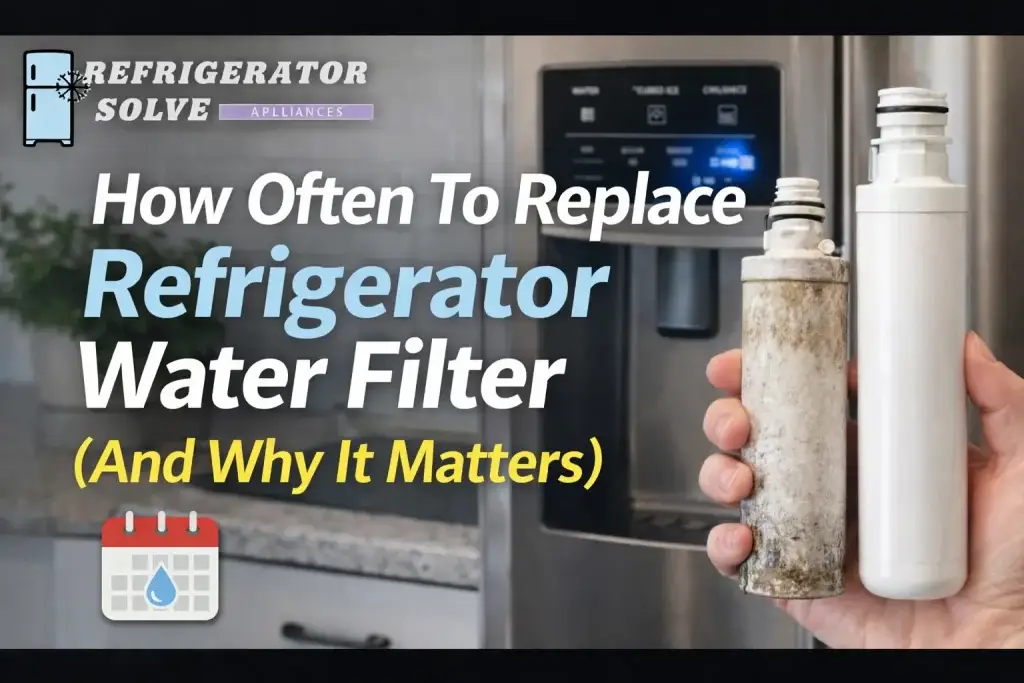 How Often to Replace Refrigerator Water Filter (And Why It Matters)
If your ice looks cloudy or has a weird film, don’t shrug it off. Your filter is past the point of no return. Replace it before you start wondering if your drink is sparkling water or just sparkly with regret.
So, The Real Answer (Finally)
Okay, here’s the easy-going rule of thumb: every 6 months is a safe bet if you want to feel like a responsible adult. But if you’re lazy like me, aim for every 9 to 12 months—as long as the water still tastes clean and flows fast. Mark a date on your calendar, or better yet, buy a pack of filters on Amazon right now and toss one in the pantry. Future You will be stunned by your foresight.
Don’t trust a filter that’s lived through two presidential elections. It’s not a vintage wine; it’s a glorified carbon brick that eventually becomes a petri dish. Swap it out, and you’ll instantly remember what crisp, fresh, “why did I wait so long” water tastes like.
A Final, Friendly PSA
One more thing: when you do replace it, flush it for 5 minutes. That new filter is packed with carbon dust and manufacturing grease. Drink that first batch, and you’ll be tasting a mouthful of “factory floor.” Run the water until it runs clear. Then thank yourself.
And seriously, if your fridge is more than ten years old, double-check the model number. Some filters are absurdly expensive. If you find yourself paying $60 for a piece of plastic that’s smaller than a soda can, maybe just buy a pitcher filter. No shame in that game. Your wallet will thank you, and your water will still taste like water—not a chemistry experiment gone wrong.
Now go forth, replace that forgotten guardian of your hydration, and raise a glass of non-cardboard water to your own good sense. Cheers. You earned it.
