What's The Difference Between Distilled And Deionized Water

Let’s be honest: you probably don’t spend your weekends pondering the molecular gossip inside your tap water. But here’s the twist—you should care. Because “pure” water is a g...
Let’s be honest: you probably don’t spend your weekends pondering the molecular gossip inside your tap water. But here’s the twist—you should care. Because “pure” water is a glorious, complicated liar.
The Great Water Makeover
Imagine water as a teenager trying to find itself. Tap water is the messy version—full of minerals, salts, and random bits of stuff. Distilled and deionized water are the two popular “clean” versions. But they’re not the same.
One is a drama queen that boils its problems away. The other is a geek who uses electricity to kick out unwanted guests. Both result in H₂O that’s almost too clean for its own good.
Must Read
Distilled Water: The Hot-Tempered Snob
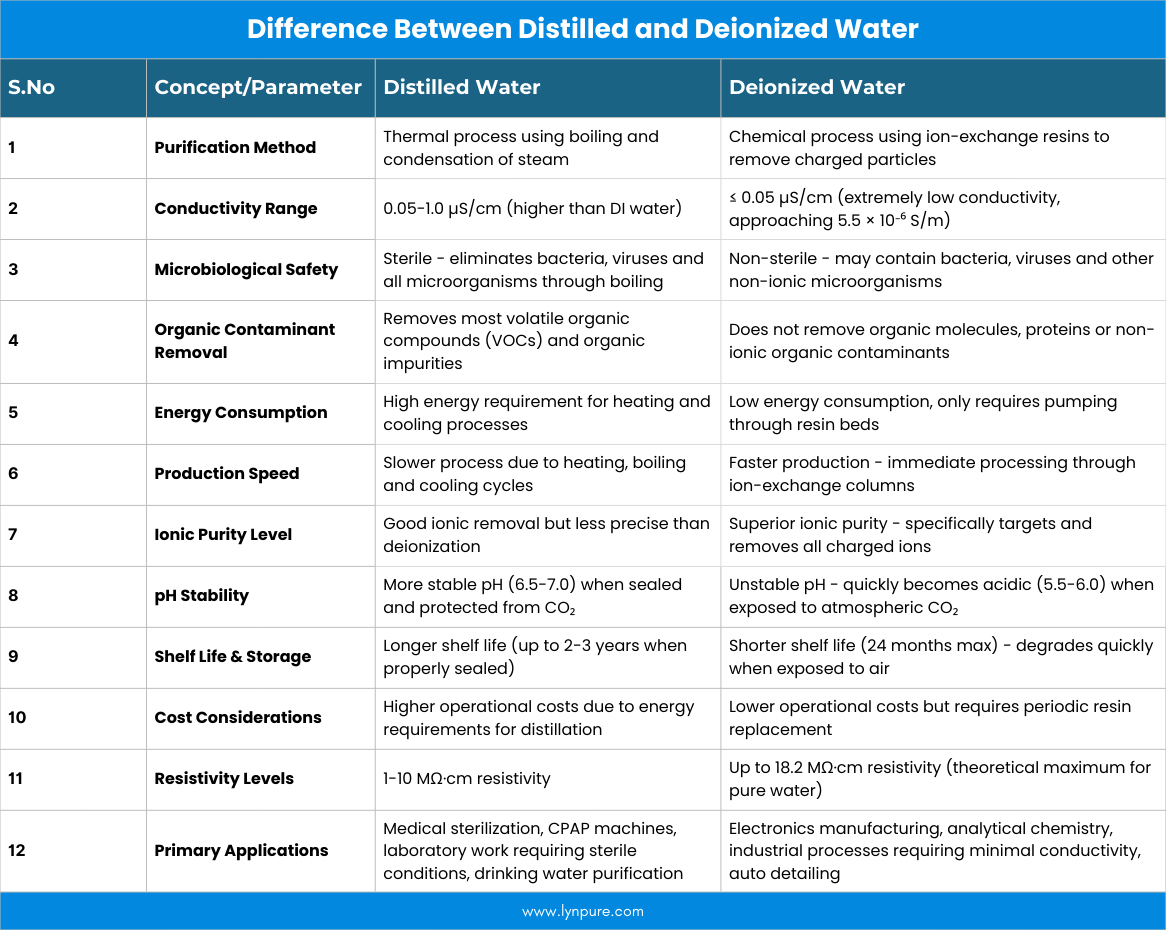
Distilled water is the water you’d find at a fancy spa if spas were run by mad scientists. It’s made by boiling water until it turns into steam, then cooling it back into liquid. The minerals stay behind, like guests who refuse to leave the party.
Here’s the funny part: distilled water is so “pure” it’s actually a little hungry. It will try to steal carbon dioxide from the air, making it slightly acidic. That’s why some people say distilled water tastes “flat.” It’s literally missing the flavor of life.
Quirky fact: Your iron or steam mop loves distilled water. Why? Because hard water leaves white mineral crust that looks like alien dandruff. Distilled water prevents that. Your appliance becomes a smooth operator.
Deionized Water: The Electrifying Clean Freak
Deionized (DI) water doesn’t boil anything. Instead, it runs through special resins that act like magnets for charged particles. It yanks out all the ions—positive and negative—like a bouncer at a VIP club. Only H₂O stays.
But here’s the wild twist: DI water is terrifying to some materials. It can corrode metal pipes because it’s so desperate to steal ions back. In a lab, it’s a hero. In your copper plumbing, it’s a silent villain.
Fun fact: Pure deionized water doesn’t conduct electricity well. But give it one tiny pinch of salt, and bam—it becomes a shocking conductor. It’s like a shy person who suddenly becomes a party animal.
The Smackdown: Distilled vs. Deionized
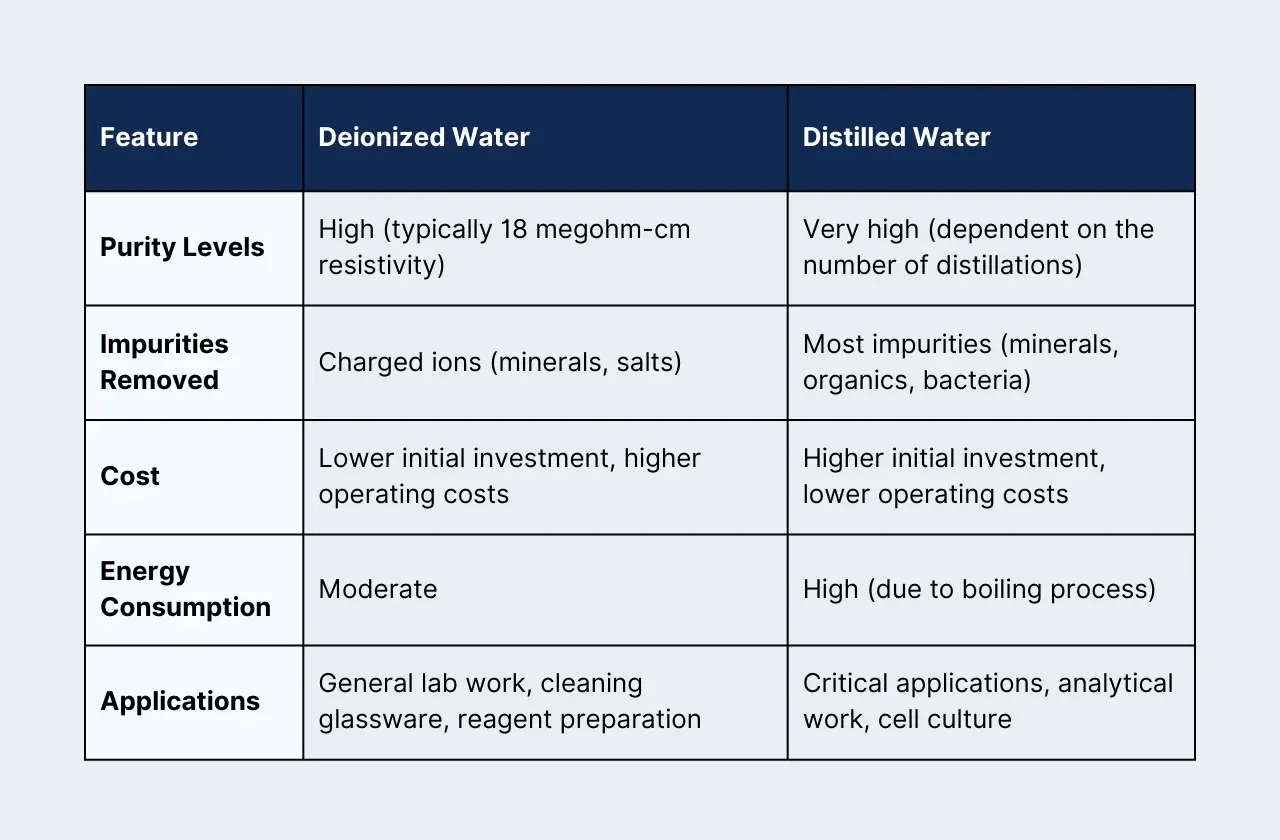
Here’s the real difference in two sentences: Distilled water is made by heat and patience. Deionized water is made by chemistry and hustle.
Distilled water removes minerals, bacteria, and even some viruses (if you boil long enough). Deionized water only removes ions, which means it leaves behind bacteria, viruses, and uncharged particles. So DI water isn’t necessarily sterile—it’s just electrically boring.
Think of it this way: distilling is like sending your house guests through a high-speed luggage scanner. Deionizing is like zapping them with a static shock until they drop their keys.
 Distilled Water vs Deionized Water | Key Differences
Which One Should You Drink?
Short answer: neither, in the long term. Your body needs those minerals. Drinking only distilled or DI water is like trying to survive on air kisses and silence. Your cells will rebel.
But for coffee? Distilled water makes a crisper brew. For aquariums? Deionized water is a lifesaver for exotic fish. For your car’s battery? Distilled water is the gold standard.
And if you ever see a scientist sprinkle a pinch of salt into a cup of deionized water just to watch a light bulb glow? That’s not magic. That’s science showing off its amateur dramatics.
The Weirdest Thing About Both
Here’s the ultimate irony: pure water is dangerous to your ears. Seriously. If you swim in a pool so pure it’s distilled, the water will suck ions out of your ear cells. That’s why swimmers get “surfer’s ear”—it’s not just the pressure, it’s the water’s thirst.
Also, distilled water can explode in a microwave. Well, not explode—but it superheats below boiling point, then erupts when you touch it. It’s like a silent water ninja that waits to strike.
Deionized water is equally dramatic. If you pour it over a speaker, it can dissolve the glue. Some people use it to clean electronics because it leaves zero residue. But never, ever drink it straight. Your taste buds will cry “where’s the flavor?!”
So… What’s the Point?
The point is this: water is never “just water.” It’s a character. Distilled is the stoic loner. Deionized is the hyper-reactive extrovert. Both are weirdly fascinating.
Next time you sip tap water, remember—you’re drinking a mineral cocktail that’s billions of years old. Distilled water tastes like the memory of rain. Deionized water tastes like a blank piece of paper.
And if someone tries to tell you they’re the same? Laugh. Then point out that one boils with rage, and the other shocks for a living. That’s a difference worth wetting your brain over.
