Expert Deionization System Designers For Healthcare Facilities

Ever had that moment when you’re making coffee, and the tap water tastes like a distant cousin of a swimming pool? Now imagine that, but for a hospital. That’s where expert de...
Ever had that moment when you’re making coffee, and the tap water tastes like a distant cousin of a swimming pool? Now imagine that, but for a hospital. That’s where expert deionization system designers come in—they’re basically the water whisperers of the healthcare world.
Think of them as the plumbers who went to finishing school. While you and I just grumble about hard water spots on our glasses, they’re figuring out how to make water so pure it could almost be used as a prop in a sci-fi movie. For hospitals, using regular tap water for things like lab tests or cleaning surgical tools is like bringing a butter knife to a sword fight—it just won’t cut it.
See, hospital machines are divas. Dialysis units, sterilization autoclaves, and lab analyzers throw a fit if a single stray mineral floats by. A good deionization system is like a velvet rope at a nightclub, keeping out the “unwanted guests”—like calcium, magnesium, and other troublemakers—so the equipment can party all night without getting finicky.
Must Read
Why Your Morning Shower Isn’t the Same
You know that feeling when you step out of the shower and your skin feels like you just rubbed it with sandpaper? That’s hard water’s fault. In a hospital, that buildup isn’t just annoying—it can destroy expensive valves and damage sensitive diagnostic machines.
Expert designers don’t just throw a filter in a corner. They map out the entire facility’s water flow like a general planning a battle, but with way less yelling and more water conductivity meters. They know exactly where a single drop of impure water could cause a headache the size of a conference room.
It’s Like a Custom Suit for Your Pipes
I once watched a design team discuss pH levels for an hour, and I swear it was more riveting than that time my cousin tried to explain cryptocurrency. They talked about resin beds and reverse osmosis like chefs talking about a secret sauce. “We need a two-bed deionizer here,” one said, “and a mixed-bed there for the pharmacy.” I nodded along, pretending I wasn’t picturing a water spa for tiny molecules.
The best part? These engineers design systems that account for peak demand. You know when your entire family showers at once, and the water pressure turns into a tragic drizzle? Hospital designers plan for hurricane-force usage: two dozen surgeries, a lab running tests, and a steam sterilizer going nuts—all at 7 AM on a Monday.
Failure is not an option. If the water goes bad, patient care does too. That’s why these designers install monitoring systems that beep like a grumpy robot when conductivity spikes even a tiny bit. They even add backup tanks, so if the main system takes a nap, the hospital just keeps humming along.
The Real-World Magic of Deionized Water
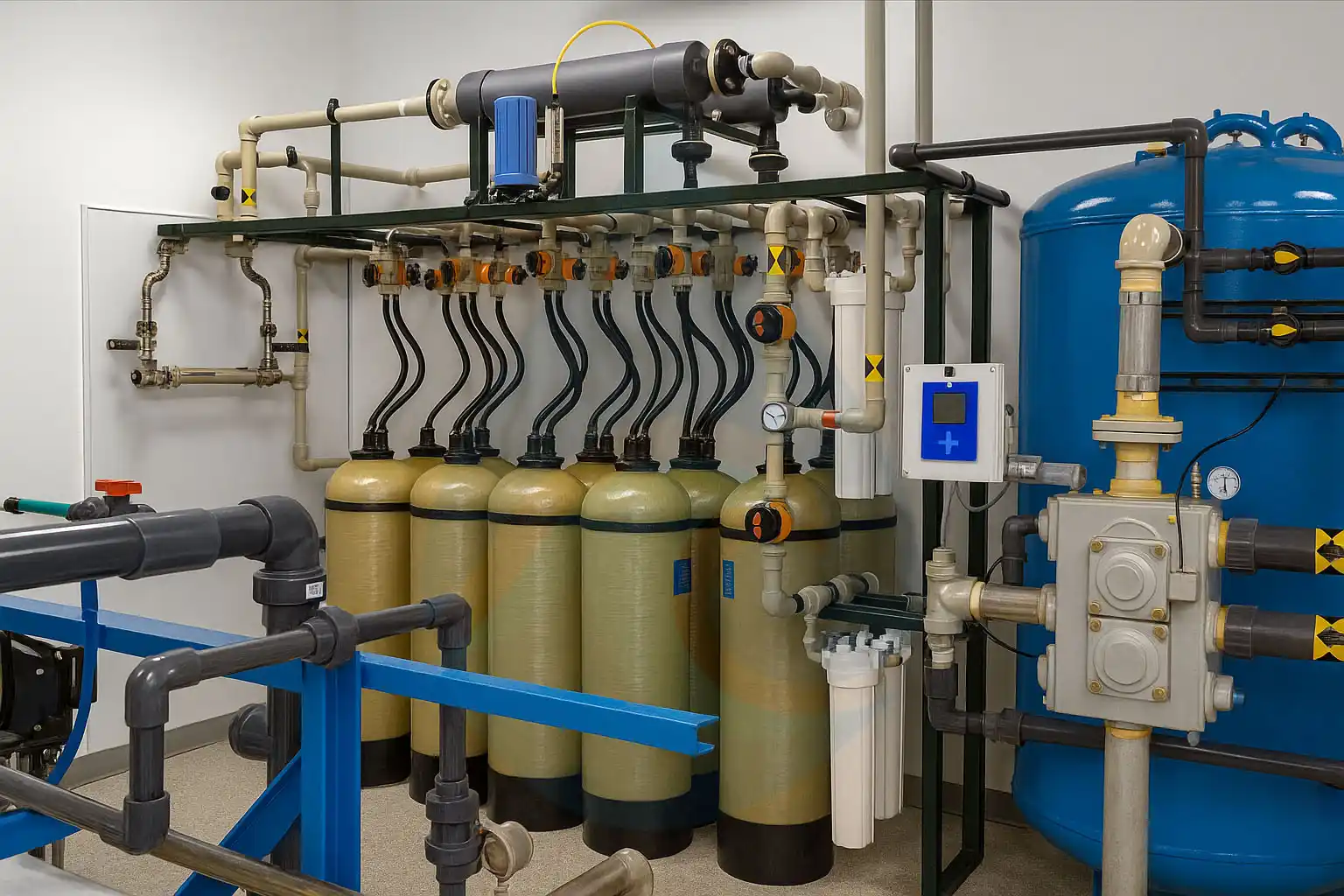
I once visited a hospital where the maintenance guy showed me the deionization room. It was spotless, with pipes that gleamed like a showroom floor. He told me, “This water is so pure, it literally wants to eat minerals out of the pipes. We have to use special materials just to keep it from corroding everything.”
 Deionization Systems – Trionetics
That’s the level of detail these designers obsess over. They choose materials like PVC, stainless steel, or polypropylene based on how “hungry” the water gets. It’s like building a cage for a water wolf—you don’t use cardboard.
And here’s a funny truth: the same technology that makes hospital water ultra-pure is what your local car wash brags about, but on steroids. Your car gets a gentle rinse; a hospital’s system can strip away ions until the water has a resistivity of 18.2 megohm-cm. That’s so clean it could probably apologize for being born.
How They Save You from a Plumbing Meltdown
Without an expert designer, you might end up with a system that clogs faster than a teen’s internet browser history. I heard a story about a facility that bought a cheap system online, and within three months, the membrane was so scaled up it looked like a coral reef. The fix cost twice as much as a proper design.
These pros also think about future expansion. They add extra ports and bypasses, so when the hospital buys a new MRI or a fancy autoclave, they don’t have to rip out walls. It’s like buying a house with extra outlets—you don’t know you need them until you need them at midnight.
Bottom line? Expert deionization system designers are the unsung heroes who make sure healthcare facilities get water so clean it makes bottled spring water look like a muddy puddle. They save hospitals from constant repairs, screaming lab techs, and the kind of water-related chaos that would make your home’s hard water look like a walk in the park.
So next time you drink a glass of tap water at home, just be grateful your heart doesn’t need it to be 18.2 megohm-cm pure. And if you ever meet one of these designers, buy them a coffee—preferably with water so soft it apologizes for being wet. They deserve it.
