What's The Difference Between Distilled Water And Purified Water

You’re standing in the water aisle at the grocery store, staring at two identical-looking jugs. One says distilled, the other says purified. Your brain short-circuits. Are the...
You’re standing in the water aisle at the grocery store, staring at two identical-looking jugs. One says distilled, the other says purified. Your brain short-circuits. Are they the same? Did one get a fancy diploma?
Relax, I’ve got you. Let me pour you a glass of clarity—with a splash of humor. By the end of this, you’ll be the smartest person at the next boring dinner party.
The Short & Sparkling Answer
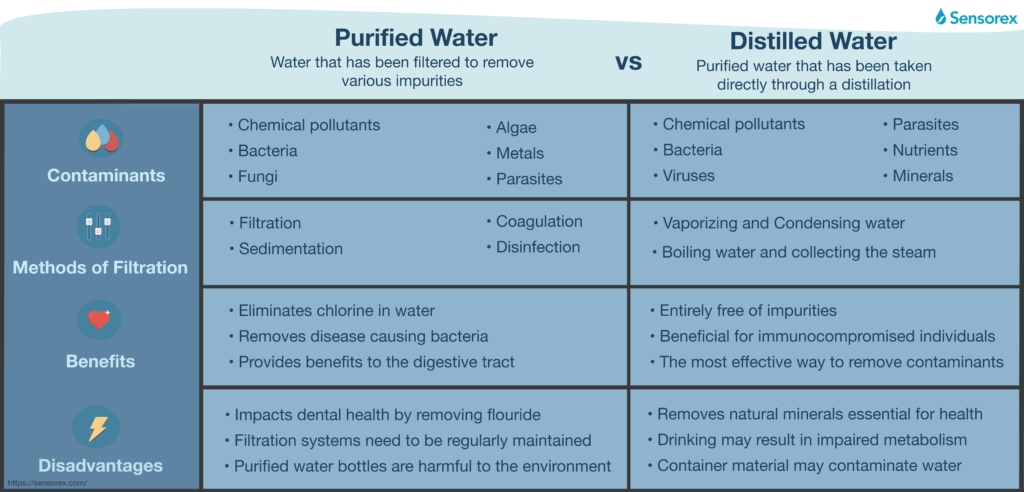
Purified water is the overachiever who uses any method to strip out bad stuff: reverse osmosis, carbon filters, ultraviolet light—whatever it takes. Distilled water is the renaissance purist who only uses one ancient trick: boil it into steam, then condense it back.
Must Read
Think of it this way: purified water is like a chef using every gadget in the kitchen. Distilled water is like your grandpa using a cast-iron skillet and fire.
Both kick impurities out. But distilled water takes the process to a dramatic, almost theatrical level.
How Distilled Water Works (The Drama Queen in the Lab)
Distillation is the oldest water-cleaning trick in the book—literally. Ancient Greeks did it. You boil water until it turns into steam, leaving all the gunk (minerals, bacteria, heavy metals, your ex’s bad vibes) behind in the pot.
Then you catch the steam, cool it down, and—voilà—you have distilled water. It’s so pure it’s almost aggressively clean.
Fun fact: distilled water is so pure that if you leave it in a metal container for too long, it will eat the metal. It’s like a liquid ninja that attacks everything it touches.
Surprising Fact #1: Distilled water tastes like nothing—and I mean nothing
That’s because all the minerals that give tap water its “flavor” (calcium, magnesium, the faint hint of municipal pipe) are gone. Drinking distilled water is like kissing a ghost. It’s unnervingly blank.
Some people hate it. Others love it because it’s the purest water you can get. But don’t drink it for months on end—you’ll leach electrolytes out of your body. That’s a real thing. Your cells will start sending you passive-aggressive text messages.
How Purified Water Works (The Swiss Army Knife)
Purified water is a team player. It uses a combo of methods: reverse osmosis (pushing water through a membrane), carbon filtration (trapping chlorine and bad tastes), and sometimes UV light (zapping bacteria into oblivion).
It’s not as dramatic as distillation, but it’s incredibly effective. Most bottled water you buy is purified, not distilled, because it’s cheaper and faster.
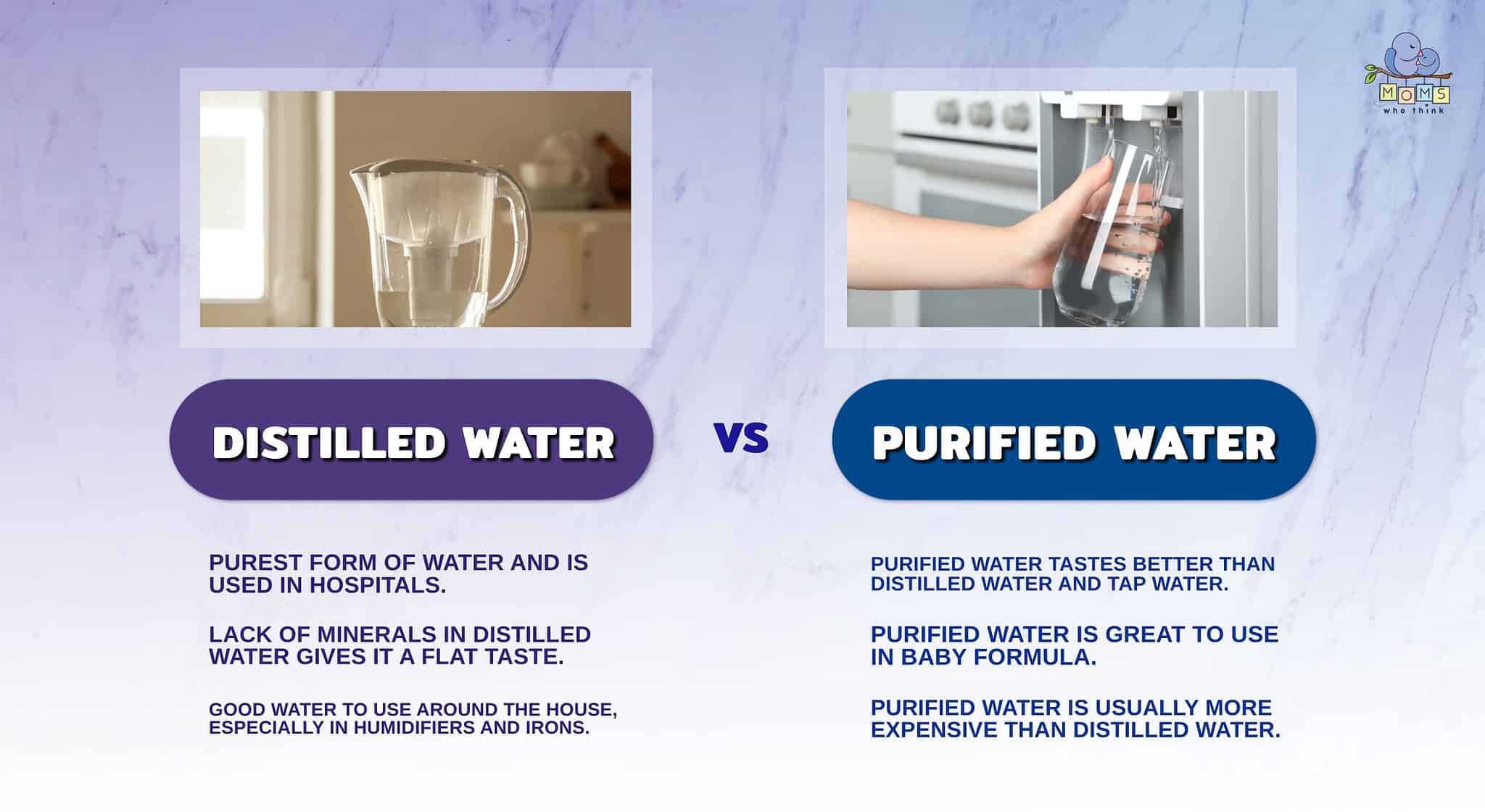
Here’s the kicker: purified water can contain up to 10 parts per million of dissolved solids. Distilled water has less than one. So if water purity were a boxing match, distilled would be the heavyweight champion—but purified is the crowd favorite.
 Distilled vs. Purified Water: 4 Differences & Health Benefits
Surprising Fact #2: Your tap water is technically “purified” already
Municipal water treatment uses filtration, chlorine, and UV light. So technically, you’re probably drinking purified water right now. But unless you live in a mountain village with a secret spring, your tap water still has trace amounts of chloramine, lead, and microplastics.
That’s why people buy the jugs. It’s like upgrading from a bus pass to a first-class seat. Same destination, but fewer weird smells.
When To Use Which (And When To Just Drink The Tap)
Use distilled water for your iron, your humidifier, your car’s battery, or your expensive espresso machine. Minerals in tap water will scale up those devices like a Victorian mansion. Distilled keeps them pristine.
Use purified water for drinking, cooking, and making coffee. It tastes better than distilled (because it retains a whisper of minerals) and won’t steal electrolytes from your breakfast.
Oh, and never water your plants with distilled water. They’ll die. Plants need those minerals. You’ll just have a pot of dirt and a crying succulent.
Surprising Fact #3: Distilled water is the same stuff clouds are made of
Think about it: rain is nature’s distillation. The sun heats the ocean, water evaporates (leaving salt and gunk behind), forms clouds, and then precipitates clean water. So next time you drink distilled water, you’re basically drinking rain in a bottle.
Except rain also picks up pollution on the way down. Distilled water is rain that went to a fancy spa before it hit the glass.
The Final Verdict (Because You’re Still Holding That Jug)
If you need water that is chemically pure—for science experiments, medical gear, or impressing your chemistry-major friend—grab the distilled jug. It’s the overachiever.
If you need great-tasting, clean water to drink and cook with, purified is your go-to. It’s the practical winner.
And if you’re ever in doubt? Just remember: both are better than that weird-tasting tap water from the office fountain that smells faintly of swimming pool and regret. Stay hydrated, you beautiful, water-confused human.
