What Percentage Of The Older Population Are Chronically Dehydrated

Let’s talk about something we all do every single day: drink water. Or, more accurately, let’s talk about the times we don’t. You know the feeling—noon rolls around, and you r...

Let’s talk about something we all do every single day: drink water. Or, more accurately, let’s talk about the times we don’t. You know the feeling—noon rolls around, and you realize that coffee from 7 AM is the only thing that’s touched your lips. Imagine feeling that way, but for weeks on end.
That’s not just a bad day. That’s chronic dehydration. And it hits our older loved ones harder than you might guess. So, what percentage of the older population are chronically dehydrated? Prepare to raise your eyebrows: studies suggest that between 20% and 30% of older adults are living in a state of chronic, low-grade dehydration. That’s roughly one in every three seniors you pass in the grocery store.
Why so many? It’s not just “forgetting to drink”
You might think, “My grandma is sharp. She wouldn’t forget to drink.” And you’re probably right. But the body changes. As we age, the thirst signal gets quieter. Remember that sudden, crazy thirst you get after a spicy meal? For many older folks, that signal is more like a whisper—or it doesn’t show up at all.
Must Read
Then there’s the medication factor. Pills for blood pressure, heart health, or diabetes often act like tiny sponges, flushing water right out of the system. Plus, a lot of seniors consciously drink less because they are worried about needing the bathroom too often. It’s a logical—but risky—trade-off.
Meet Margaret, the 78-year-old I met at the garden center
A few months ago, I was buying potting soil and chatted with a lively woman named Margaret. She told me she felt “a little cloudy in the head” lately. She also mentioned her joints were creaking and she had a headache “that just wouldn’t quit.” Sound familiar?
When I gently asked about water, she laughed. “Oh, I have tea in the morning and a glass of wine at night. That’s plenty, right?” Wrong. Tea and alcohol are diuretics—they actually push water out. Margaret was a textbook case of chronic dehydration, and she had no clue.
What “chronically dehydrated” really looks like
It’s not just a dry mouth. Chronic dehydration in seniors often masquerades as confusion, fatigue, or even falls. I’ve seen doctors mistake it for dementia. When the brain is 75% water, a constant shortfall makes you foggy, irritable, and dizzy. You don’t think “hydrate,” you think “I’m getting old.”
And here’s the scary part: urine color isn’t a reliable guide for them. Many elders have kidneys that don’t concentrate urine well, so their pee can look pale yellow even when they are dehydrated. The old “check the color” trick? It can lie.
The “soup and Jell-O” secret
The good news? Fixing this doesn’t mean chugging gallon jugs. That’s overwhelming and uncomfortable. Instead, think stealth hydration. My own dad, who is 81, now eats a bowl of soup at lunch. He also loves watermelon, cucumber slices, and yes—that wobbly, nostalgic Jell-O cup. They count as fluid.
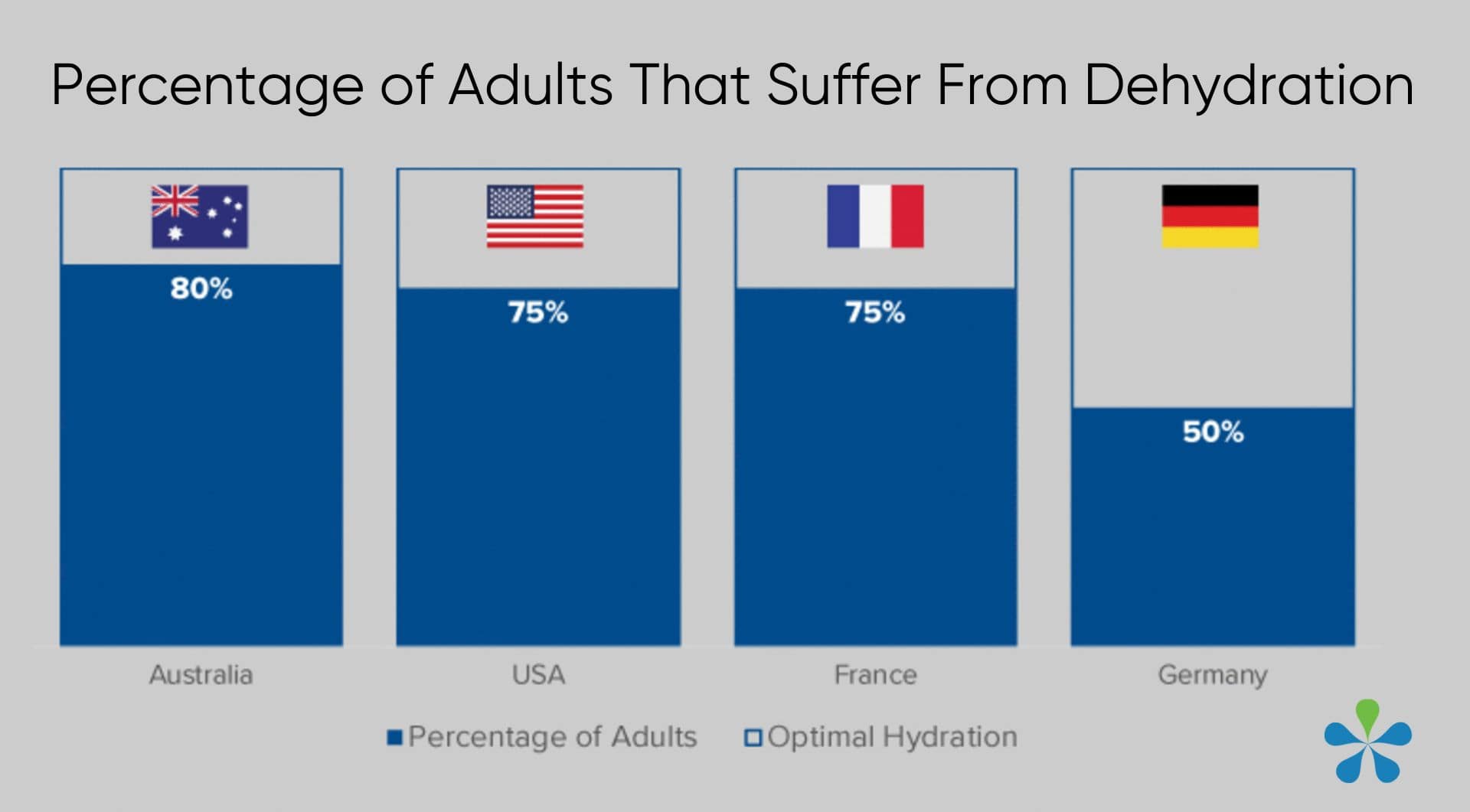 How Many People are Dehydrated? | Culligan Quench
Little stories work wonders. Tell your older friend or relative: “Hey, every time you take a pill, drink a full glass of water.” Make it a rule. Turn it into a game. My aunt sets a timer on her phone that plays the sound of a babbling brook. Goofy? Maybe. Effective? Absolutely.
Why you—yes, you—should care right now
Because this is the cheapest, simplest health fix out there. Chronic dehydration increases the risk of urinary tract infections, kidney stones, and even hospitalization. A 2017 study found that dehydrated seniors were far more likely to end up in the ER. A glass of water is cheaper than an ambulance ride.
But more than the stats, think of the life quality. A well-hydrated older person has better energy, sharper thinking, and steadier steps. They feel like themselves. And let’s be honest—a hydrated grandma is a happier grandma.
Three tiny changes that make a big difference
First, offer fluids with every single conversation. When you call your mom or dad, don’t just ask how they are. Say, “Hey, go grab a glass of water and come back to the phone.” It sounds pushy, but it works. Second, flavor it. A splash of lemon, a few berries, or a sugar-free flavor packet can turn water from a chore into a treat.
Third, never underestimate the power of a pretty glass. My neighbor Betty bought a blue, iridescent tumbler with a straw. She says it makes her feel fancy. And because she likes looking at it, she drinks more. Whatever gets the job done, right?
The bottom line (and why you can smile about it)
So, 20% to 30% of the older population are chronically dehydrated. That’s a lot of Margarets and Bettys and dads. But here’s the uplifting part: this is completely reversible. You don’t need a prescription, a doctor’s visit, or a complicated plan. You just need a nudge, a little creativity, and a glass of water within arm’s reach.
Next time you see an older person—or you think about your own future—remember: water isn’t just hydration. It’s clarity, energy, and independence in a cup. So raise a glass (a pretty one, if you like) and drink to that. Cheers!
