Leading Uv Disinfection Technologies For Class A Water Reuse Standards

Let’s talk about something that sounds like a science lab gone rogue: disinfecting wastewater so thoroughly you could drink it. I’m talking about Class A water reuse standards...
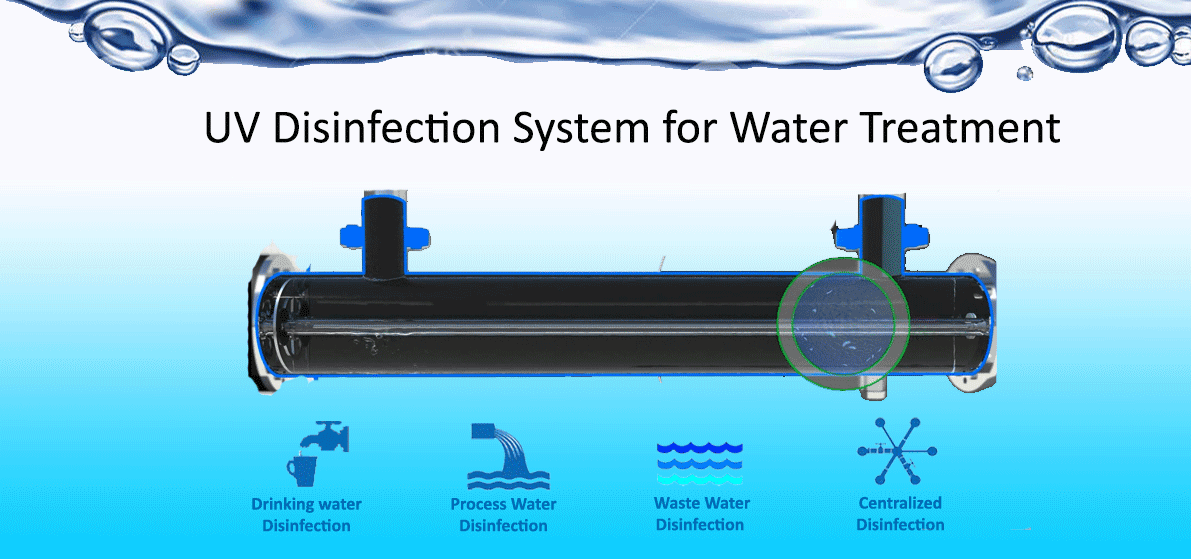
Let’s talk about something that sounds like a science lab gone rogue: disinfecting wastewater so thoroughly you could drink it. I’m talking about Class A water reuse standards. That’s the gold medal of clean, where leftover bathwater and sink dribble get turned into liquid that’s actually safer than most tap water. It’s like extreme makeover: sewer edition.
The Germs Are Laughing—Until The Light Shows Up
Your average wastewater is a party for pathogens. Bacteria, viruses, and protozoa are doing the conga down the drain. But ultraviolet (UV) disinfection technologies are the bouncers at this party, and they don’t mess around. They use electromagnetic radiation to zap the DNA of these little troublemakers, basically giving them a lethal sunburn they can’t recover from. Germs hate sunbathing—shocking, I know.
To hit Class A standards, you need to erase 99.9999% of those nasties. That’s like finding one grain of sand on a beach, then making it disappear. UV systems do this without adding a single chemical to the water. No chlorine smell, no “what’s that weird aftertaste?”—just pure, crisp, “I can’t believe this used to be toilet water” refreshment.
Must Read
Medium-Pressure UV: The Big Hairy Blaster
First up is medium-pressure UV, the muscle car of disinfection. These lamps pump out a wide spectrum of UV light, like a disco ball for killing things. They’re incredibly powerful—so strong that one lamp can treat enough water for a small city. The downside? They use as much electricity as a suspiciously large grow-op. But when you need to obliterate every microorganism in a massive treatment plant, this is your bruiser in a lab coat.
Fun fact: medium-pressure lamps are so hot they can burn your skin if you get too close. Not that you’re planning to hug one. But if you did, you’d have a very clean, very crispy arm.
Low-Pressure UV: The Efficient Munchkin
Then there’s low-pressure UV, the little engine that could. These lamps look like fluorescent tubes from your office ceiling, but instead of lighting up your cubicle, they light up a microbe’s last moments. They’re much more energy-efficient than medium-pressure systems because they focus their power on a specific germ-killing wavelength (253.7 nanometers, if you’re taking notes).
Think of it as a sniper rifle versus a shotgun. Low-pressure UV doesn’t waste energy blasting everything—it just hits the one spot that makes bacteria explode. (Okay, they don’t literally explode, but wouldn’t that be a better infomercial?) The trade-off is that you need more lamps to treat the same amount of water, so your system looks like a giant light-bulb hotel.
UV-LED: The Flashy New Kid
Here’s where it gets weird and cool. UV-LED technology uses those tiny light-emitting diodes you find in your TV remote, but souped-up to kill germs instantly. These little dots of death can turn on and off in milliseconds, they don’t contain toxic mercury like older lamps, and they can be tuned to multiple wavelengths at once. It’s like having a Swiss Army knife of light.
Here’s the head-scratcher: UV-LEDs can also be powered by batteries. Imagine a portable water-bottle-sized device that zaps your camping water to Class A standards. You could drink from a puddle and feel smug about it. The tech is still pricey, but give it a few years—your future Mars colony will use these things to recycle astronaut sweat into morning coffee.
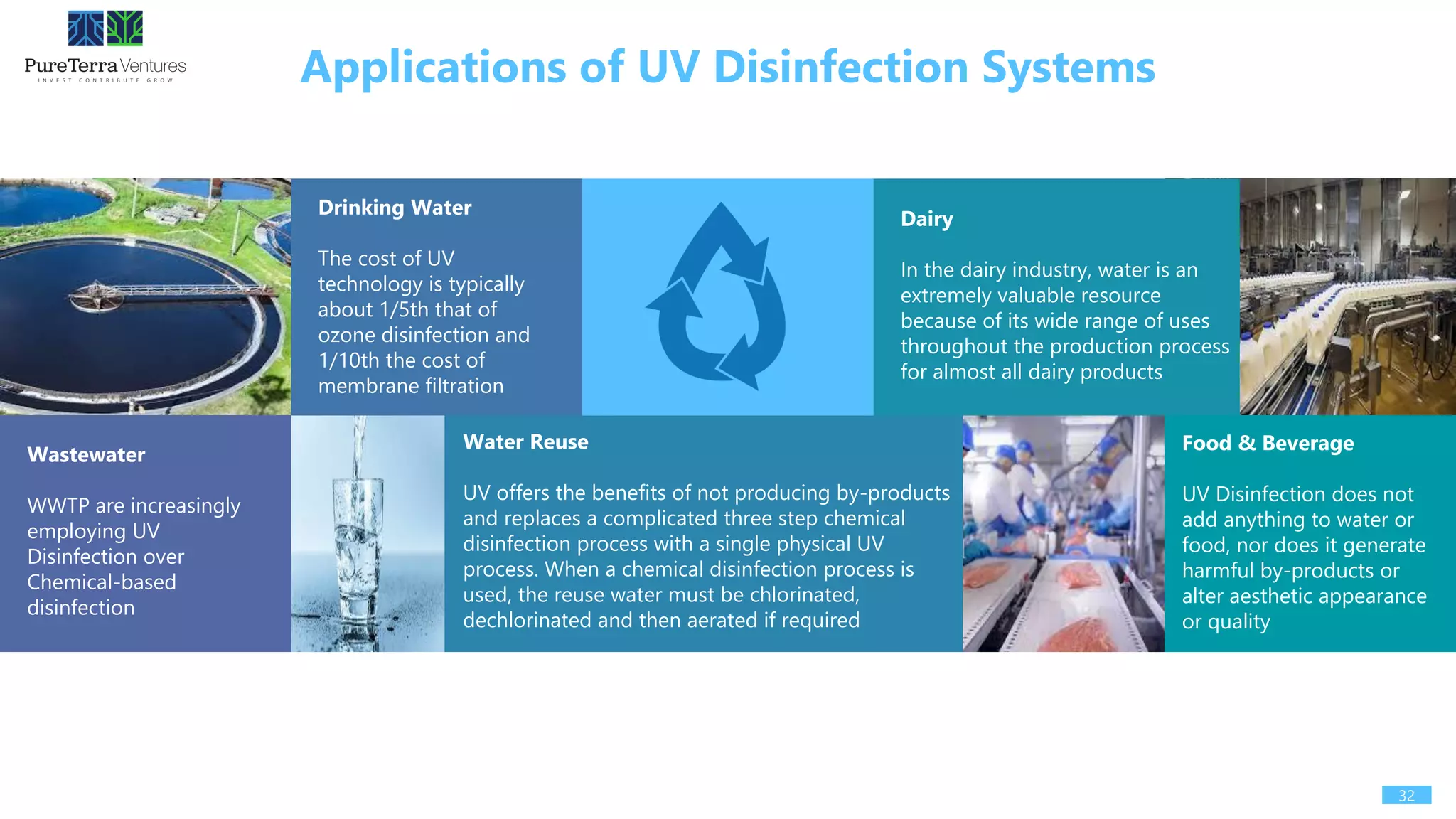 UV for water treatment | PDF
But Wait—There’s a Catch (There’s Always a Catch)
UV light is a line-of-sight assassin. If there’s a speck of dirt hiding a tiny virus, the germ survives. That’s why Class A systems aren’t just UV lamp in a bucket—they’re preceded by filters so fine they catch particles smaller than a human hair. It’s like requiring the water to pass through a microscopic sieve before we fry it with sunlight.
And here’s the surprising part: some viruses are incredibly UV-resistant. The adenovirus (which gives you pink eye and the sniffles) is basically a tiny tank. You need four times the UV dose to kill it compared to most bacteria. That’s why engineers often use a combination of UV with a dash of chlorine or ozone—like finishing off a tough steak with a flamethrower.
The Real Hero: No One Tastes It
Here’s the magic: after UV treatment, the water contains zero disinfection byproducts. Unlike chlorine, which can create funky chemical compounds that taste like swimming pool and smell like regret, UV leaves no trace. You could serve this water at a fancy restaurant and no one would know it was once in a toilet.
Singapore actually does this. They call it NEWater, and it’s so pure that semiconductor factories use it to wash computer chips. Meanwhile, most of us are still buying bottled water because the label has a mountain on it.
Final Thought: UV Is the Comedy Club Bouncer
So which technology wins? All of them, depending on your budget and how many germs annoy you. Medium-pressure is for big cities with big electricity bills. Low-pressure is for efficient plants that love spreadsheets. UV-LED is for futurists who want to drink their own shower runoff.
What makes UV the undisputed champion for Class A reuse is simple: it kills things without adding anything gross. No chemicals, no smell, no taste. Just light. And as any germ will tell you, the most terrifying thing in the universe is a very bright, very focused bulb. Now go drink some recycled water—it’s cleaner than the coffee you’re holding, and likely tastes better.
