What's The Difference Between Distilled Water And Reverse Osmosis Water

Ever stood in the water aisle at the grocery store, staring at labels and feeling a little lost between “Distilled” and “Reverse Osmosis”? You’re not alone, my friend. It’s li...
Ever stood in the water aisle at the grocery store, staring at labels and feeling a little lost between “Distilled” and “Reverse Osmosis”? You’re not alone, my friend. It’s like choosing between two superheroes that both promise to save you from tap-water villains, but each has a totally different origin story. So, let’s chill out and decode this liquid mystery together, shall we?
The Big Idea: Removing the “Stuff”
Both distilled water and reverse osmosis (RO) water are about purity. Think of tap water as a busy city bus, packed with passengers like minerals, chlorine, and maybe even a few bacteria you didn’t invite. These two methods kick those passengers off—but they do it in wildly different ways.
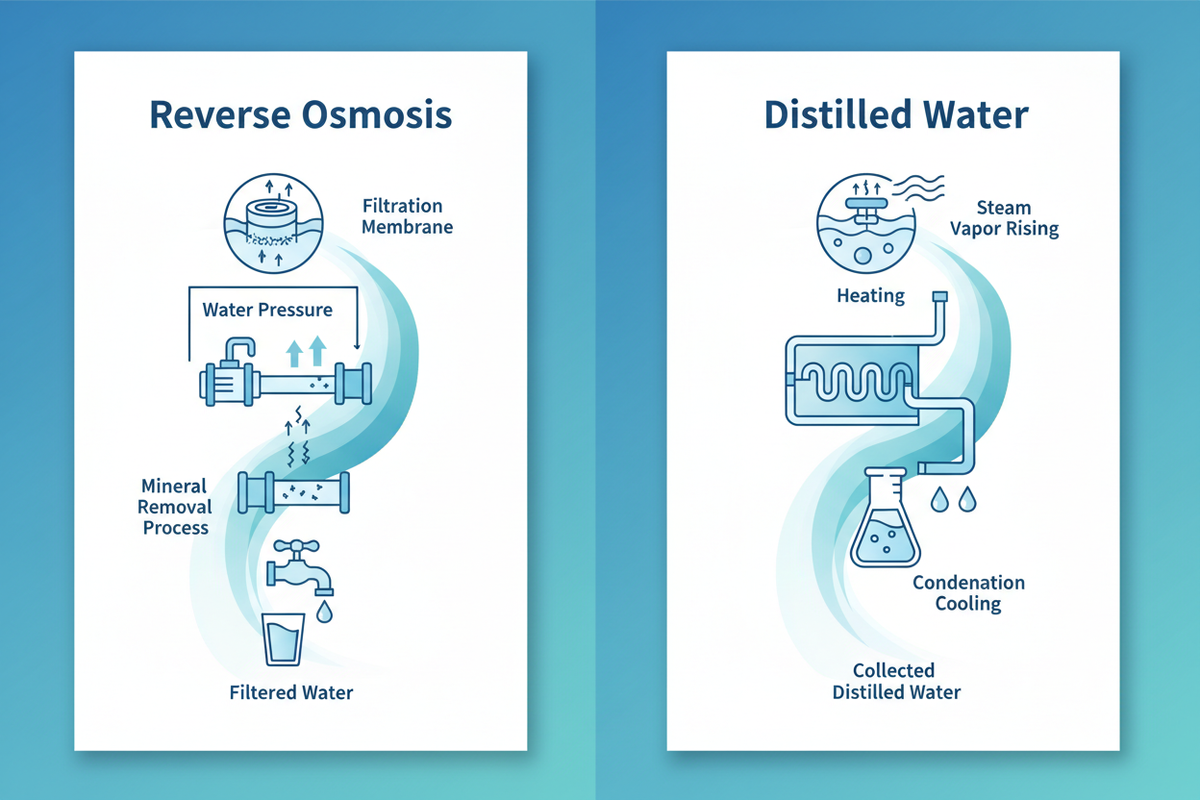
Distilled water is like the old-school alchemist. It boils the water until it turns into steam, then catches that steam and lets it cool back into liquid. The impurities get left behind in the boiling pot because they’re too heavy to float up with the vapor. Pretty clever, right?
Must Read
Reverse osmosis feels more like a high-tech bouncer at an exclusive club. It forces water through a super-fine membrane under high pressure. Only the tiniest H₂O molecules get through; everything else—dissolved salts, lead, even some viruses—gets turned away at the velvet rope.
What Gets Left Behind?
Here’s where it gets interesting. Distillation is a beast at removing heavy metals, bacteria, and minerals that don’t evaporate. You end up with water that’s almost chemically naked—it’s just H₂O, no plus-ones. However, it doesn’t do a perfect job on some volatile organic compounds (VOCs) that can boil at similar temperatures as water. Sneaky, huh?
Reverse osmosis, on the other hand, is the overachiever. It strips out almost everything: chlorine, fluoride, pesticides, arsenic, and even that funky taste from old pipes. RO systems often include a carbon filter beforehand to catch chlorine, which helps the membrane live longer. The result? Water that’s incredibly pure, but maybe a little too empty for some taste buds.
The Taste Test: Does Purity Matter?
Have you ever drank distilled water and thought, “Wait, this tastes like nothing”? That’s exactly the point. Without minerals, water can feel flat or even slightly acidic. Some people describe it as “sad water.” Reverse osmosis water usually tastes crisper and cleaner because it still contains a tiny bit of dissolved gases (like oxygen) that affect flavor.
Fun fact: If you’re a coffee nerd or a tea lover, RO water is often the secret weapon. It lets the beans or leaves shine without mineral interference. Distilled water? It might make your brew taste a bit hollow—like a joke without a punchline.
Everyday Uses: When You Need Which
Let’s talk practicality. Distilled water is the star for appliances that hate mineral buildup. Think steam irons, humidifiers, car batteries, and baby formula—where you want zero risk of scale or contaminants. It’s also the go-to for medical equipment like CPAP machines. Basically, if it heats up or touches something sensitive, distilled is your pal.
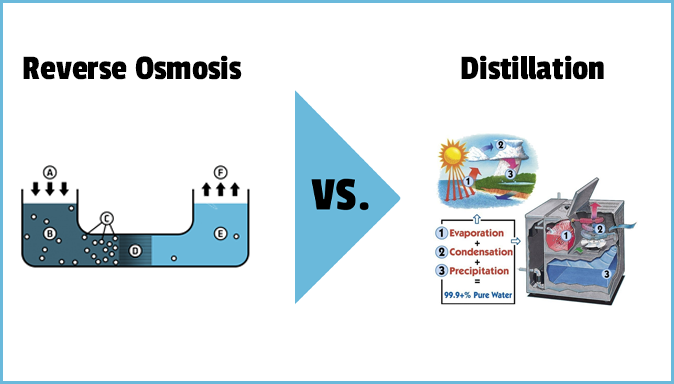 Reverse Osmosis versus Distilled Water - My Pure Water
Reverse osmosis water is the MVP for everyday drinking and cooking. Most homes with an RO system have a dedicated faucet or a big jug in the fridge. You get great-tasting water without the plastic bottle guilt. Plus, it’s a workhorse for making ice cubes that don’t smell like last night’s fish dinner.
The Cost Factor: What’s Your Wallet Saying?
Here’s the real talk: distillation is energy-hungry. Boiling water takes a lot of electricity, and the process is slow. A countertop distiller might produce a gallon every few hours. Reverse osmosis is faster and more efficient, but the systems cost more upfront (think $150–$500 for a good under-sink unit). Then you have to replace filters and the membrane every year or so.
So, which is the better value? For most people, RO wins for daily use. It’s cheaper per gallon over time, and you don’t have to wait for steam to do its thing. But if you only need a gallon a week for a humidifier, distilled jugs from the store might be simpler and cheaper than installing a whole system.
Environmental Vibes: What About the Planet?
Both methods have a footprint. Distillation uses heat (often from fossil fuels), while RO uses water—because it wastes a lot of it. For every gallon of pure RO water, older systems dump two to three gallons of “brine” down the drain. Newer models are better, but it’s still a bummer. Distilled water creates zero wastewater, but its carbon footprint is larger per drop.
If you want to feel good about your choice, consider a countertop distiller for occasional use, or a high-efficiency RO system for daily guzzling. Both beat buying single-use plastic bottles—so you’re already winning.
So, What’s the Verdict?
Honestly? Neither is “better”—they’re just different tools for different jobs. Earnest question: do you need super-pure water for your espresso machine, or just great-tasting drinking water without the tap-town aftertaste? Distilled is the minimalist’s dream; RO is the practical multitasker.
Maybe the coolest thing is that we have options. You can have water that’s stripped down to its pure essence, or water that’s been gently filtered to keep just the good vibes. Next time you’re at the store, you’ll smile knowingly—and pick the one that fits your life. Cheers to that.
