How Much Should A Whole House Water Filtration System Cost

You’re at that point. The tap water tastes like a swimming pool, your skin feels tight after a shower, and you’ve started Googling “whole house water filtration system cost” a...

You’re at that point. The tap water tastes like a swimming pool, your skin feels tight after a shower, and you’ve started Googling “whole house water filtration system cost” at 2 a.m. We get it. The question isn’t just about money; it’s about peace of mind every time you turn on a faucet.
Let’s cut to the chase. A decent whole-house system typically runs between $1,000 and $4,500 installed. Yes, that’s a wide range, but think of it like buying a car—a sedan isn’t a pickup truck, and a luxury SUV isn’t a compact. Your home’s water quality, pipe size, and specific bad guys (chlorine, sediment, heavy metals) will dictate the price.
The Price Tag Breakdown: What You’re Actually Paying For
The equipment itself is roughly half the cost. A basic sediment and carbon filter combo might only set you back $400 to $800. But if you need to kick out iron, sulfur, or those nasty “forever chemicals” (PFAS), the unit can climb to $2,000 or more. Filtration is not a one-size-fits-all t-shirt; it’s a bespoke suit for your pipes.
Must Read
Installation labor is the other big piece. A plumber’s visit to connect the system to your main water line usually costs $300 to $1,200. That’s the price for knowing the shut-off valve won’t burst at 3 a.m. during your next Netflix binge.
Then come the hidden gems: permit fees (yes, some cities care about your plumbing) and annual filter replacements, which run about $150 to $500. Think of it as a subscription service for your hydration, minus the cancel button.
Cultural Check: The “Influencer” Trap
You’ve seen the ads. A sleek stainless-steel monster with Bluetooth, promising “zero maintenance” and “unlimited flow.” Spoiler alert: physics doesn’t bend to marketing. A $10,000 system might just be a $3,000 system with a fancy touchscreen and a name that sounds like a wellness retreat.
Fun fact: Ancient Rome used lead pipes for their aqueducts. You know what they didn’t have? A carbon block filter. Be grateful for modern technology, but don’t let hype fool you into buying a system that’s overkill for city water. A simple test kit from a hardware store is worth more than a dozen YouTube reviews.
 Whole House Water Filter Costs for 2025-2026
Three Practical Tips to Save Your Wallet (And Your Sanity)
First, test your water before you buy. Call your municipal water provider or grab a at-home kit. If you’re on a well, get a professional lab test for bacteria, nitrates, and pH. Don’t buy a fire extinguisher if you only have a candle.
Second, think about flow rate. A system that slows your water pressure is a nightmare for showers. Look for one that handles 10 to 15 gallons per minute for an average house. If you love long, theatrical showers, bump it up to 20 GPM.
Third, get three quotes from licensed plumbers. Not from a “water doctor” who knocks on your door selling magic. Ask for itemized bids: equipment, labor, and permits. Compare apples to apples, not a whole fruit basket.
Fun Little Fact: The Reverse Osmosis Paradox
You might be tempted to get a whole-house reverse osmosis system. Don’t. RO systems waste three to four gallons of water for every one they produce. That’s like flushing money down the toilet—literally. Reserve RO for your kitchen sink faucet only. For the whole house, go with carbon filters, catalytic media, or a salt-free conditioner.
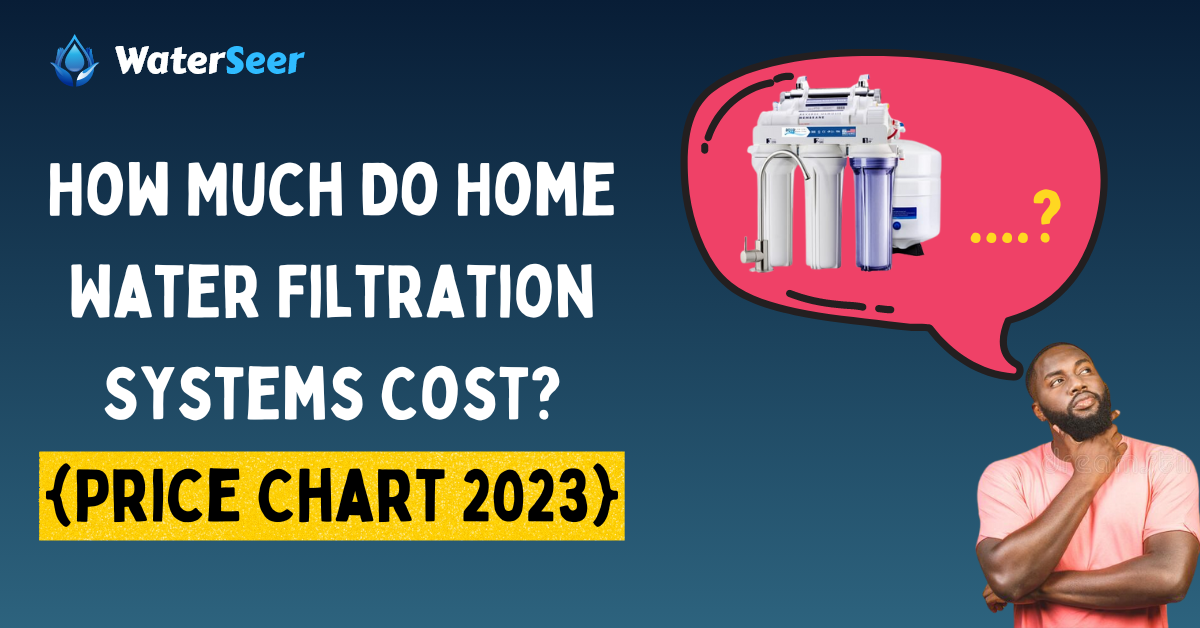 How Much Do Home Water Filtration Systems Cost? {Price Chart}
Another fun tidbit: The EPA estimates the average American uses 88 gallons of water per day. That’s a lot of potential contaminants entering your lungs and skin. A good whole-house system isn’t a luxury; it’s a hygiene upgrade for your entire lifestyle. Your silver jewelry will stay shiny, your tea will taste cleaner, and your hair will stop sounding like dry straw.
When Cheap Becomes Expensive
I once met a guy who bought a $200 system online. It lasted three months before the housing cracked, flooding his basement. The repair cost him $3,000. That’s the difference between buying a pair of boots and making a mortgage payment on a wet carpet. Don’t be that guy.
A mid-range system from brands like iSpring, Aquasana, or Pelican (or their plumber-grade cousins) usually hits the sweet spot: reliable, affordable, and with easy-to-find replacement filters. That’s your “Goldilocks” zone—not too hot, not too cold, just right for your tap.
A Reflection for Your Tap
So, how much should a whole-house system cost? Enough to make your morning coffee taste like a promise, not a chemical experiment. The real cost isn’t the dollar sign; it’s the quiet confidence that every glass—from the dog’s bowl to the pasta water—is clean. That first shower where your skin doesn’t feel dry? Priceless. That last sip of water before bed without that chlorine aftertaste? That’s the luxury of knowing you invested in your life, one drop at a time.
Now, go turn on your faucet. Listen to the water run. Then, decide if it’s time to make it sing a cleaner song.
