What Is The Difference Between Purified And Filtered Water

So the other day, I’m at my friend’s house, and she offers me a glass of water from her fancy new pitcher. She beams and says, “It’s filtered!” I take a sip, nod politely, and...
So the other day, I’m at my friend’s house, and she offers me a glass of water from her fancy new pitcher. She beams and says, “It’s filtered!” I take a sip, nod politely, and then she notices my Brita bottle on the counter. “Oh, you’re one of those purified water snobs?” she teases. I laughed, but honestly, I had no clue if there was even a difference. Sound familiar?
You’re not alone if you’ve ever stood in the grocery aisle, staring at bottles labeled “filtered” and “purified,” feeling like you need a science degree. It’s one of those everyday mysteries nobody bothers to explain—until now. Grab your reusable bottle, and let’s settle this once and for all.
The Big, Juicy Difference
Here’s the short version: Filtered water is water that’s been passed through a physical barrier or a chemical process to remove specific impurities. Think of it like a really expensive, reusable coffee filter for your tap water. It catches the big stuff—chlorine, sediment, sometimes lead—but leaves the microscopic minerals and salts alone.
Must Read
Purified water, on the other hand, goes to the extreme. It’s water that’s had all impurities—chemicals, bacteria, minerals, the whole shebang—removed until it reaches a purity level of 99.9% or higher. That’s right, we’re talking water so clean it’s basically a blank slate. It’s the difference between “nice, smooth coffee” and “distilled, caffeinated water.”
How They Get There (The Geeky Part)
Filtered water usually goes through a simple process: carbon filters, ceramic filters, or sometimes a basic UV light. Your average refrigerator filter? That’s filtering. It’s great for getting rid of that weird “pool water” taste from chlorine, but it won’t yank out viruses or heavy metals entirely. Unless you buy a super-expensive multi-stage one, but we’re keeping it real here.
Purified water uses heavy artillery: reverse osmosis, distillation, or deionization. Reverse osmosis pushes water through a membrane so tight that even molecules smaller than a human hair get kicked out. Distillation basically boils the water and catches the steam, leaving all the nasty stuff behind. It’s like sending your water to boot camp.
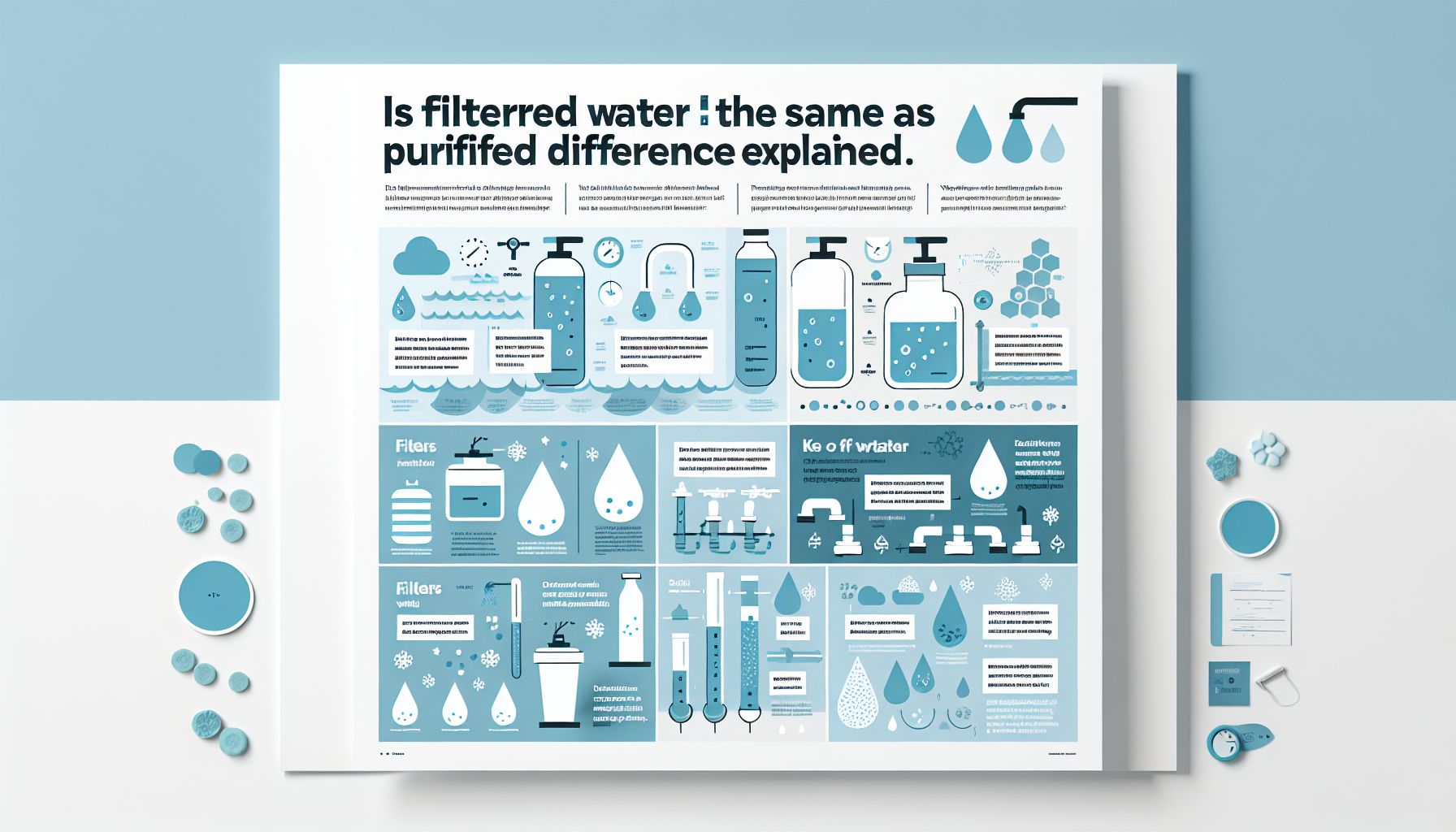 Filtered vs Purified Water: Key Differences
So Which One Should You Drink?
Honestly, for most of us with decent tap water, filtered water is totally fine—and way cheaper. It keeps the good minerals (like calcium and magnesium) that your body actually needs, while ditching the stuff that makes water taste like a swimming pool. Your kidneys will thank you for the minerals, honestly.
Purified water is amazing if your tap water is sketchy—like you live in an old house with lead pipes or a rural area with well water. It’s also a must for babies, people with compromised immune systems, or when you want to brew a truly “neutral” cup of coffee. But let’s be real: drinking nothing but purified water might make you a bit deficient in trace minerals over time. Balance, people.
The “Yeah, But…” Game
“But isn’t bottled water purified?” Nope. Check the label: most bottled water is just filtered tap water. That “spring water” you’re buying? Often filtered, not purified. The only exception is if it says “purified by reverse osmosis” right on the bottle. Don’t fall for the marketing fog, my friend.
 What Is the Difference between Purified and Filtered Water? - Shift Tech BD
“What about those 20-stage filters?” Look, unless you’re filtering out nuclear waste, a basic carbon filter is fine for city water. Those multi-stage systems? They’re essentially doing a “light purification,” which is great, but you’re paying for marketing hype. Your money, your call, but don’t let the sales guy convince you need a PhD in hydrology to drink water.
The Final Sip
Think of it this way: Filtered water is like a decent housecleaner who sweeps and mops. Purified water is the same cleaner, but now they’re wearing hazmat suits, scrubbing every molecule with bleach, and repainting the walls. Both get the job done, but one is overkill for a typical Tuesday.
So next time someone offers you a glass of “filtered” water, smile and drink it. Then, when they ask about your Brita bottle, you can throw a casual “Oh, I’m a purified kind of guy,” and watch their face. Just don’t be a snob about it—unless you’ve got a science degree, in which case, go ahead.
And remember: the best water is the one you actually drink. Whether it’s from a $300 filter or a hose in the backyard (okay, maybe not the hose), staying hydrated is the real win. Now go fill up your glass, you hydrated legend.
