How Long Does It Take Ultraviolet Light To Kill Bacteria

Ever wonder how a little light can wage war on invisible invaders? It sounds like science fiction, but it’s real: ultraviolet light, or UV, is a germ-killing machine. And you’...

Ever wonder how a little light can wage war on invisible invaders? It sounds like science fiction, but it’s real: ultraviolet light, or UV, is a germ-killing machine. And you’re probably asking, how long does it actually take to zap those bacteria into oblivion? The short answer is: it depends, but often it’s scary-fast—sometimes just seconds.
UV Light: The Sun’s Secret Weapon
Think of UV light as the sun’s powerful, invisible cousin. It has more energy than the visible light we see, and that energy is what destroys bacteria. It works by messing with their DNA, basically giving them a fatal sunburn that stops them from reproducing. Pretty brutal, right?
But not all UV light is created equal. The special type that kills bugs is called UVC, which is the most energetic and dangerous—so don’t stare at it! Your typical household black light (UVA) is too weak to kill bacteria quickly; you’d need to leave it on for hours.
Must Read
So, How Long Are We Talking?
If you use a powerful UVC lamp, you can wipe out 99.9% of common bacteria in less than a minute. We’re talking about things like E. coli, Salmonella, and even the flu virus. Some studies show that direct exposure for just 10 to 30 seconds is enough to neutralize them.
But here’s the catch: it’s all about distance and intensity. A lamp held close to a surface works in seconds, but if it’s a foot away, it might need a few minutes. Think of it like a campfire—you get warm fast up close, but stand far back and you barely feel it.
Also, bacteria aren’t all equally tough. Some, like Bacillus subtilis (which forms protective spores), can take several minutes of direct UVC to die. Mold spores are even more resilient—they might require 5 to 10 minutes of exposure. It’s like comparing a mosquito to a cockroach.
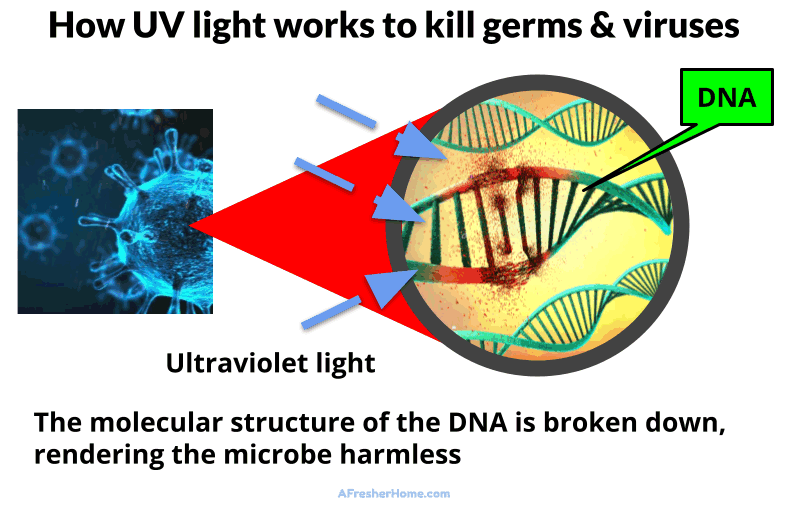 Uv Light Effect On Bacteria at Johnathan Olivar blog
Cool Comparisons to Keep You Hooked
Want a fun way to picture this? Imagine you’re a bacteria cell. A standard UV wand is like a laser beam of doom that cooks you in the time it takes to blink. A weaker UV bulb is more like a slow-motion sauna that takes a few songs to finish you off.
Or compare it to hand sanitizer: you rub it in for 20 seconds, right? UV light can do the same job in 10 seconds if the surface is clean and the light hits it directly. That’s faster than you can sing “Happy Birthday” twice.
And get this: UV light is so effective that hospitals already use it to sanitize rooms between patients. Robots roll in, blast the room with UVC for 5 to 10 minutes, and kill 99.99% of pathogens. It’s like having a tiny, invisible janitor that works at the speed of light.
The Big “But”: Shadows Are a Problem
Here’s the thing with UV: it only works in a straight line. If bacteria hide in a crack, under a dust speck, or behind a piece of furniture, they’re basically safe. Shadows are kryptonite for UV light. So you can’t just wave a wand in the air and call it clean—you need to get it close and direct.
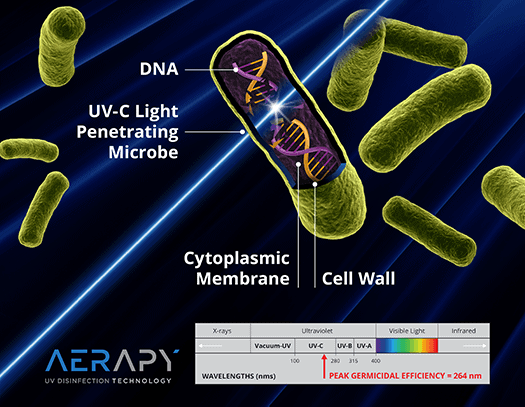 How Does Uv Light Kill Bacteria | Gas Furnace
That’s why UV is great for surfaces you can see, like your phone, keys, or countertops. But for porous stuff like cloth or wood, it’s less reliable because the light can’t reach the nooks and crannies. Think of it like trying to dry a towel with a hair dryer—you get the top dry, but the folds stay damp.
Is It Worth the Hype for Home Use?
Absolutely, if you use it right. UV wands and phone sanitizers are popular because they’re chemical-free and kill germs fast. A typical phone sanitizer box will zap your device in 3 to 5 minutes—no wiping, no fumes, just light.
But don’t believe the hype that a 30-second pass over your pillow will sterilize it. For thick bacteria or allergens, you might need 10 minutes or more of dedicated exposure. It’s a tool, not a magic wand.
So next time you see a UV gadget, remember: it’s not about how much time you spend, but how direct and intense the light is. A second of powerful UVC is worth more than an hour of weak UV. And that’s pretty cool—light, literally, fighting a battle you can’t see.
