How Much Water Does A Water Softener Use To Regenerate

Let’s be honest: when you think about your water softener, “fun” isn’t the first word that springs to mind. But stick with me, because we’re about to talk about something surp...

Let’s be honest: when you think about your water softener, “fun” isn’t the first word that springs to mind. But stick with me, because we’re about to talk about something surprisingly fascinating: how much water it uses to regenerate. Trust me, this is the kind of nerdy knowledge that makes you feel like a home-maintenance superhero.
The Big Gulp: How Much Water Are We Talking?
On average, a standard water softener uses anywhere from 20 to 65 gallons of water per regeneration cycle. That sounds like a lot, right? But here’s the kicker: most modern, efficient softeners do this only once or twice a week, not every single day.
To put that in perspective, a ten-minute shower uses about 20 gallons. So your softener’s regeneration is roughly equivalent to taking one or two extra showers per week. Suddenly, it doesn’t seem so scary, does it?
Must Read
Why Does It Need So Much Water Anyway?
Think of regeneration like a deep cleanse—like when you wash a really muddy sponge. Your softener’s resin beads have been trapping hard minerals (calcium and magnesium) all week, and they’re exhausted. The regeneration process uses fresh water and salt to flush those trapped minerals down the drain, leaving the beads fresh and ready for action.
It’s not wasteful; it’s essential maintenance. Without this rinse cycle, your softener would quickly become a hard, crusty brick of minerals—and nobody wants that.
The Million-Dollar Question: Can You Use Less?
Absolutely! The amount of water used depends on three key factors: the size of your unit, your water hardness level, and how often it regenerates. Older, non-metered softeners often regenerate on a timer (wasteful!), while newer, demand-initiated models only regenerate when they really need to.
Upgrading to a metered softener can cut your water usage by 30-50%. That’s like saving an entire bathtub of water every single week—for the same sparkly, spotless dishes and silky skin.
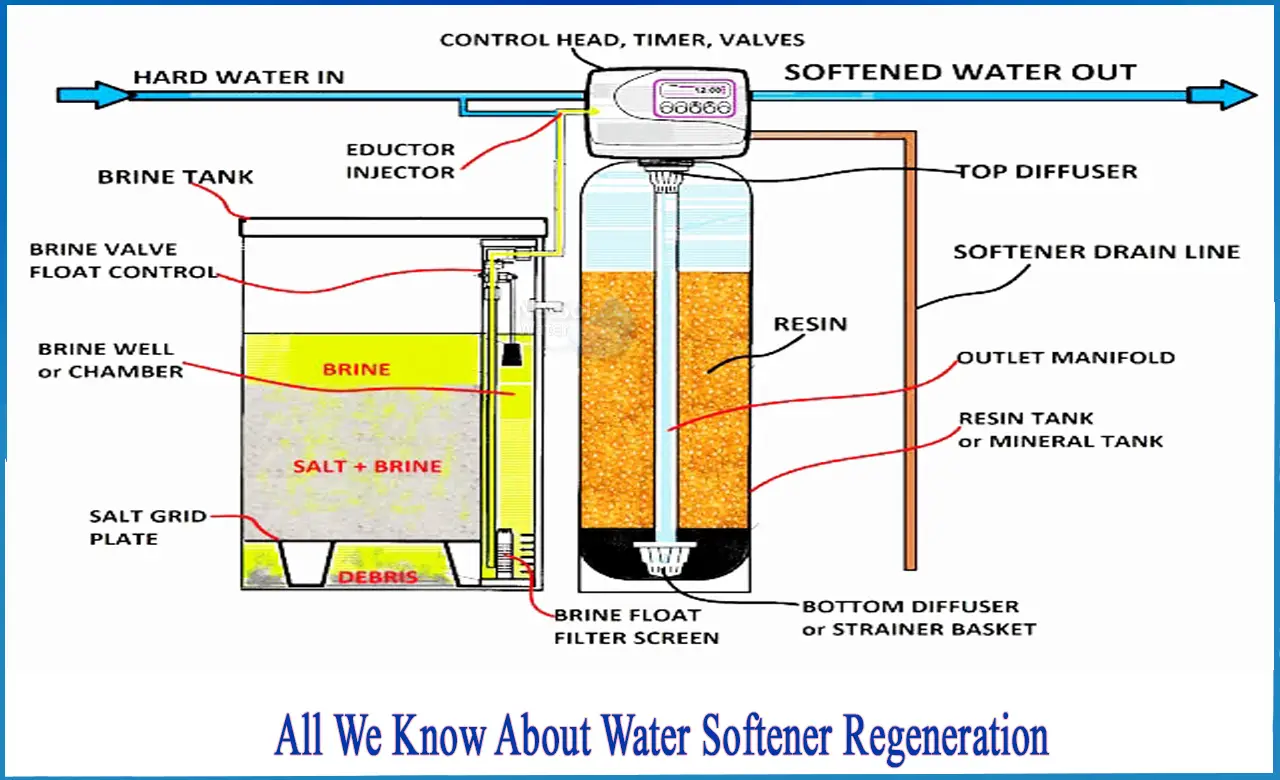 How Long Does It Take To Regenerate A Water Softener | Detroit Chinatown
A Fun Reality Check: The “Spot-Free” Trade-Off
Let’s do a quick mental experiment. Imagine washing your car with hard water. You’ll spend ages scrubbing, only to end up with white, chalky spots everywhere. Then you have to rinse it again. That wasted water? Way more than your softener’s regeneration.
So while your softener uses water to regenerate, it actually saves water in the long run. No more re-washing dishes, no more scrubbing shower scum, and no more buying endless bottles of descaler. Efficiency is the ultimate flex.
Make It Fun: Become a Water-Wise Detective
Here’s your challenge for the week: check your owner’s manual or look at your softener’s control panel. See if you have a “water usage” setting. If your softener regenerates at 2:00 AM, you can even set a timer and listen for the whoosh of the backwash—it’s oddly satisfying.
Or, get the whole family involved. Turn it into a game: “Who can guess how many gallons our softener used last night?” Winner gets to pick the shower playlist. See? I told you this could be fun.
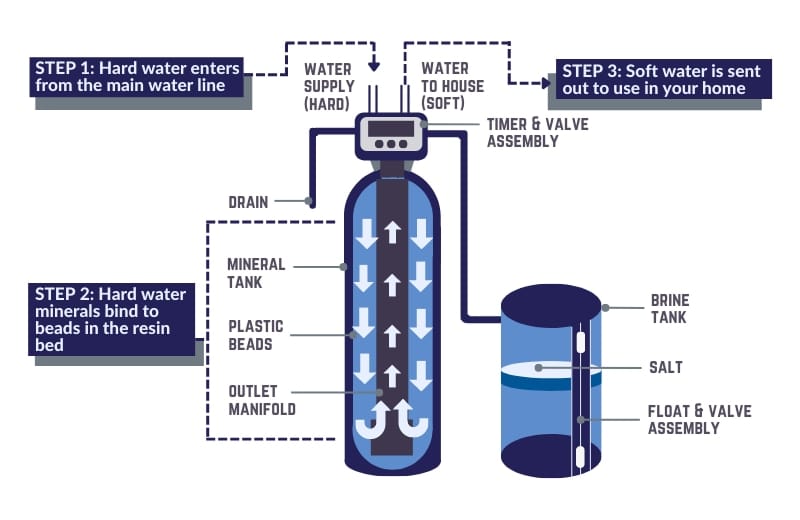 How Does A Water Softener Work Step By Step | Detroit Chinatown
Remember: You’re Not Wasting Water—You’re Trading It
Every drop that goes down the drain during regeneration is a drop that buys you softer laundry, cleaner hair, and a longer life for your appliances. Your water heater, your washing machine, and your coffee maker will all thank you. They’ll work more efficiently, use less energy, and last years longer.
Think of it this way: you’re not just using water; you’re investing in a future where your plumbing never fights back. That’s a pretty inspiring return on investment.
So, What’s the Bottom Line?
Yes, your water softener uses water to regenerate—usually between 20 and 65 gallons per cycle. But that’s a small price to pay for the magic of spot-free glasses, silky skin, and zero-scale faucets. And with a modern, smart unit, that number keeps getting smaller.
Now you know the secret. The next time someone asks you about water softeners, you can lean in, smile, and drop some knowledge. Go on, be the hero of your own hard-water story. The world is full of soggy mysteries, and you’ve just cracked one wide open. Isn’t that a fun thought?
