Does Boiling Water Reduce Tds Total Dissolved Solids

Picture this: It’s a cozy Sunday morning. You’re waiting for your kettle to click off, ready to make that perfect cup of tea. The steam rises, and you think, “Ah, this boiling...

Picture this: It’s a cozy Sunday morning. You’re waiting for your kettle to click off, ready to make that perfect cup of tea. The steam rises, and you think, “Ah, this boiling water must be super pure now, right?” Well, hold your biscuit, my friend, because we need to talk about TDS—Total Dissolved Solids.
What Are Those “Solids” Anyway?
TDS is just a fancy name for the tiny bits of minerals, salts, and metals floating around in your water. Things like calcium, magnesium, potassium, and yes, sometimes a little bit of lead or copper if your pipes are old.
Think of it as the personality of your water. Some water is a shy introvert with very little TDS; other water is a chatty extrovert with tons of it.
Must Read
But here’s the burning question: Does boiling that kettle strip all that stuff out? Grab a cuppa, and let’s dive in.
The Short Answer (No, But I’ll Explain)
Boiling water does not reduce TDS in the way you hope. In fact, it does the opposite—it increases it slightly.
When you boil water, some of the water turns into steam and floats away. That steam is pure H₂O. But the minerals and salts? They stay behind in the pot.
So if you start with a pot of water that has 200 ppm (parts per million) of TDS, and you boil off a quarter of it, the leftover water now has a higher concentration of those solids. You haven’t removed them—you’ve just concentrated them. Oops.
Wait, What About My Hard Water?
Ah, the white, crusty stuff you see in your kettle? That’s temporary hardness, mostly calcium and magnesium bicarbonates. When you boil, they turn into carbonates and fall out as scale.
So yes, boiling does remove some specific minerals from the water—calcium and magnesium to be exact. But the total amount of dissolved solids barely changes. Sodium, chloride, and other stubborn stuff stay put.
It’s like inviting a few party guests to leave, but the loud ones just move to the living room. The party is still full.
 How To Reduce Total Dissolved Solids (TDS) In Water? | Atlas Scientific
Why Should an Everyday Person Care?
Let’s make this personal. Your morning coffee tastes flat? That could be high TDS. Your tap water leaves a weird film on your glasses? Also TDS.
Boiling won’t fix that. You need filtration—like a reverse osmosis system, a water filter jug, or even a simple activated carbon filter for taste.
But don’t panic! Boiling is still great for killing germs. That’s its superpower. For TDS, it’s just not the right tool for the job.
A Little Story for the Road
My Aunt Carol once decided to “purify” her tap water by boiling it for twenty minutes. She served me a glass of what looked perfectly clear water. I took a sip, and it tasted saltier than before. I had to explain that she accidentally made a weak mineral broth.
She laughed and said, “Well, at least it’s sterile soup!” We bought her a simple filter the next day.
Remember, boiling water doesn’t remove salt, lead, nitrates, or most dissolved solids. It just zaps the bugs.
When Does TDS Matter to You?
If you’re using a humidifier, high TDS water can leave white dust on your furniture. Boiling won’t help—in fact, it makes the problem worse because you’re concentrating the minerals.
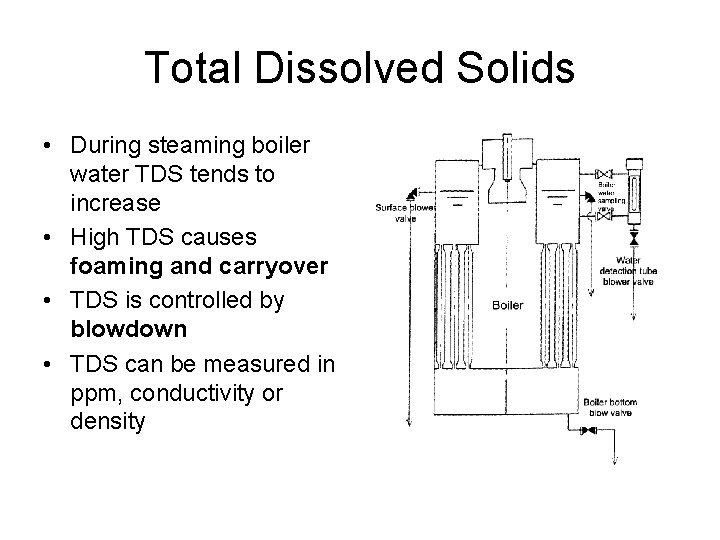 Boiler water treatment Rajan Bhandari Question Severe pitting
If you have a fish tank, especially with delicate species, boiling does nothing to reduce TDS. You need to use distilled or deionized water.
And for your espresso machine? High TDS means scale buildup, which ruins the machine. Boiling doesn’t save it. You need to descale with vinegar or a special solution.
The Good News
You don’t need to obsess over TDS. For most of us, drinking boiled water is perfectly safe and healthy. The WHO recommends a TDS below 300 ppm for good taste, but water with 500 ppm can still be safe.
Boiling is a simple, lovely act of care—steaming your mug, making tea for a friend. Just know that for removing dissolved solids, it’s like using a flyswatter on a boulder.
If the taste bothers you, a good water filter is worth every penny. Your tea will thank you, your coffee will hug you, and your kettle will stop looking like a geologist’s dream.
Bottom Line (Kettle-Friendly Version)
Boiling water does not reduce Total Dissolved Solids. It kills bacteria and viruses, and it can remove a bit of temporary hardness, but the overall solids count stays about the same or goes up.
So next time you’re at a party and someone says, “I always boil my water to make it pure,” you can smile and say, “That’s great for the germs, but the minerals are still hitching a ride.”
And if they look confused? Offer them a cup of tea—with filtered water. You’ll be the hero of the kitchen.
