Does Boiling Water Remove Chlorine From Tap Water

So, you’re staring at a glass of tap water, wondering if it tastes a little… pool-ish. You’ve heard a rumor that boiling it will kick that chlorine to the curb. Let’s dive in,...
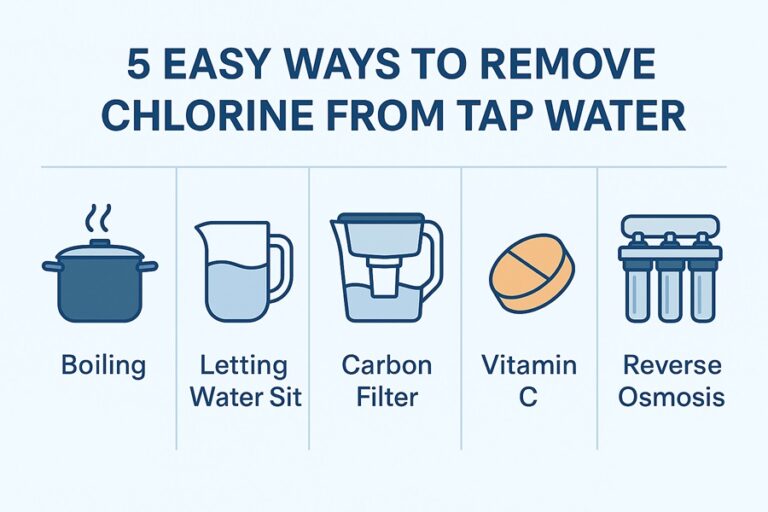
So, you’re staring at a glass of tap water, wondering if it tastes a little… pool-ish. You’ve heard a rumor that boiling it will kick that chlorine to the curb. Let’s dive in, shall we?
The Short, Splashy Answer
Yes, boiling water does remove chlorine from tap water. But—and this is a big, dramatic, soap-opera “but”—it’s not quite as simple as turning on the stove and walking away.
Chlorine is a gas dissolved in water, and it’s volatile. That means it wants to escape into the air like a kid fleeing a boring lecture. Heat just gives it a super-fast exit visa.
Must Read
Think of it this way: Boiling speeds up the party, but chlorine is already trying to leave the building.
The Science-y Part (But I Promise It’s Painless)
When you heat water to a rolling boil, the chlorine molecules get all excited and fizzy—like you after three cups of coffee. They break free from the H₂O and vanish into steam.
But here’s the kicker: it takes time. Just bringing water to a boil for a few seconds won’t do much. You need to let it rock and roll for about 15 to 20 minutes to shoo most of the chlorine out.
And if you’re using a lid? Well, you’re basically trapping the chlorine steam back into the water. That’s like locking a ghost in a haunted house—it doesn’t leave. Leave the lid off!
The Fine Print: Chloramine vs. Chlorine
Some water systems use chloramine—a sneaky cousin of chlorine that’s a bit more clingy. Boiling for 15 minutes? That barely makes a dent in chloramine.
To evict chloramine, you’d need to boil for an hour or more, which feels like a punishment for wanting clean-tasting water. Nobody has that kind of patience (or gas bill).
If your water utility uses chloramine, boiling is a meh solution. You’d be better off with a filter or leaving the water out overnight.
The “But It Tastes Weird!” Factor
Here’s a fun plot twist: boiling won’t remove everything that makes tap water taste funny. Minerals like calcium and magnesium stay put even after a long boil.
 Does Boiling Remove Chlorine? How to Dechlorinate Water
So, if your water tastes “hard” or metallic, boiling won’t fix that. It just removes the chemical “zing” of chlorine. You might end up with water that’s less stinky but still not Perrier-level fancy.
Pro tip: Pour the boiled water back and forth between two pitchers. That adds oxygen, which helps any remaining chlorine—and that “flat” taste—evaporate even faster. It’s like aerating wine, but for water.
The “Can I Speed This Up?” Section
Absolutely. If you’re in a hurry, just increase the surface area. Pour the tap water into a wide pot or a glass dish. More surface area = more chlorine escaping without heat.
Leaving it uncovered in the fridge overnight (called “off-gassing”) works too. No boiling needed. It’s the lazy person’s method, and I respect it deeply.
But if you need hot water for tea or pasta anyway? Boiling is a two-for-one deal. You get chlorine-free water and dinner. Multitasking at its finest.
The “Is It Worth It?” Verdict
If your tap water smells like a pool and you’ve got 15 minutes to kill? Yes, boiling is your cheap, easy friend. It’s especially great for making baby formula, brewing coffee, or watering sensitive plants that hate chemicals.
But if you’re dealing with chloramine or just want “perfect” water, a simple carbon filter (like a Brita) is probably more effective and way less work. You don’t have to stand there watching a pot boil.
Also, let’s be real: boiling for 20 minutes uses energy. If you’re trying to save the planet (and your electric bill), consider a countertop filter instead.
 How To Boil Water To Remove Chlorine
Fun Facts to Impress Your Friends
Did you know that boiling actually concentrates certain contaminants? Yup. If your water has heavy metals or nitrates, boiling doesn’t remove them—it just makes the water level go down, so the bad stuff gets more concentrated.
So, while chlorine is waving goodbye, lead might be saying, “Hey, I’m still here!” That’s why boiling is only a partial solution. Don’t boil your water if you think it has lead. That’s a rookie mistake.
And one more thing: distilled water is a different beast. Boiling and collecting the steam gives you pure H₂O, but that’s a whole other kitchen experiment. We’re just talking about plain ol’ boiled tap water here.
A Little Boiling Check-List
Want to try it? Here’s the cheat sheet: 1) Use an open pot (no lid!). 2) Boil for 15-20 minutes. 3) Let it cool in the same open pot. 4) Pour it into a clean glass and feel like a science wizard.
That’s it. No chemistry degree required. You’ve just performed a basic separation technique. Pat yourself on the back.
And if you forget to take the lid off? You’ll just have slightly less chlorinated water. It’s not the end of the world—it’s just a “did I leave the oven on?” moment.
The Grand, Glistening Conclusion
So, does boiling water remove chlorine? Yes, it does! With a little patience and an open pot, you can banish that pool-party taste from your glass.
Is it the perfect solution? Not always. But for most of us, it’s a tiny, simple act of care—a gentle reminder that even a little effort can make our everyday life taste a bit fresher.
And hey, if you end up with a pot of cool, clear, chlorine-free water, you’ve won the day. Cheers to you, you stove-wielding, water-purifying legend. Now go hydrate, and maybe treat yourself to a lemon slice. You’ve earned it. 🥤✨
