How Long Does Water Have To Boil To Kill Bacteria

Okay, so you’re boiling water because you’re worried about bacteria. Maybe you’re camping. Maybe your tap water tastes weird. Or maybe you’re just a germaphobe like me. Let’s...
Okay, so you’re boiling water because you’re worried about bacteria. Maybe you’re camping. Maybe your tap water tastes weird. Or maybe you’re just a germaphobe like me.
Let’s cut to the chase: how long do you really have to boil water to kill the bad guys? Spoiler alert: it’s probably less time than you think. But also, don’t just dump your pasta in yet.
The Magic Number (It’s Not a Full Hour)
Most health experts will tell you to bring water to a rolling boil for one minute. Yes, just sixty seconds.
Must Read
That’s it. One minute at sea level. Bacteria like E. coli, giardia, and cryptosporidium—all those party crashers—die quick at 212°F (100°C).
I know, I was shocked too. I used to boil water for ten minutes like I was brewing a witch’s potion. Total overkill.
What About High Altitude? (Spoiler: It Gets Chillier)
Here’s where it gets fun: water boils at a lower temperature up in the mountains. At 5,000 feet, it boils at about 202°F.
So at altitude, you need to boil for three minutes instead of one. Why? Because the lower temperature means it takes longer to kill bugs.
Think of it like this: you can’t just show up to a party early and leave. The bacteria need a proper hot soak.
But Wait—Does Boiling Kill Everything?
Here’s the honest, slightly awkward truth: yes for bacteria, viruses, and protozoa. No for chemicals, heavy metals, or sediment.
So if your water is full of lead from old pipes, boiling won’t help. You’ll just have hot lead water. Not an improvement.
But for germs? Boiling is the absolute champion. It’s like sending them to a sauna that never ends. Bye-bye.
 Will Boiling Kill Bacteria In Food at Charles Macias blog
The “Clear” vs. “Cloudy” Problem
If your water is murky (like pond water), you need to filter it first. Boiling cloudy water just makes hot cloudy water.
Strain it through a coffee filter, a cloth, or a t-shirt. Then boil. Your gut will thank you.
Pro tip: if you’re in a survival situation and have no filter, let the mud settle to the bottom. Sip from the top. Then boil. It’s not fancy, but it works.
How Do You Know It’s “Done”?
Watch for a rolling boil. Those big, enthusiastic bubbles that look like a hot tub. Not tiny shy bubbles—those are just flirting.
Once you hit that full-on bubble rage, start your timer. One minute at sea level. Three minutes up high.
You could also use a thermometer, but let’s be real: who carries a thermometer while camping? Just watch the bubbles. Your inner child can handle this.
The “Cool Down” Danger Zone
Here’s a sneaky trap: after boiling, let the water cool naturally. Don’t dunk a dirty cup in it or slurp right from the pot.
Why? Recontamination. Your fingers, lips, or a grimy bottle can re-introduce bacteria. Boil it, cool it, seal it.
And no, you don’t need to boil it again if it sits out for a day. But if you drop a fly in it? Yeah, re-boil. I’m sorry, but rules are rules.
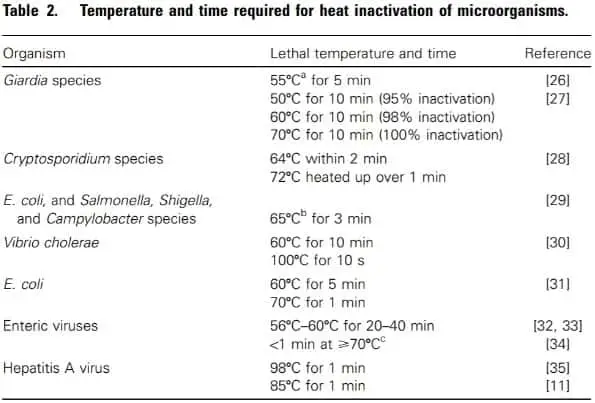 How Long Does Water Need to Boil to Kill Bacteria? – Tryout Nature
Does Boiling Kill Bacteria in Food?
Great question, friend with good instincts. Boiling food is a whole different beast. A single minute won’t kill bacteria deep inside a chicken thigh.
That’s why we use food thermometers. For water, it’s easy—it heats evenly. For a hunk of meat? Not so much.
Moral of the story: boil water for one minute; cook chicken until it’s 165°F inside. Don’t mix them up. You’ll get soup or salmonella.
The “But I Only Have a Microwave” Loophole
Yes, you can boil water in a microwave. But it’s risky in a weird way. Water can superheat and explode in your face.
To avoid becoming a science experiment, put a wooden spoon or a microwave-safe object in the cup. That gives bubbles a place to form.
Then heat until it boils, let it sit for one minute, and you’re good. No spoon? Use a chopstick. You’re a creative genius.
So, What’s the Final Answer?
One minute at a rolling boil. That’s all you need to kill bacteria, viruses, and most parasites. It’s almost too easy.
But remember: altitude adds two more minutes. And always start with clean-ish water—boiling won’t fix chemical sludge.
Now go make some tea, you beautiful, bacteria-free human. And stop boiling water for ten minutes—your electricity bill is crying.
