What Is Difference Between Club Soda And Seltzer

You’re at a party. Someone hands you a fizzy drink. Is it club soda? Seltzer? Sparkling water? Tonic? You take a sip, nod wisely, and have absolutely no idea what just happene...
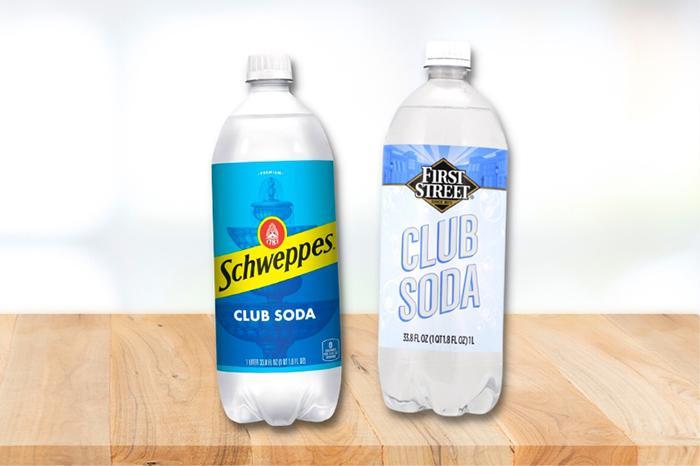
You’re at a party. Someone hands you a fizzy drink. Is it club soda? Seltzer? Sparkling water? Tonic? You take a sip, nod wisely, and have absolutely no idea what just happened. Relax. You’re not alone. This is the great carbonated confusion of our time, and it’s time to settle it like adults—with jokes and science.
The Tale of Two Bubbles
Let’s start with the simplest one: seltzer. Seltzer is plain water that has been carbonated. That’s it. No extra minerals, no weird flavors, no secret ingredients. It’s the vanilla ice cream of fizzy waters: pure, honest, and a little boring on its own. The name comes from a German town called Niederselters, which had natural springs. So really, you’re drinking German history in a can. Zwei bier, bitte!
Now, club soda is seltzer’s slightly fancier cousin who shows up to brunch wearing a blazer. Club soda has added minerals—like sodium bicarbonate, potassium sulfate, or sodium chloride. That’s just a fancy way of saying “a pinch of salt and some magic powder.” These minerals give club soda a rounder, more sophisticated taste. It’s the difference between a plain bagel and a bagel with a smear of cream cheese. Both are fine, but one tries harder.
Must Read
The Taste Test You Didn’t Ask For
If you drink seltzer and club soda side by side, you’ll notice something. Seltzer hits your tongue like a tiny, enthusiastic jackhammer. Sharp and clean. Club soda is softer, almost creamy. It’s because the minerals buffer the acidity. The carbonic acid (that’s the fizz) gets mellowed out by the salts. You’re basically drinking unflavored, low-rent Gatorade. What a time to be alive.
Here’s a surprising fact: club soda was invented in the 1800s to mimic natural mineral waters from spas. Rich people would travel to fancy springs in Europe to drink bubbly water for their health. Club soda was the cheap knockoff, sold in bars. So next time you order a vodka soda, remember: you’re drinking a 200-year-old hustle on the wealthy.
Why Does Any of This Matter?
It matters if you’re mixing cocktails. Bartenders have strong opinions about this, and they will judge you silently. For a vodka soda, seltzer is fine. It lets the vodka scream. But for a gin and tonic, never use club soda. Tonic water is its own beast—it has quinine, sugar, and a bitter taste. Club soda would make the whole drink taste like a sweaty sock. A salty sweaty sock.
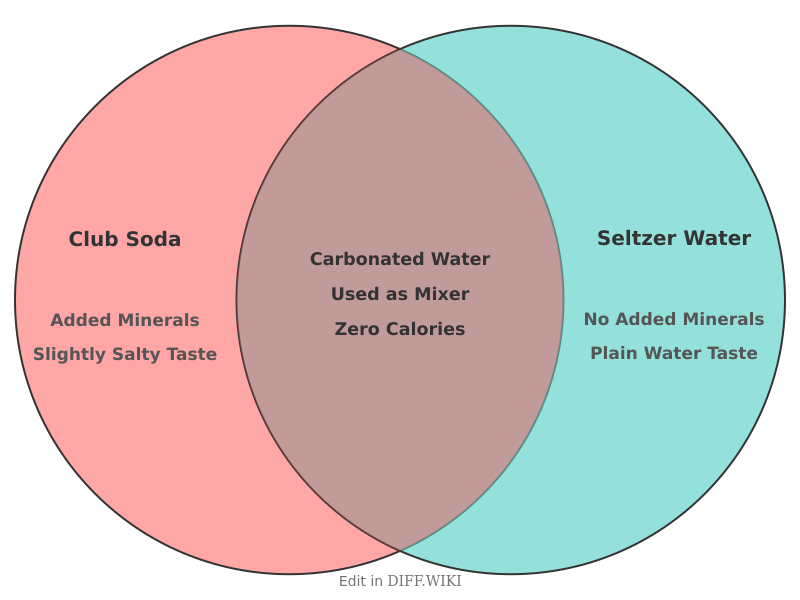 Differences between Club Soda and Seltzer Water - diff.wiki
And don’t even get me started on tonic water. It’s not even in this family. Tonic has sugar, quinine (a malaria-fighting compound from tree bark), and enough calories to fuel a small horse. Quinine glows under UV light, by the way. So if you’re at a rave and your gin and tonic is neon blue, that’s normal. Or you’ve been drugged. Either way, hydrate.
The Great Identity Crisis
Here’s where it gets chaotic. Many brands blur the lines. Perrier is naturally carbonated mineral water. San Pellegrino is also natural, but with more minerals. Those aren’t club soda or seltzer. They’re the fancy European aristocrats who refuse to acknowledge commoners. And then there’s LaCroix—which is seltzer with natural flavors. But people call it “sparkling water,” and the internet fights about whether it’s healthy. Spoiler: it’s fine. Drink it.
To add chaos, some regions call all bubbly water “soda water.” Order a “soda” in the American South, and you might get a Coke. Order a “soda water” in London, and a bartender will hand you club soda, then sneer. The whole system is designed to confuse you. I believe it’s a conspiracy by Big Sparkle to sell more cans.
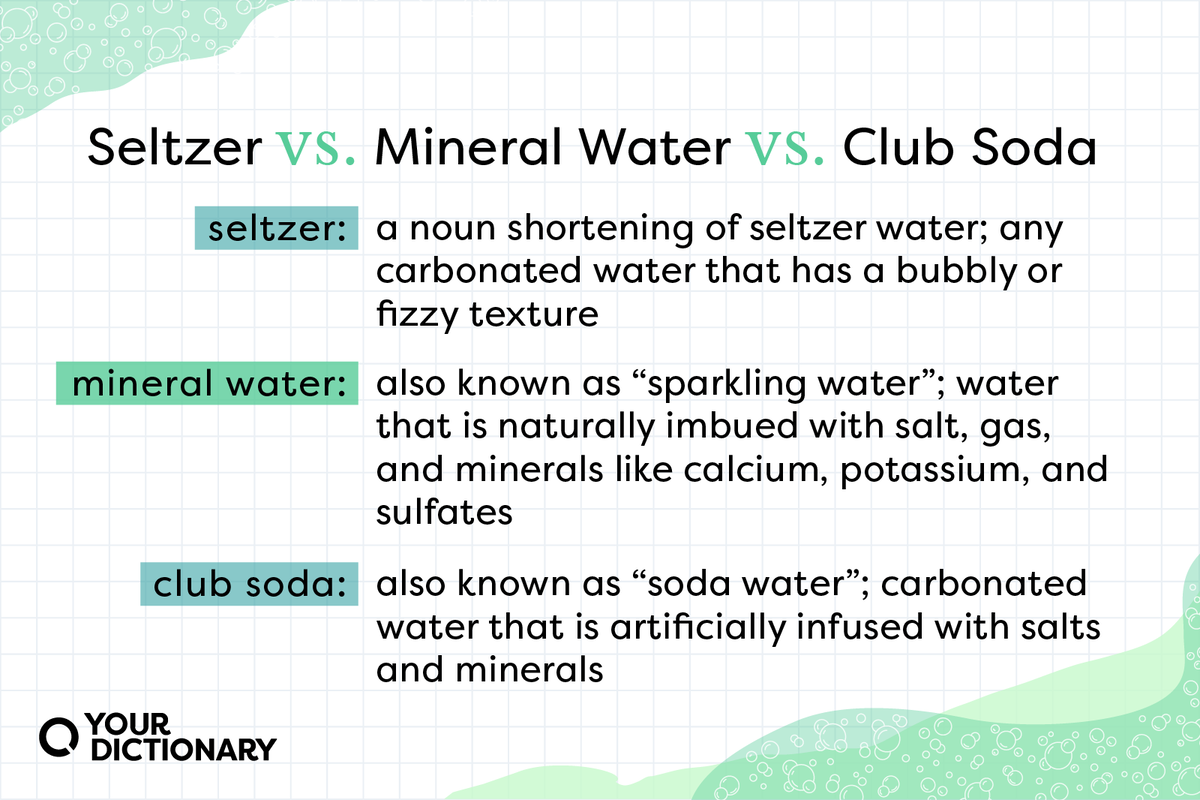 Difference Between Club Soda And Seltzer Water at Michael Carandini blog
Which One Should You Buy?
If you’re broke and just want bubbles for your whiskey: buy seltzer. It’s cheap, it’s simple, and nobody cares. If you’re making a fancy mocktail for your yoga friends: buy club soda. The minerals add a “je ne sais quoi” that makes you look like you know what you’re doing. You don’t, but the fizz will hide that.
And if you ever see a bottle labeled “carbonated water”, run. That’s a red flag. It means whoever made it couldn’t even be bothered to choose a name. It’s the “Hey you” of beverages. Drink at your own risk.
The Most Surprising Fact of All
Here’s a party trick: club soda can actually remove stains from fabric. The carbonation lifts the dirt, and the salt helps break it down. So if you spill red wine on your white shirt, pour club soda on it. It works better than seltzer. That’s right: club soda is a stain remover, a mixer, and a historical artifact. Seltzer can’t even remove a bad mood.
Now go forth. Order your drink with confidence. When the bartender asks, “Club soda or seltzer?” look them dead in the eye and say, “I know the difference, and I made my choice.” Then realize you forgot which one you picked, panic, and just say “yes.” We’ve all been there.
