Does Reverse Osmosis Remove Fluoride From Water

Let’s be real—water is basically the original influencer. It’s everywhere, it’s essential, and everyone has an opinion on how it should be treated. Lately, the big question bu...
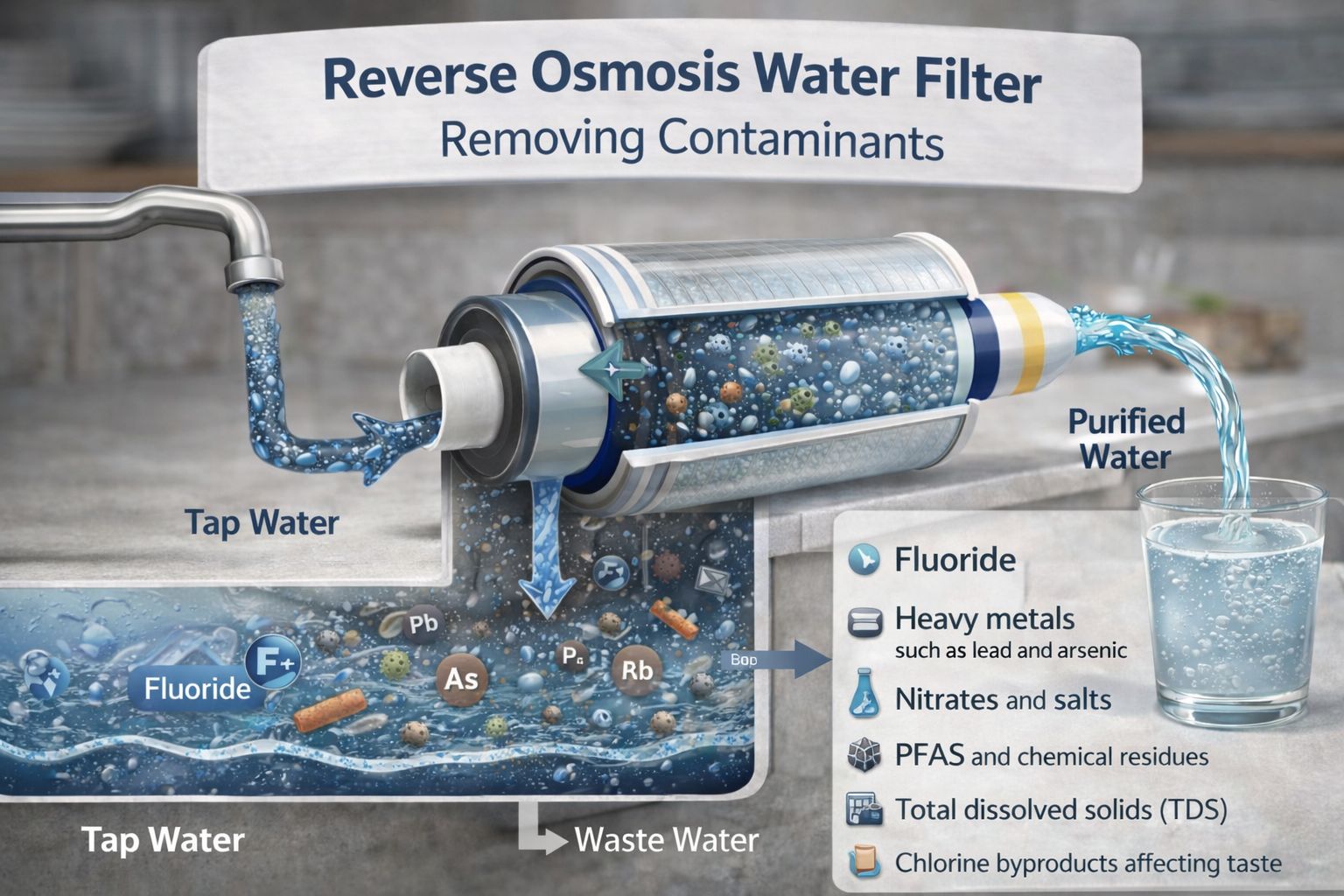
Let’s be real—water is basically the original influencer. It’s everywhere, it’s essential, and everyone has an opinion on how it should be treated. Lately, the big question buzzing in your filtered water bottle or under-sink system is this: does reverse osmosis remove fluoride from water? The short, satisfying answer is yes—but the longer story is where things get interesting.
Reverse osmosis, or RO for the cool kids, is a highly effective filtration method. It works by pushing water through a semi-permeable membrane that catches nasties like lead, chlorine, and yes, fluoride. Studies show it can remove between 85% to 95% of fluoride, depending on the system and your water’s starting chemistry.
Think of RO as the bouncer at an exclusive club. It lets H₂O molecules pass through, but fluoride ions—along with other dissolved solids—get politely turned away at the door. That’s why RO systems are often called the gold standard for water purification.
Must Read
The Fluoride Fiend in Your Faucet
Fluoride isn’t evil—it’s actually a bit of a celebrity in the dental world. Since the 1940s, municipalities have added it to tap water to prevent cavities, a move the CDC calls one of the top public health achievements of the 20th century. But here’s the plot twist: not everyone wants the encore.
Some folks worry about overexposure, especially if they use multiple fluoride sources (toothpaste, mouthwash, and even some teas). Others are simply chasing that pure, “mountain spring” vibe at home. If you’re in the latter camp, RO is your ticket to fluoride-free hydration.
But don’t toss your toothbrush just yet. While RO removes fluoride, it also strips out beneficial minerals like calcium and magnesium. That’s why many modern RO systems include a remineralization filter—because crisp water shouldn’t taste like a chemistry experiment.
Practical Tips for the Fluoride-Curious
If you’re considering an RO system, start with a water test kit. Your local water utility can tell you if fluoride levels are high (typically 0.7 to 1.2 mg/L in the U.S.). Fun fact: some countries like Kenya and India have naturally high fluoride in groundwater, so RO is a literal lifesaver there.
Not ready for a full under-sink setup? Countertop RO filters exist, and they’re as stylish as a Scandinavian coffee brewer. Brands like AquaTru or Waterdrop make sleek units that fit on your counter without looking like industrial plumbing.
 Does Reverse Osmosis Remove Fluoride? - Rayne Water
Pro tip: replace your RO membrane every 2 to 3 years. A clogged membrane is like a lazy bouncer—it stops filtering properly. Also, flush the system weekly to prevent bacteria buildup. Your water deserves fresh vibes.
The Cultural Reframe: From Tap to Trend
Remember when everyone was obsessed with alkaline water at the gym? Now fluoride removal is the new wellness flex. But let’s not pretend this is a panic—it’s more like a personal preference, the same way some people swear by oat milk while others die for dairy.
Culturally, we’ve entered an era where “what’s in my water” is a dinner party conversation starter. You might hear someone say, “I only drink RO water,” with the same smugness as “I only buy vintage vinyl.” And hey, power to them—just don’t forget that hydration is the real prize.
Even the French know this. In Paris, tap water is safe and often mineral-rich, but many locals still use carafes with basic charcoal filters. It’s about taste and ritual, not fear. So whether you choose RO or a simple pitcher, make it a ritual you love.
Fun Little Facts to Sip On
Did you know that average humans are about 60% water? That means your body is basically a walking aquarium. If you’re filtering out fluoride, you’re also filtering out arsenic, nitrates, and even some pharmaceutical residues—all bonus wins.
 How to Remove Fluoride From Water: 5 Proven Methods
Another geeky gem: RO was originally developed for desalinating seawater in the 1950s. Now it’s sitting cozily under your kitchen sink. Talk about a glow-up. The technology uses about 3 to 4 gallons of water for every 1 gallon of purified output—so it’s not the most eco-friendly choice, but newer systems are getting wiser with water waste.
And here’s a curveball: boiling water actually concentrates fluoride. So if you’re hoping to evaporate it away, you’ll just get a stronger dose. Reverse osmosis is the only home method that truly kicks fluoride to the curb.
A Short Reflection for Your Daily Glass
At the end of the day, the decision to remove fluoride is yours—and it’s okay if it changes. Some people love that little dental boost from tap water; others want a blank slate for their morning matcha. Both are valid, like choosing between a cozy café and a smoothie bar.
What matters most is that you’re hydrating, thinking critically about what you consume, and maybe even enjoying the process. That first sip of cold, filtered water? It’s a small ritual of care, a moment to pause in a busy day.
So go ahead—install that RO system, or don’t. Fill a fancy bottle from the tap. Just remember: water is your oldest friend, and it’s always worth treating well. Cheers to that.
