How Much Water Is Recommended To Drink Per Day

Let’s be real for a second: hydration is having a cultural moment. From massive, influencer-approved water bottles with motivational time stamps to the sudden ubiquity of elec...
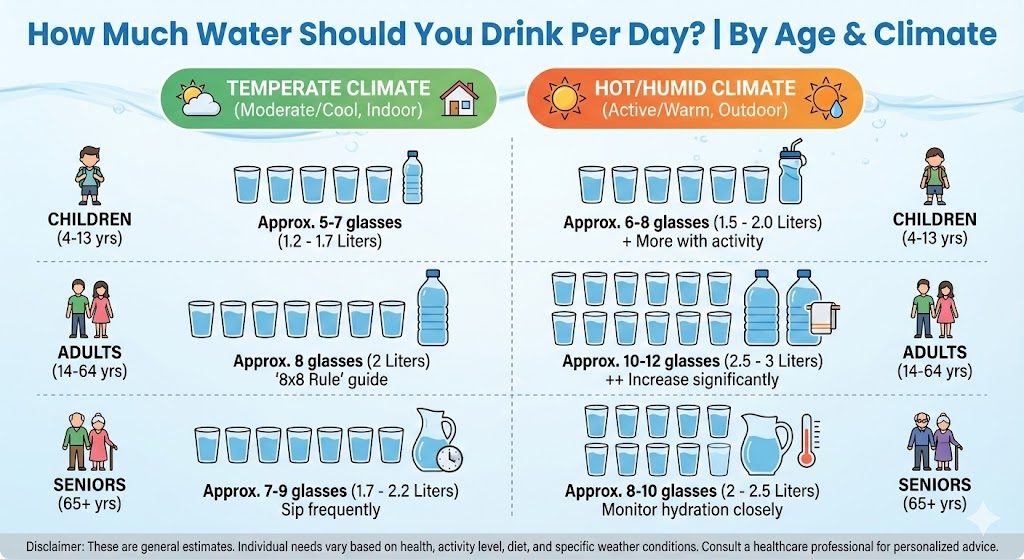
Let’s be real for a second: hydration is having a cultural moment. From massive, influencer-approved water bottles with motivational time stamps to the sudden ubiquity of electrolyte packets, it feels like we’re all racing to chug our way to better skin, sharper focus, and eternal youth. But in the chaos of competing wellness trends, the most basic question often gets lost: how much water do you really need to drink every day?
Spoiler alert: the old “eight glasses a day” rule is a decent starting point, but it’s far from the whole story. The official numbers, according to the U.S. National Academies of Sciences, Engineering, and Medicine, are about 3.7 liters (15.5 cups) for men and 2.7 liters (11.5 cups) for women daily. That sounds like a lot, but here’s the fun part—that includes all fluids, from your morning coffee to that juicy slice of watermelon at lunch.
The Myth of the Clear Pee
We’ve all heard the advice to chase “clear” urine, but that’s actually a bit of overkill. Your pee should be a pale-straw color, not completely transparent. If it’s crystal clear, you’re likely overhydrating, which can flush out essential electrolytes and leave you feeling more tired than before. Think of it like Goldilocks: not too dark, not too clear.
Must Read
A better, more intuitive metric? Thirst. Your body has a highly evolved internal system for a reason. In fact, studies show that the “drink 8 glasses” advice is often ignored by the very researchers who developed it, because most healthy people self-regulate perfectly fine when they listen to their own thirst cues.
What About Coffee and Tea?
For years, we were told that caffeine was a diuretic that canceled out hydration. That myth? Totally busted. While caffeine has a mild diuretic effect, your body adapts quickly. A regular coffee drinker gets just as much hydration from their latte as they do from a glass of water. So yes, your morning ritual counts toward the daily goal.
The same goes for herbal teas, sparkling water, and even soups. The real culprits that work against you are alcohol and high-sugar sodas, which can actively pull water from your system. A good rule: for every alcoholic drink, chase it with a glass of still water—your tomorrow-self will thank you.
Practical Tips for the Modern Life
If you find water boring (and let’s be honest, it often is), add a twist. Drop in a few slices of cucumber, a sprig of mint, or a handful of frozen berries. This isn’t just aesthetic—it makes the act of hydrating feel like a small, luxurious ritual rather than a chore.
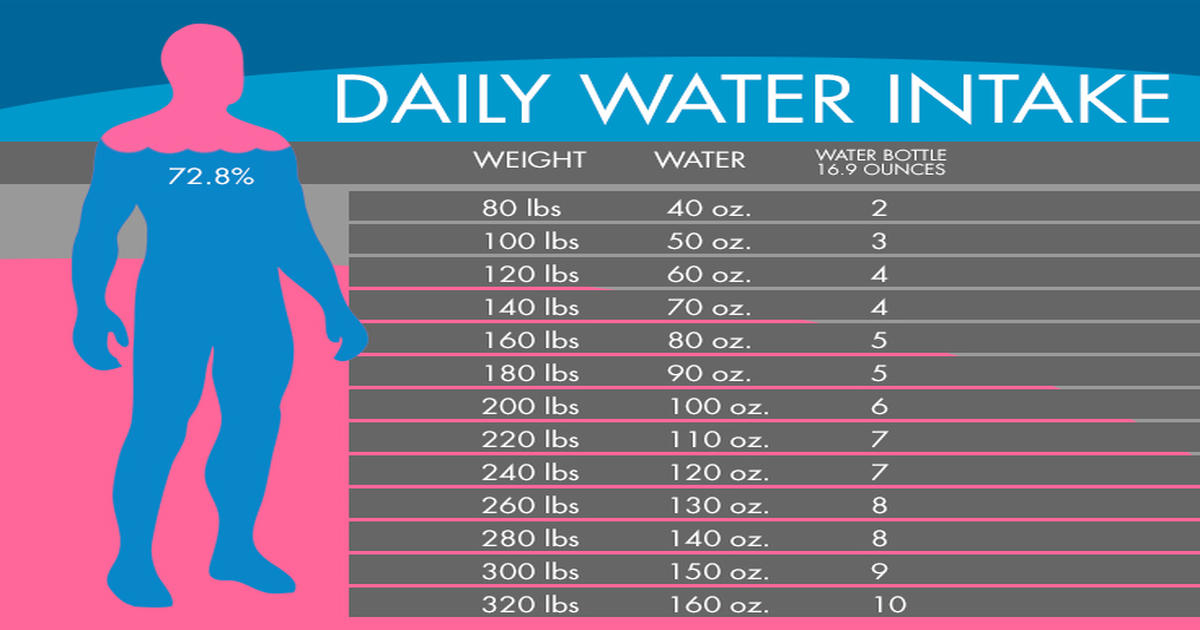 Water Consumption Per Day Chart – LFMP
Another hack: set a paddle. Not a literal one, but a visual timer on your phone or a drink-bottle with hourly markers. These bottles are everywhere now, from Target to your local athleisure boutique. They work because they turn an abstract goal into a game. Try to hit the “10 AM” line before your second meeting of the day.
And here’s a wild little fact: eating a large salad or a bowl of cucumber slices can provide over a cup of water. Celery, watermelon, and strawberries are 90% water or more. So your afternoon snack is actually a hydration power-up in disguise.
When You Need More
Exercise, hot climates, and illness (like a fever or stomach bug) obviously increase your need. The rule of thumb here is replace what you lose. Before a workout, drink 16-20 ounces (about 2 cups) two hours prior, then sip during. After, weigh yourself and drink 16-24 ounces for every pound lost. That’s the science of performance.
Pregnancy and breastfeeding also demand more—about 10 cups per day for nursing moms. And if you’re in a plane, that dry cabin air can dehydrate you faster than you’d think. Always pack an empty reusable bottle through security and fill it at the gate.
 Hydration 101: How Much Water Should You Drink Each Day?
The Social and Cultural Water Dance
Walk any American office these days, and you’ll see a Stanley cup or a Nalgene bottle like a uniform accessory. TikTok has turned “water tok” into a genre, with creators timing their sips to beats and comparing the aesthetics of various bottles. It’s memetic, but it works—social visibility makes hydration a shared value
Culturally, we’ve swung from the 1970s “gatorade is for jocks” mentality to the current “water is the ultimate flex.” Even the French, known for their wine, now carry chic glass carafes. The global shift is real. Hydration is the new cool.
A Simple, Final Reflection
At the end of the day, water is not a performance metric. It’s a return to the basics. The recommendation is flexible for a reason—your life is not a lab experiment. Some days you’ll drink a gallon; other days you’ll forget to fill your bottle until 3 PM. That’s okay.
The real takeaway is not to obsess over ounces, but to notice the signals. That slight headache behind your eyes? That midday fog? That dry mouth during a zoom call? Those are your body asking for a favor. Pour it a glass—quietly, without guilt. And then, go live your life. The water will follow.
