How Much Water Does A Water Softener Discharge

So, my uncle Dave—bless his heart—decided to “save” the planet last summer. He installed a water softener and then, I swear, he acted like he’d personally defeated climate cha...

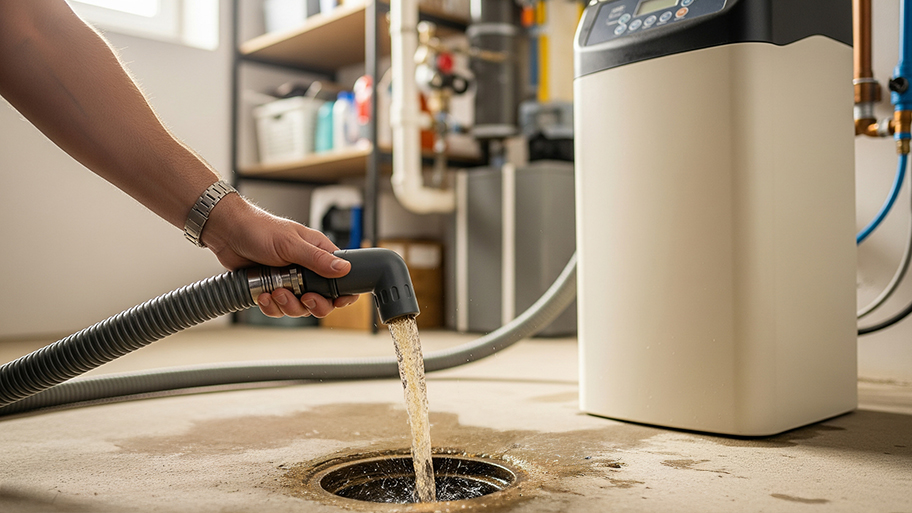
So, my uncle Dave—bless his heart—decided to “save” the planet last summer. He installed a water softener and then, I swear, he acted like he’d personally defeated climate change. A week later, his pristine new driveway looked like a salt lick for a herd of ghost deer. The white crust was everywhere. He called me, panicked: “Did my water softener vomit on my house?”
The Short, Honest Answer
Well, Dave, sort of. A typical water softener discharges between 25 and 60 gallons of water during a single regeneration cycle. That’s the “backwash” you’re seeing. It happens every few days, depending on how hard your water is and how much you use.
Think of it this way: your unit is flushing itself out. It’s not a leak—it’s a scheduled, salty bath for the resin beads inside. And yes, that bath water has to go somewhere.
Must Read
Why So Much Water?
I know, 50 gallons sounds insane. But here’s the irony: if you didn’t discharge that water, the softener wouldn’t work. The process uses water to rinse the salt brine away from the resin, and another round to flush out the calcium and magnesium grit.
It’s like washing a really dirty mop. You don’t just dip it once—you rinse, rinse, and rinse again. Your softener does the same, but for your pipes. And honestly, compared to the gallons you save by avoiding scale-clogged showerheads and failed water heaters? It’s a trade-off.
The Math That Makes You Wince
Let’s do some quick, painless math (I promise, no pop quiz). If your unit regenerates every three days, that’s roughly 6,000 to 7,000 gallons of discharge water per year. For a family of four, that’s like adding one extra load of laundry every day—only saltier.
But here’s the twist: modern, “high-efficiency” softeners can cut that number in half. They use “demand-initiated regeneration,” which means they only flush when the resin is truly exhausted. Smart, right? My uncle Dave? He bought the cheap one. Classic Dave.
 Who repairs water softeners? | Angi
The “Where Does It Go?” Problem
Most people don’t worry about the volume—they worry about the salt. That discharge is basically brine soup. If you’re on a septic system, you need to be careful. The salt can kill the helpful bacteria in your tank, and trust me, dead septic bacteria smell like a crime scene.
If you’re on city water, the brine goes into the sewer system. That works fine, but it’s worth checking local regulations. Some municipalities are getting picky about chloride levels in their water.
How to Avoid the “Uncle Dave” Disaster
Don’t do what Dave did. He pointed the discharge hose straight onto his driveway (bad) and didn’t check the flow rate (worse). Always route the brine to a drain, a dry well, or at least ten feet away from your foundation.
And please don’t water your lawn with it. That salty water will turn your green grass into a crispy, brown apology. I know it sounds like a waste, but that water is not friendly to plants.
 How Much Water Does A Resin Softener Use? – VIIIG
Can You Reduce the Flow?
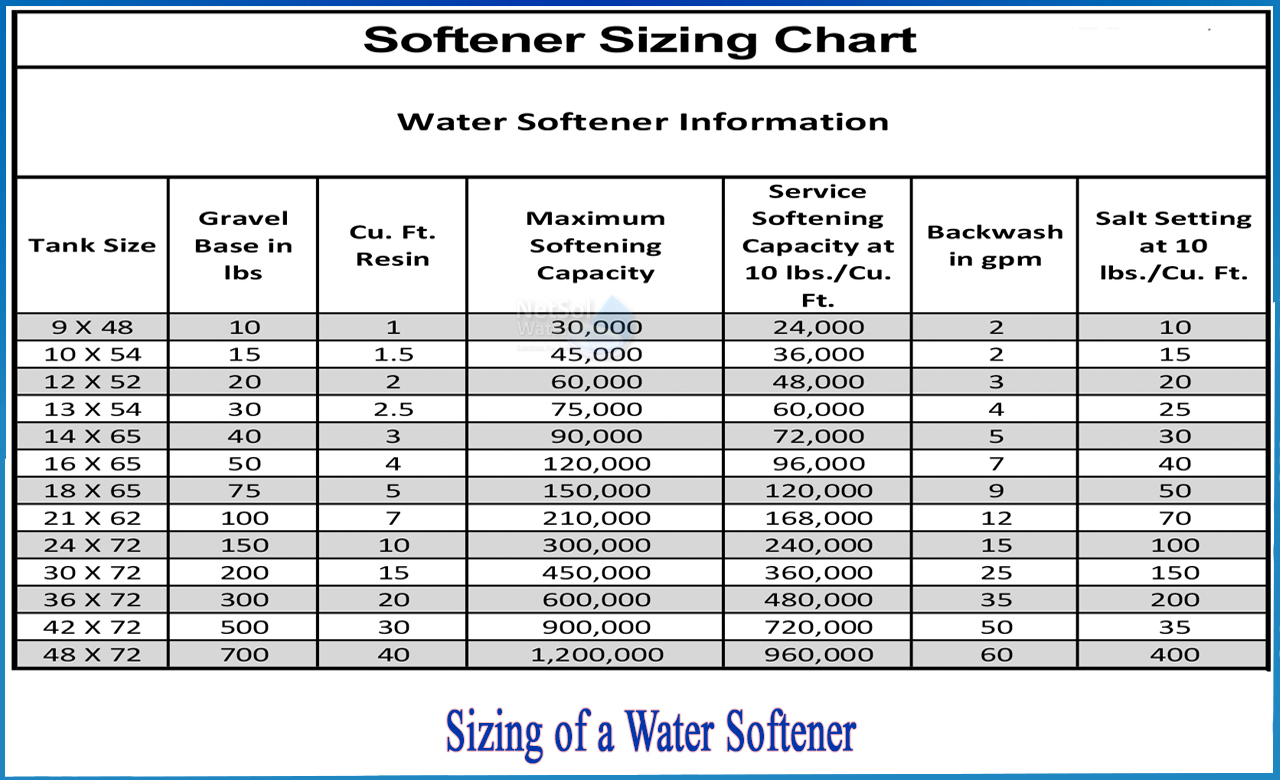
Yes, actually. You can adjust the regeneration frequency and the brine fill amount on most controllers. But here’s a secret: if you have really hard water, you’re stuck with a certain minimum. It’s physics, not a conspiracy.
Also, consider a “counter-current” or “upflow” softener. They’re pricier, but they use up to 40% less water per cycle. Your wallet and the planet will thank you.
The Bottom Line (No Pun)
So, how much water does a water softener discharge? Enough to fill a bathtub every three days. Enough to make your driveway look like a salt cracker if you’re careless. But that water is the price you pay for silky hair, spotless dishes, and a washing machine that doesn’t die of calcium heart disease.
Is it wasteful? A little. But it’s also necessary. Just don’t be like my uncle Dave. Plan the discharge point, check your septic, and maybe—just maybe—spend a few extra bucks on an efficient model. Your future self, and your driveway, will thank you.
P.S. – If you see white crust on your driveway, that’s not a ghost. That’s your softener saying, “Hey, I’m working!” Now go rinse it off with a garden hose (no, not with the softener water).
