What Is The Recommended Tds For Drinking Water

You twist the cap, take a long sip of water, and pause. It tastes flat, or maybe a little metallic. That feeling, that subtle "off" note you can't quite name? It all comes dow...

You twist the cap, take a long sip of water, and pause. It tastes flat, or maybe a little metallic. That feeling, that subtle "off" note you can't quite name? It all comes down to something called TDS—Total Dissolved Solids. Think of it as the secret fingerprint of your water, the invisible profile that determines whether that glass feels crisp and refreshing or like it just came from a questionable garden hose.
So, What Actually Is TDS?
Imagine a tiny, invisible party floating in your water: minerals like calcium and magnesium, salts, a few trace metals, and even bits of organic matter. That's your Total Dissolved Solids. Your tongue is actually a sophisticated TDS detector, picking up on these particles to give water its "mouthfeel" and taste.
A glass of pure H2O with zero TDS? It would taste bizarrely flat and aggressive, like drinking from a science lab. On the other hand, water so loaded with minerals it tastes like a rocky riverbank isn't exactly a spa experience either. There's a sweet spot, a Goldilocks zone for your hydration happiness.
Must Read
The Global Gold Standard: 0–300 PPM
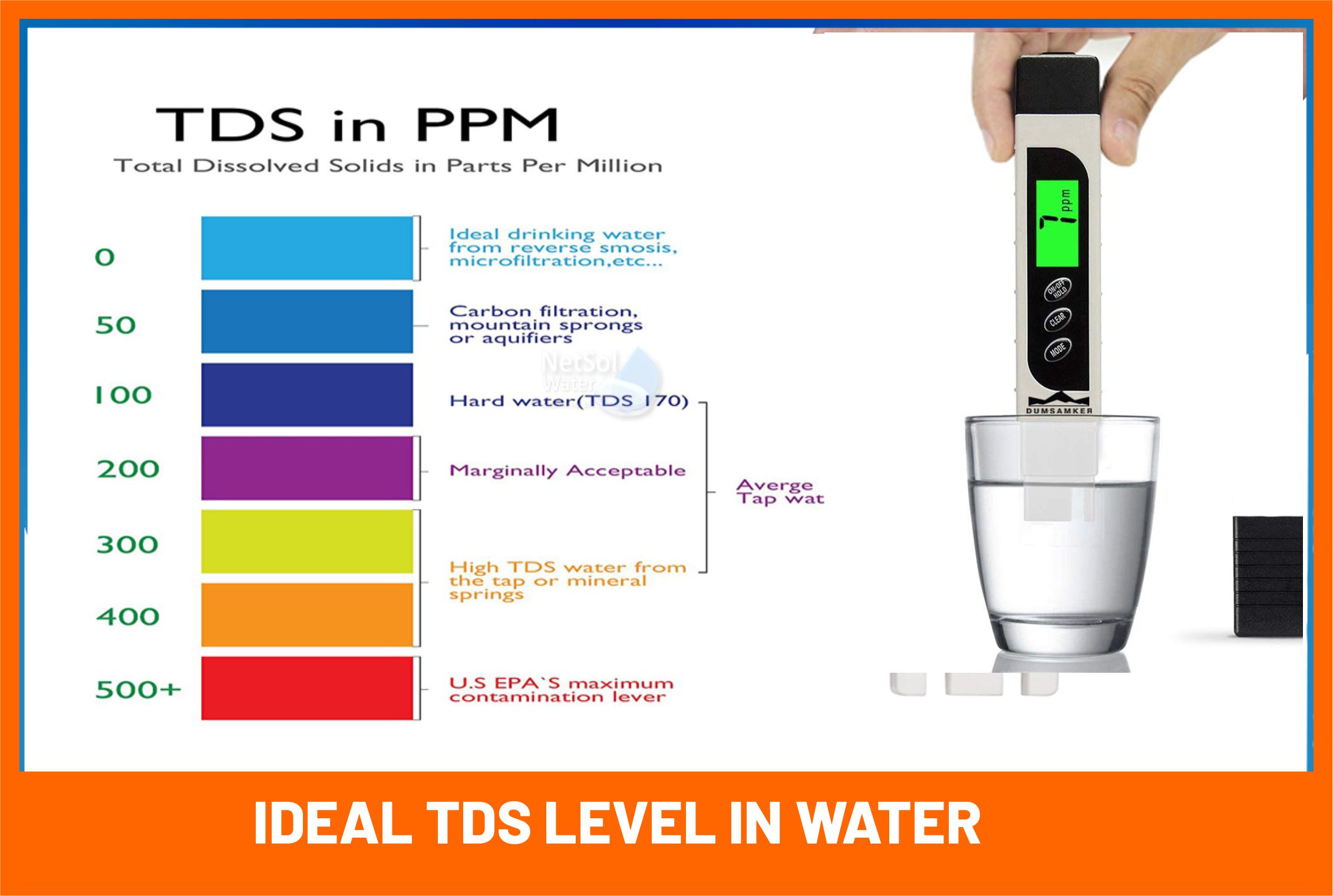
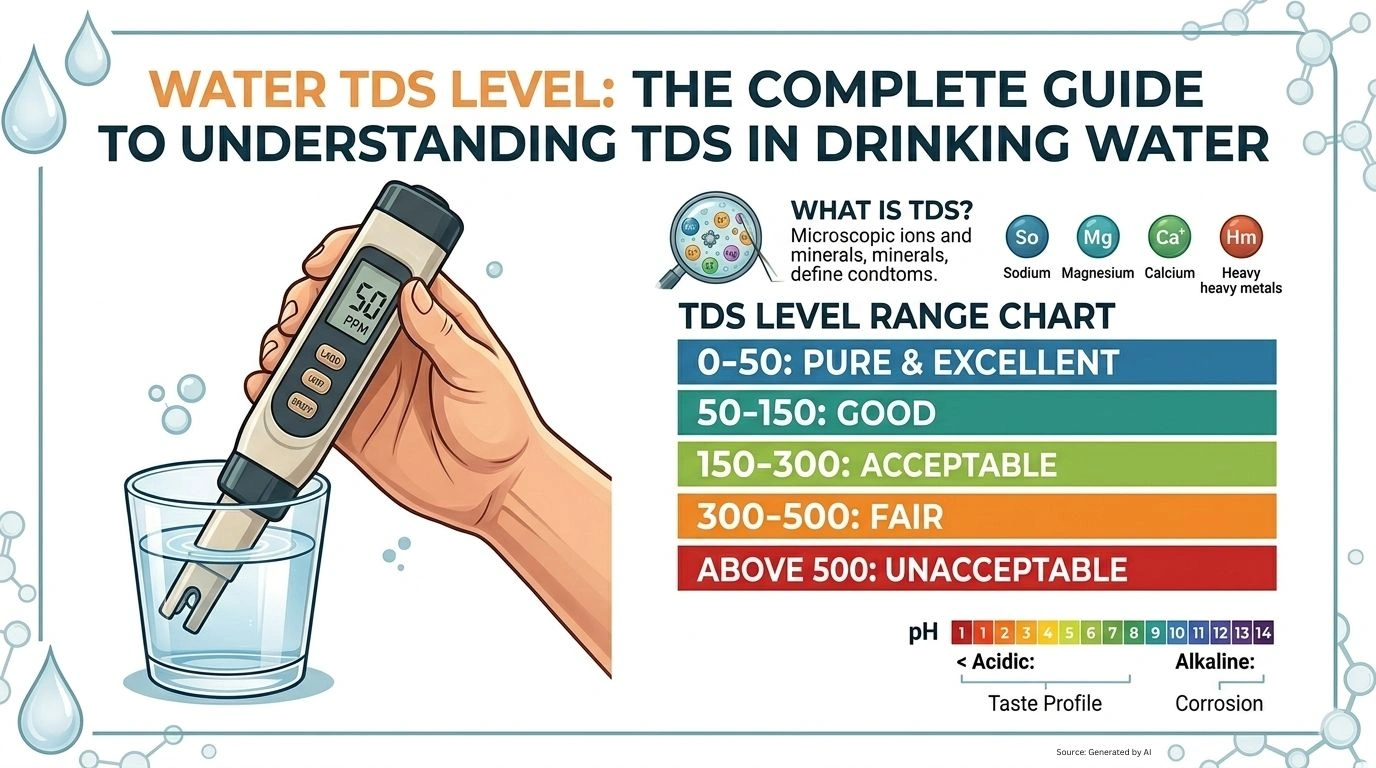
Here's the short, beautiful answer: most experts, including the World Health Organization and major water quality bodies, recommend drinking water with a TDS between 50 and 300 parts per million (PPM). Below 50 PPM, water starts to get thirsty for minerals—it's too pure, often acting like a sponge and leaching minerals from your body. Above 300 PPM, you enter the "mineral water" territory, which is fine in moderation but can taste heavy, salty, or even bitter.
Your tap water in a modern city usually sits between 100 and 300 PPM. A fancy imported mineral water from a European spring might clock in at 250 PPM. That cold, filtered water from your office cooler? Probably around 30 to 50 PPM. The verdict? Low 100s is where the magic happens for everyday drinking.
A Global Taste Test (Bottled Water Edition)
Let's play a game. Grab that bottle of Fiji water from your grocery store. Its TDS hovers around 210 PPM—that's why it has that soft, silky texture. Now look at Evian, which is a bit bolder at about 304 PPM. In contrast, Aquafina and Dasani are heavily filtered down to a mere 4 to 10 PPM, which is why they taste "neutral" or, to some palates, like nothing at all. Your preference is literally written in the numbers.
 Drinkable Water Tds Range
In Japan, water is often brewed to a very low TDS (around 30 PPM) to enhance the flavor of delicate green tea. In parts of the Middle East, where desalination is common, water is often re-mineralized back up to 150 PPM because locals find the pure stuff unpalatable. Culture, climate, and even your morning coffee ritual all bend around this one little number.
The Refresher & The Filter: Practical Tips
If your tap water tastes like a swimming pool or a swamp, a simple TDS meter (a ten-dollar gadget online) is your new best friend. Stick it in a glass and read the number. If it's over 500 PPM, that's a sign of high mineral content or potential contamination, especially scaling in your pipes. If it's under 20 PPM from a reverse osmosis filter, you're stripping out everything, including the good stuff.
Fix it like a pro: If your water is too high in TDS, a basic carbon filter won't cut it—you need reverse osmosis or distillation. But don't go too far. The smartest move is to re-mineralize your purified water. You can buy a small mineral cartridge for your countertop filter, or simply add a pinch of high-quality sea salt or a mineral drop. It sounds fancy, but it's just restoring balance.
A fun little fact: cucumbers and watermelons have a TDS of about 100 to 150 PPM. That's why they taste so naturally hydrating. Your body, which runs at roughly 9,000 PPM internally (thanks to salts and electrolytes), actually craves that sweet spot of 100–300 PPM for optimal absorption.
 Water TDS Level: The Detailed Guide For Drinking Water TDS | ZeroB
The "Mouthfeel" Rule of Thumb
Here's an insider trick: pour two glasses of water—one from your tap, one from a filtered pitcher. Take a sip of each and swish it like wine. The one that feels "thin" and leaves your mouth feeling slightly dry? Likely under 30 PPM. The one that feels "heavy" or leaves an aftertaste? Probably north of 350 PPM. The one that feels smooth, neutral, and lightly crisp? You've found your Goldilocks, likely in the 80–200 PPM range.
Don't obsess over the number. If you're healthy and your water doesn't taste terrible, a range of 50–300 PPM is perfectly safe. The obsession belongs only to coffee snobs (who use exactly 150 PPM for the perfect brew) and tea purists (who prefer 50 PPM to let the leaf shine).
A Short Reflection for Your Daily Life
The next time you fill your glass, think about this: water isn't just a thirst-quencher. It's a conversation between you and the earth's minerals. A TDS of 150 means you're drinking dissolved limestone from an ancient seabed, or magnesium shaken loose from granite mountains. You are literally imbibing the geology of your region.
So, ask for the number the next time someone offers you a fancy bottled water. Or better yet, trust your own taste buds. The perfect glass of water isn't some luxury import—it's the one that makes you take a deep, satisfied breath after the first sip. And with a little TDS wisdom, you'll find it in your own kitchen, every single day. Cheers to that crisp, invisible companion.
