Does Uv Treatment Remove Turbidity From Water

Let’s talk about cloudy water. You know the stuff—like someone dumped a milkshake into your tap. That’s turbidity, the scientific word for “ick.” It’s not just gross; it’s tin...

Let’s talk about cloudy water. You know the stuff—like someone dumped a milkshake into your tap. That’s turbidity, the scientific word for “ick.” It’s not just gross; it’s tiny particles—dirt, clay, algae—floating around, making your water look like a swamp’s backwash. You might wonder: can a UV light, the same thing that zaps bacteria, clear that murkiness right up? Spoiler alert: it cannot, and this will be a short, frustrating relationship.
The UV Light: A Bad Boy With One Talent
Imagine hiring a bodyguard who’s terrifically good at punching germs in the face. That’s your UV treatment system. It uses ultraviolet rays to scramble the DNA of bacteria, viruses, and parasites, turning them into harmless, sterile little ghosts. It’s a marvel of modern science—right until you ask it to clean your windshield.
UV light is invisible and works purely on a molecular level. It doesn’t grab dirt. It doesn’t filter anything. It’s like expecting a flashlight to mop your floor; the light will shine, but the mess stays. If your water looks like pea soup, a UV lamp will just provide very bright, very sterile pea soup.
Must Read
So, What Actually Happens to the Turbidity?
If you blast murky water with UV, the dirt particles just laugh at the rays. They’re too big and clumsy to be phased by a few photons. The light might even fail completely, because those particles create shadows. A microbe can hide behind a speck of sand, giggling while the UV light fumbles around like a blind cat.
Think of it this way: you wouldn’t use a tanning bed to clean your oven. The grease stays. Similarly, UV cannot remove physical junk—it can only sterilize whatever it actually touches. If the water is thick with silt, the UV rays are just throwing punches in a fog bank. They miss everything.
The Gross Truth: Turbidity Is a Bully
Turbidity isn’t just ugly; it’s a security threat for your disinfection. The EPA (the fun police of water) says you need water with less than 1 NTU (Nephelometric Turbidity Units) for UV to work properly. For reference, that’s clearer than a celebrity’s social media filter. If your water is at 10 NTU—which looks like weak tea—the UV system might as well be a nightlight.
 UV & Water Filtration – McQuinn Pumps
Here’s the surprise fact that will make you the star of a dull party: clear water is less safe with UV than you think! Wait, no, let me fix that. Murky water is more dangerous because it shields pathogens. A study found that just a little turbidity can reduce UV effectiveness by over 99% for some viruses. It’s like trying to sunbathe in a mudslide.
The Three-Step Dance to Fix It
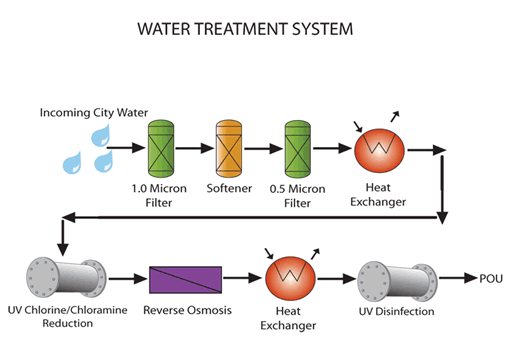
You don’t give up on UV. You just realize it’s a diva that needs prep work. First, you need a pre-filter. A sediment filter catches all the big chunks—sand, rust, your ex’s hopes and dreams. This brings turbidity down to a manageable level. Then you let the UV light do its germ-zapping magic.
Second, you need a carbon filter if there’s organic stuff making the water yellow. That removes tannins and smells (like rotten eggs, which is never a good look). The third step is sometimes a coagulant, a chemical that gloms tiny particles together so your filter can catch them. It’s elaborate, but hey, clean water is a needy friend.
 Titan Advantec Malaysia: Products - Ultraviolet (UV), TOC Sterilizer
But Wait! What If Your Water Is Already Clear?
If your water comes out of the tap looking like a diamond, UV is an absolute rock star. It kills 99.99% of bacteria without adding chemicals. No chlorine taste, no weird plastic aftertaste—just pure, crisp, disinfected water. It’s the James Bond of water treatment: sleek, effective, and only works well when everything is already in order.
And here’s the kicker: UV treatment does remove turbidity in a weird, roundabout way. Not by pulling dirt out, but by killing the living gunk. Algae blooms and certain bacteria can make water look hazy. When the UV zaps them dead, they might settle to the bottom. So, technically, the water clears up—but only if the turbidity was alive. You’re not removing mud; you’re committing microbial murder that happens to improve the view.
The Final Verdict (No Jargon, Just Gossip)
Does UV remove turbidity? Nope. It’s like asking if your toaster can vacuum the carpet. It can’t. But in the grand scheme of water purification, UV is a necessary diva—it just needs a good pre-filter to hold its hair back. If your water looks like a murky swamp, UV will turn it into a sterile murky swamp—safer, but still ugly.
So, next time someone sells you a UV system for cloudy water, laugh politely and walk away. Get a sediment filter first. Or just embrace the swamp aesthetic. Just remember: dirty water + UV light = clean dirty water. And that, my friend, is not what your coffee maker ordered. Stay hydrated, and stay clear.
