Does Reverse Osmosis Water Filter Remove Lead

So, you’re worried about lead in your water. Maybe you’ve seen the news, or you just watched a very dramatic water filter infomercial at 2 AM. Either way, you’re staring at yo...

So, you’re worried about lead in your water. Maybe you’ve seen the news, or you just watched a very dramatic water filter infomercial at 2 AM. Either way, you’re staring at your tap like it’s a suspicious character in a noir film. The big question: can your fancy Reverse Osmosis system save you from this metallic menace?
Short answer? Yes, it absolutely can. Reverse Osmosis is basically the bouncer of water filters. It kicks lead out of the party—and we mean kicks it. But hold your horses (and your filtered water glass), because there’s a whole bunch of fun, surprising science behind this.
The Magic (Not Really Magic, But Close)
Think of Reverse Osmosis (RO) as a very, very picky sieve. It uses a semi-permeable membrane with holes so tiny, water molecules can squeeze through, but lead ions—which are bigger and chunkier—get stuck. It’s like trying to shove a bowling ball through a keyhole.
Must Read
In fact, RO systems can remove up to 99% of lead from your water. That’s not a typo. That’s a higher success rate than my last attempt at a New Year’s resolution. The membrane literally tells lead, “Sorry, you’re not on the guest list.”
But here’s the kicker: RO doesn’t just stop at lead. It also kicks out arsenic, nitrates, fluoride, and even that weird chlorine taste that makes you feel like you’re drinking from a swimming pool. Basically, it’s the karate master of water purification.
But Wait—Is There a Catch? (There’s Always a Catch)
Of course, nothing this good comes without a few quirks. First, RO systems are slow. Like, glacier-on-a-Sunday-afternoon slow. You’ll fill a glass and feel like you’ve waited for a full season of your favorite show. And they waste water—about three to four gallons of water for every one gallon they make. Sorry, environment.
Also, the system needs regular maintenance. The pre-filters and membrane don’t last forever. If you ignore them, your RO will eventually just be a fancy, expensive pipe. A pipe that doesn’t remove lead. So, buy a calendar and set a reminder—your future hydration depends on it.
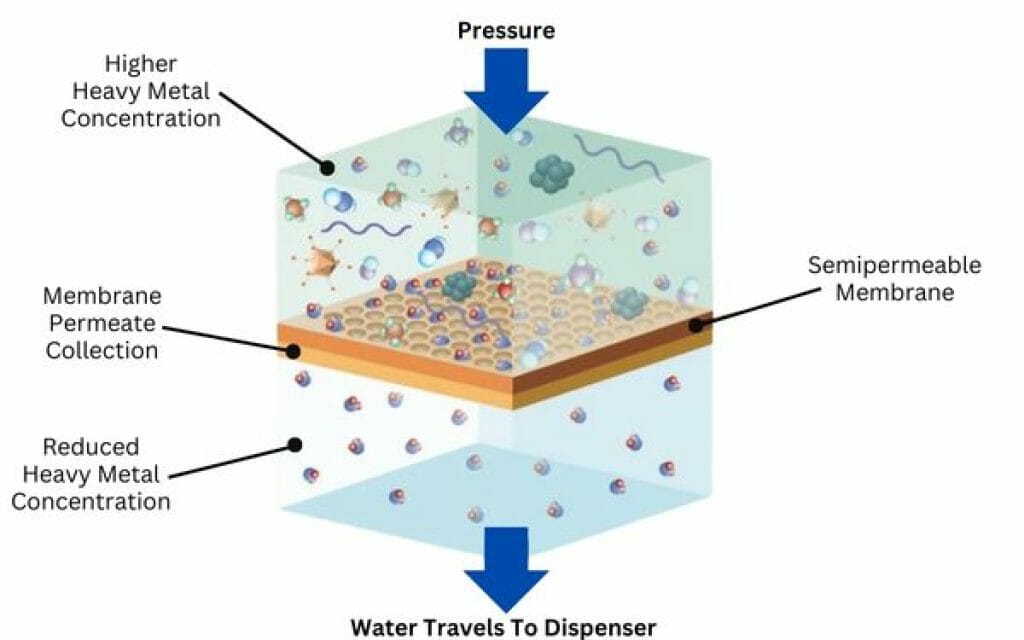 Does Reverse Osmosis Remove Lead From Water? – Freshnss
And here’s a surprising fact: RO water is actually too pure for some people. It removes good minerals like calcium and magnesium, too. Your water becomes a boring, empty shell of itself. Some folks add a remineralization cartridge just to give it some personality. But for lead removal? Still a champion.
What About Those “Other” Filters?
Let’s be real: not every filter is a hero. Those basic pitcher filters (you know, the brand with the blue logo) can reduce lead, but not as well as RO. They’re like a beginner’s yoga class for your tap water—helpful, but not winning any Olympics.
Activated carbon filters are good, but only if they’re combined with specialized media designed to grab lead. Read the fine print, people! Most just trap chlorine and make your water taste less like a swimming pool accident. Lead sneaks right through.
The real problem is that lead in water is invisible, tasteless, and odorless. Your brain can’t yell “Danger!” like it does with bad sushi. So, you need a system that actually works. That’s why RO is the gold standard—or should I say, the no-lead standard?
The “Flint, Michigan” Reminder
If you’re still on the fence, remember the whole Flint water crisis. That was a nightmare caused by aging pipes and poor management. The takeaway? Don’t trust your pipes. Trust your filter. RO systems are literally used in hospitals and labs to get ultra-pure water. You bet they can handle a little lead.
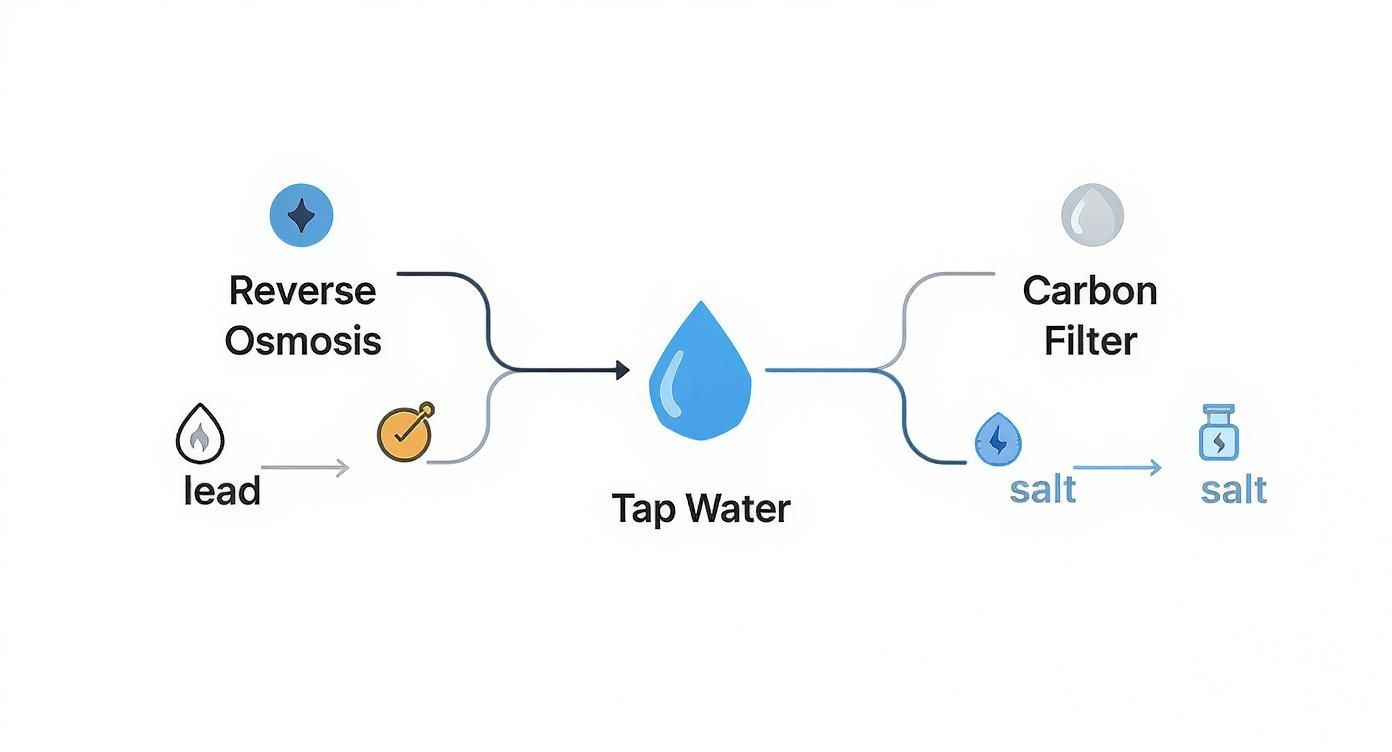 Reverse Osmosis vs Filtered Water: Which System is Right for Your Home?
But here’s the hilarious irony: if you have old lead pipes, the water might pick up lead after it passes through the RO membrane. Wait, what? Yes—if your faucet or pipes downstream of the filter still contain lead or brass fittings, the filtered water can grab a little extra. So, make sure the RO unit is at your point of use (like the kitchen sink) and that your faucet itself is lead-free. Otherwise, you’re just giving lead a second chance.
Also, RO water is slightly acidic. That’s fine for drinking, but it can slowly corrode copper pipes over years. If you’re on a well with low pH water, you might need a special system. But for lead? RO is still the king of the hill.
The Final Sip (With Jokes)
So, does Reverse Osmosis remove lead? Yes, and it does so with the enthusiasm of a golden retriever chasing a tennis ball. It’s effective, reliable, and borderline obsessive about purity. Just remember: it’s slow, wasteful, and needs a little love (maintenance).
If you’re dealing with lead, an RO system is your best friend. But don’t buy a cheap one off a sketchy website. Invest in a certified unit from a reputable brand, or you’ll end up with a plastic paperweight. And for the love of clean water, replace the filters on time. Your future self—and your kidneys—will thank you.
Now go forth, hydrate, and never let lead crash your water party again. Cheers, you magnificent, parched human.
