Why Is It Important To Monitor Water Quality

Let’s be honest—most of us don’t think about water quality until our morning coffee tastes like a swimming pool, or we spot something *funky* floating in our glass. You know t...

Let’s be honest—most of us don’t think about water quality until our morning coffee tastes like a swimming pool, or we spot something funky floating in our glass. You know that moment: you take a sip, pause, and wonder, “Did the dog just drink from this?” That little jolt of doubt is exactly why monitoring water quality matters, and it’s way more important than we give it credit for.
The invisible stuff that makes you go “hmm”
Water isn’t just H2O. It’s a busy little highway for minerals, chemicals, and the occasional microbe that hitched a ride. Think of it like your favorite soup: you want the right balance, not a mystery ingredient that makes you run for the bathroom.
When you check water quality, you’re looking for things like lead (bad news for kids’ brains), chlorine (that pool taste), or nitrates (hello, fertilizer runoff). You can’t see them, but your kidneys sure can feel them. Monitoring is like having a secret spy for your health—silent, but absolutely vital.
Must Read
Your tap water isn’t just for drinking
We’re not just talking about the water you chug after a run. You also brush your teeth with it, wash your favorite jeans in it, and steam your broccoli with it. Bad water doesn’t discriminate. It can turn your white shirts dingy, leave weird spots on your glasses, or make your skin feel like sandpaper.
I once moved into an apartment where the water smelled like a damp basement. My hair looked like a scarecrow’s, and my tea tasted like regret. After a simple test, we found high iron levels. A cheap filter fixed it. Monitoring is that friend who tells you there’s spinach in your teeth—awkward, but you’re grateful.
The little creatures you don’t want over for dinner
Here’s a story that’ll make you smile—and maybe squirm. A buddy of mine went camping, drank straight from a “crystal clear” stream, and spent the next three days hugging a toilet. Why? Giardia, a tiny parasite that loves untreated water. Clear doesn’t mean clean.
Monitoring water quality catches the invisible hitchhikers—bacteria, viruses, and parasites that can turn your week into a biology lesson you never wanted. Even in city water, a broken pipe or a storm can let these guys sneak in. Testing is your cheap insurance policy against a very unpleasant surprise.
 PPT - Importance of Monitoring Water Quality: A Comprehensive Guide
Your wallet says thank you
Let’s talk money, because we’re all adults here. Hard water—full of calcium and magnesium—is a silent budget killer. It scales up your pipes, ruins your water heater, and makes your soap work twice as hard. Monitoring helps you catch that early. A simple test can tell you if a water softener is worth the investment.
I ignored my water for two years. My kettle looked like a fossil exhibit, and my dishwasher died young. The repair guy said, “Ma’am, your water is basically liquid rock.” A $20 test kit would’ve saved me $400. Monitoring is like checking the oil in your car—boring, but cheaper than a new engine.
What about the planet?
You might not think your sink connects to the river, but it does. Everything you pour down the drain eventually visits the fish. When you monitor your home water, you’re also keeping nasty stuff like excess salt, chemicals, and microplastics out of the local ecosystem.
I used to dump leftover paint thinner down the drain (oops). After learning that it travels to the bay, I felt like a villain in a nature documentary. Monitoring your water is a small way to be a good neighbor to the frogs and the creek behind your house. It’s not just about you—it’s about the heron that eats the fish that drinks the water.
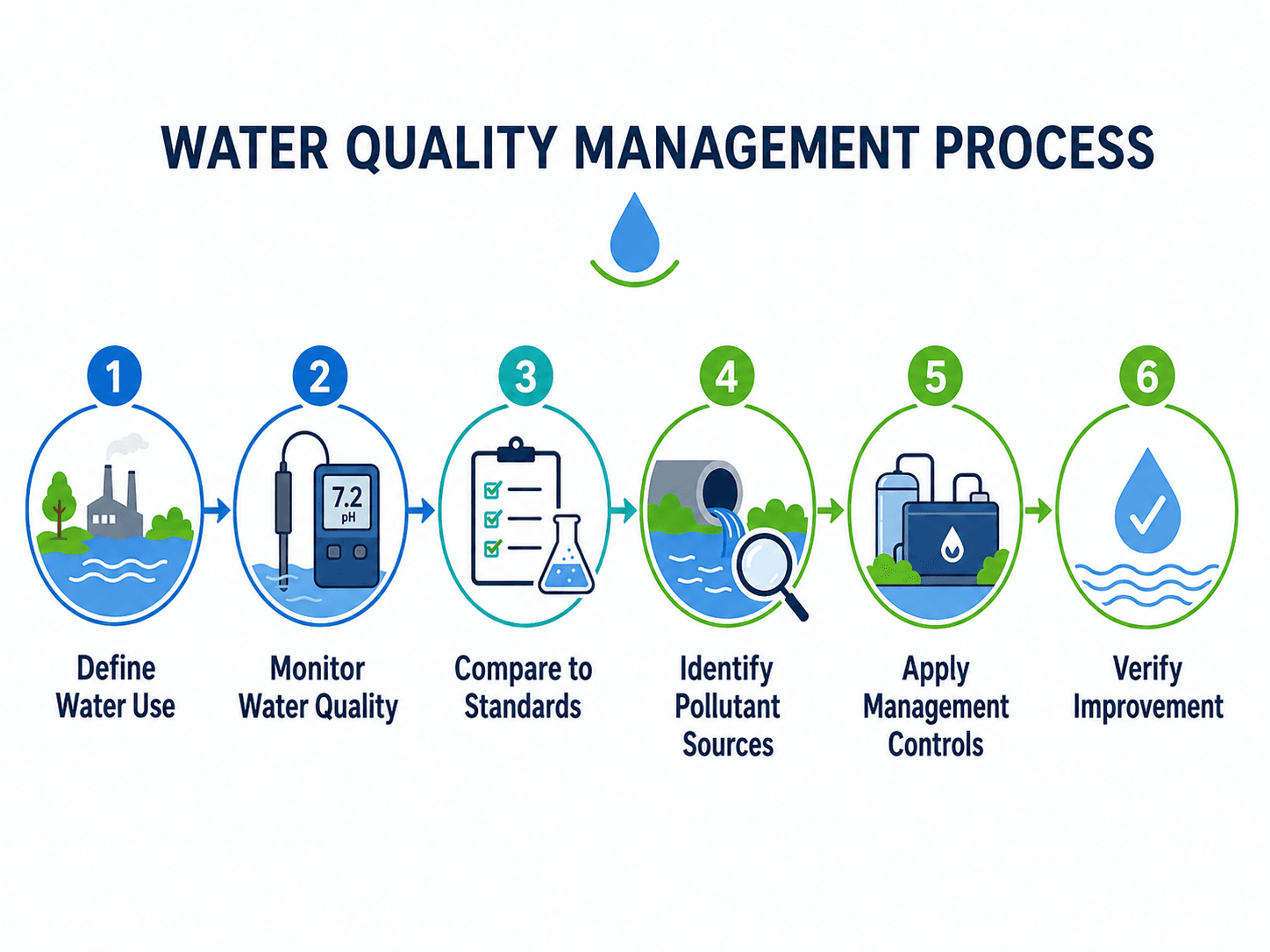 Water Quality Management Guide | Turn2Engineering
It’s easier than you think
You don’t need a lab coat or a PhD. There are simple test strips you dip in a glass for ten seconds. They change colors like a mood ring, and you match them to a chart. That’s it. You can do it while waiting for your coffee to brew.
You can also check your local water utility’s annual report—yes, it’s dry reading, but it tells you exactly what’s in your supply. Think of it as the ingredient label for your tap. Most towns legally provide this for free. A few minutes of curiosity can save you a world of “what’s that weird taste?”
The takeaway? Care a little, check a little
Water quality monitoring isn’t for scientists in hazmat suits. It’s for you, standing in your kitchen, wondering why your ice cubes look cloudy. It’s for your kid’s first sip from the faucet. It’s for your Sunday morning coffee ritual that just feels right.
You deserve to trust the water that touches your life every single day. So grab a test kit, spend ten minutes, and give your H2O a little checkup. Your taste buds, your hair, your wallet, and the local frog population will all thank you. And honestly? That’s a world where everyone wins—especially the dog, who gets fresh, clean water to drink, too.
