How Does A Reverse Osmosis Water Filter Work

Ever taken a sip of water that just tasted off? Maybe a little like a swimming pool, or like it had been sitting in an old pipe? That’s your tap water trying to tell you a sto...

Ever taken a sip of water that just tasted off? Maybe a little like a swimming pool, or like it had been sitting in an old pipe? That’s your tap water trying to tell you a story. And honestly, it’s not always a pleasant one. Enter the reverse osmosis water filter, the quiet little genius hiding under many kitchen sinks.
Think of it as a super-bouncer for your water glass. Its only job is to say “no” to the uninvited guests. We’re talking about stuff like lead, chlorine, fluoride, and even microscopic pesticides. It’s the most thorough way to get really, really clean water short of boiling it on the stove.
Let’s imagine a really picky door
Picture a crowded nightclub. A regular filter is like a basic rope—it catches the big, clumsy troublemakers. But reverse osmosis? That’s a VIP-only velvet rope with a very grumpy guard. It’s so picky that almost nothing gets through unless it’s pure water.
Must Read
The “reverse” part is the clever trick. Normally, water likes to move from a weak solution (not much stuff in it) to a strong one (lots of stuff). It’s called osmosis. Our filter flips that around. It uses pressure to push water against its natural flow.
So imagine squeezing a water balloon through a coffee filter. That’s basically it. The pressure forces H₂O molecules through a very special, very thin plastic membrane. The bad guys—the salt, the metals, the yuck—are just too big to fit through.
The three amigos of filtration
A good reverse osmosis system isn’t just one party trick. It’s a team of three hard workers. First comes a sediment filter. This catches the big, obvious stuff like sand, rust flakes, or that one leaf that snuck in from the garden hose.
Next up is a carbon filter. This is the deodorant of the operation. It grabs the chlorine that makes your water smell like a public pool, and it takes out the weird, earthy taste. It’s all about making the water feel fresh, not just clean.
 Reverse Osmosis (RO) | Water Filter Bali
Finally, the star of the show: the reverse osmosis membrane. This is the microscopic, coiled-up maze. Water is forced through layer after layer. By the time it pops out the other side, it’s almost as pure as the water that falls as rain on a mountain top.
Why should you care? (The fun part)
Here’s where it gets personal. Have you ever made a pot of coffee at home, and it just tasted… flat? That’s often your tap water’s minerals messing with the flavor. With RO water, your coffee becomes silky. Your tea gets clear. Your ice cubes are crystal clear, not cloudy.
Think about your kettle or coffee maker. If you live in an area with hard water, you know that white, crusty scale build-up. That’s calcium and magnesium. RO water takes those out, so your appliances last longer and work better. It’s like giving them a vitamin for a longer life.
Even your pasta tastes better. No joke. When you cook pasta in heavily chlorinated water, it can actually absorb that taste. RO water lets the flavor of the real food shine. You’ll taste the tomatoes, not the water treatment plant.
The little downside (worth knowing)
Okay, let’s be real. No system is perfect. Reverse osmosis is a bit of a water guzzler. For every gallon of clean water it makes, it might send two or three gallons down the drain as “reject” water. That’s the water carrying all the flushed-out bad stuff.
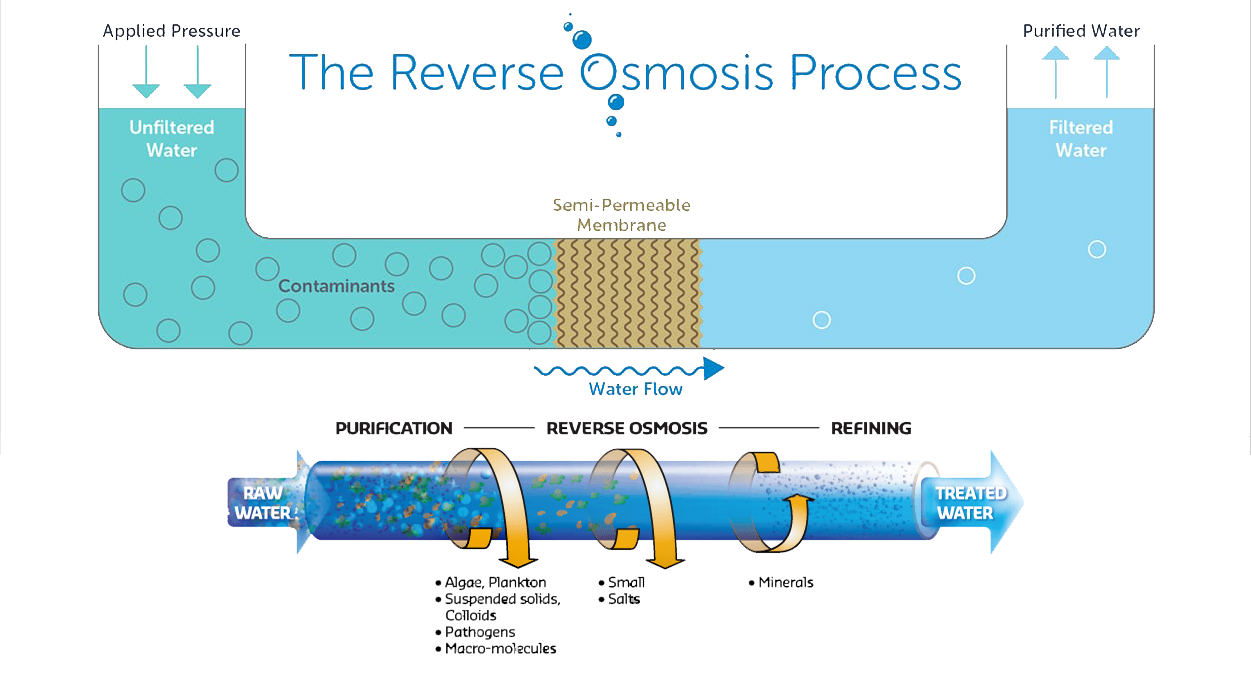 What Is Reverse Osmosis And How Does It Work
It’s also a bit slower than a regular faucet. You won’t fill a pot in five seconds. But most systems come with a little storage tank that holds a few gallons. It frees up speed for when you need a tall glass right now.
And yes, it does remove some good minerals too, like calcium and magnesium. For most people, that’s fine—you get plenty from food. But if you’re worried, you can buy a “remineralizer” filter that adds them back. It’s like putting the cherry on top of your perfect water sundae.
Making the choice feel simple
You don’t need to be a science nerd to enjoy it. You just need to want water that doesn’t taste like a hospital or a garden hose. Installing one under your sink is a weekend project that pays you back every single day.
Think of it this way: you buy fancy shampoo for your hair and organic avocados for your toast. Why not give your tap water the same thoughtful treatment? It’s the one thing you actually put inside your body every single day.
So next time you fill a glass, imagine that grumpy bouncer doing its job. The water comes out clean, crisp, and without a backstory. No weird aftertaste, no hidden fears. Just cold, refreshing water that makes you want to drink a lot more of it. And honestly, that’s the whole point.
