What Is The Proper Order Of The Water Cycle

So, you want to know the proper order of the water cycle? Buckle up, because we’re about to follow a raindrop on the wildest road trip it will ever take. No passport needed, j...
So, you want to know the proper order of the water cycle? Buckle up, because we’re about to follow a raindrop on the wildest road trip it will ever take. No passport needed, just a little imagination and maybe a towel—things might get splashy.
Let’s start at the very beginning, which is actually not a puddle. The whole cycle kicks off with evaporation. The sun, that giant, glowing toaster in the sky, heats up water in oceans, lakes, and even your neighbor’s kiddie pool.
As the water warms up, it turns into an invisible gas called water vapor. Think of it as the water’s ghost costume—it can float up into the air without anyone seeing it.
Must Read
Step One: The Great Escape (Evaporation)
This vapor isn’t hanging around for the view—it’s on the move. Warm air rises, and it takes that sneaky vapor with it, straight toward the clouds. It’s like a high-five from the sun, but way less sticky.
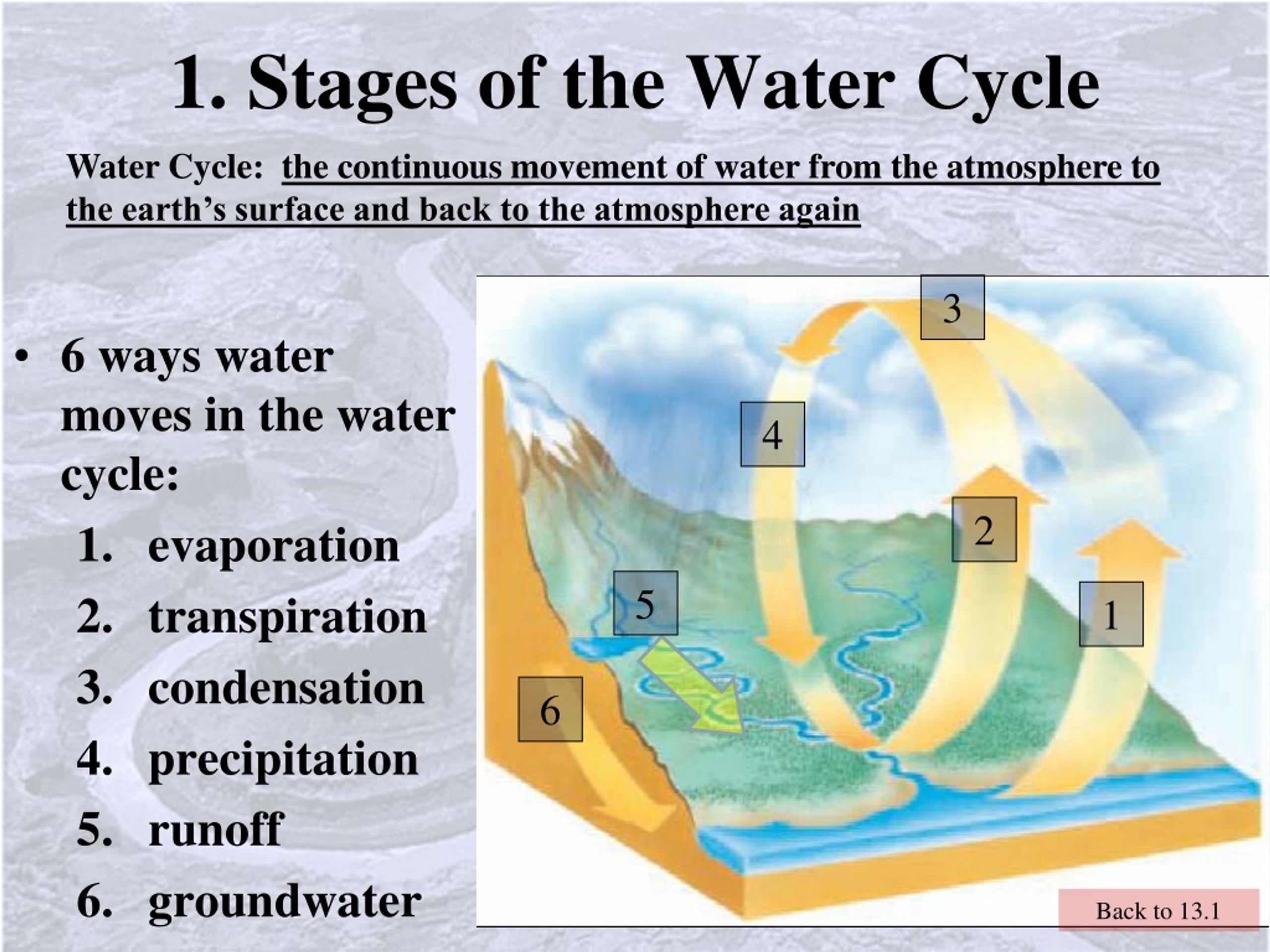
Now, here’s a fun fact: plants join the party too! They suck up water from the ground and then release it through their leaves in a process called transpiration. That’s just fancy plant sweat, but it sounds more impressive at dinner parties.
Together, evaporation and transpiration are often called evapotranspiration. Say that five times fast—I dare you. It’s the first big step where water says, “Adios, Earth! I’m going up!”
Step Two: The Loitering Phase (Condensation)
Once that water vapor floats high enough, it gets cold. Really, truly, goosebumps-on-a-penguin cold. And when water vapor gets cold, it does what any sensible gas would do: it turns back into liquid.
This is condensation, and it’s the reason clouds look like giant, fluffy cotton balls. Tiny water droplets cling together like awkward teenagers at a school dance—bunching up until they form a visible shape.
If you’ve ever seen a cold soda can “sweat” on a hot day, you’ve seen condensation in action. It’s basically the water cycle’s way of taking a breather before the next big event.
 Water Cycle Stages at Kim Delapaz blog
Step Three: The Heavy Lifting (Precipitation)
Here’s where things get dramatic. Those cloud droplets keep bumping into each other and growing bigger. They eat too many cloud-snacks and get heavy—like me after Thanksgiving dinner.
When they can’t hold on anymore, gravity yells, “Time to drop!” and down they come as precipitation. That’s just a fancy word for rain, snow, sleet, or hail—depending on the temperature’s mood.
If it’s rain, you get wet. If it’s snow, you build a snowman. If it’s hail, you run for cover and maybe yell at the sky. But no matter the form, it’s all water returning to Earth, dramatically.
Step Four: The After-Party (Collection)
Once the water hits the ground, it doesn’t just sit there and twiddle its thumbs. It starts collecting everywhere—rivers, lakes, oceans, and even underground. This is the collection stage, and it’s basically the water cycle’s version of a family reunion.
Some water soaks into the soil and becomes groundwater, which plants slurp up later. Some runs off into streams and joins the ocean for a longer vacation. Yes, water takes vacations—don’t judge.
And here’s the kicker: some of that collected water will eventually heat up again and start the whole loop over. It’s the ultimate rinse-and-repeat cycle, and it never gets bored.
But Wait—What’s the “Proper” Order?
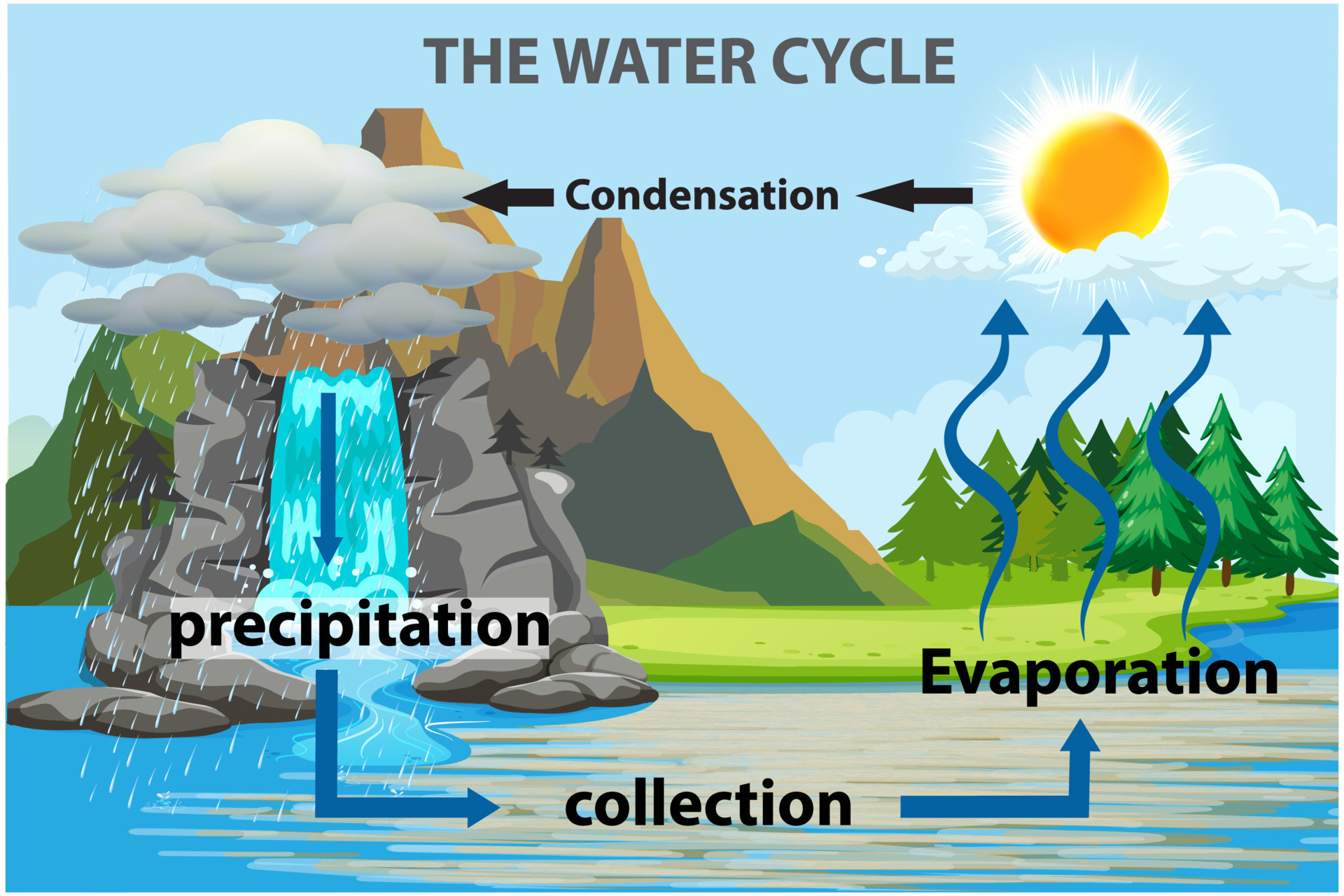
If you need to memorize the order for a quiz or just to impress your friends, here’s the cheatsheet: Evaporation → Condensation → Precipitation → Collection. That’s it! No secret level, no hidden boss fight.
 Diagram of Water Cycle - GeeksforGeeks
Think of it like a dance: water evaporates (the warm-up), condenses (the slow dance in the clouds), precipitates (the splashy drop), and collects (the cool-down). You can even add transpiration if you want to sound smart.
But here’s the truth: the water cycle doesn’t really have a start or end—it’s a loop. So if you start at collection, you’re still right. But for most science teachers, evaporation is the hero of the first scene.
Why This Should Make You Smile
Think about it: the water you drink today might have been a dinosaur’s bathwater a million years ago. The water cycle is the ultimate recycling program—no sorting required.
Every raindrop, every snowflake, every sweating soda can is part of a system so old and reliable that it’s basically the universe’s favorite playlist on repeat. No batteries needed, just good old sunlight and gravity.
So next time you see a puddle, give it a little nod. That water has been on a journey—from the sky to the ground, through a plant, back to the sky, and maybe even through your kitchen faucet. It’s the true adventurer.
And the uplifting conclusion? You are part of this cycle right now. Every breath you take has water in it. Every goodbye wave sends a little vapor into the air. You’re not just a human—you’re a walking, talking part of the biggest road trip on Earth.
So go ahead, pour yourself a glass of water, and toast to the sky. You’re connected to every cloud, every ocean, and every puddle that ever was. Cheers to the water cycle—the most epic, endless, and yes, perfectly ordered dance in the universe. Now go splash something!
