What Is The Total Dissolved Solids In Water

So, you’re staring at a water bottle label, and you see TDS. What in the world is that? Total Dissolved Solids. It sounds like a science experiment, right? But I promise, it’s...
So, you’re staring at a water bottle label, and you see TDS. What in the world is that? Total Dissolved Solids. It sounds like a science experiment, right? But I promise, it’s simpler than it sounds.
Let’s break it down over this imaginary coffee. Total Dissolved Solids is exactly what it says: all the stuff that’s dissolved in your water. Think of it as the water’s “secret ingredient list.”
What’s Actually in the Water?
Water is a natural solvent. It dissolves stuff it touches. Rocks, dirt, minerals—it’s like a thirsty sponge picking up flavors.
Must Read
Those dissolved bits are mostly minerals like calcium, magnesium, and potassium. Sometimes you get salts, a little bit of organic matter, or even tiny traces of metal. It’s not dirt floating around; it’s chemically mixed in.
The Good, The Bad, and The Tasty
Not all TDS is the enemy. In fact, some is great. That crisp taste in spring water? That’s dissolved minerals. They make water taste alive, not flat.
But too much? Oh boy. High TDS can make water taste salty, metallic, or even bitter. You know that weird, “minerally” taste from a rusty tap? That’s high TDS being a show-off.
Remember: low TDS doesn’t mean “pure.” Distilled water has almost zero TDS. It’s technically pure, but it tastes like nothing—like licking a plastic spoon. Your tongue hates it.
How Do We Measure It?
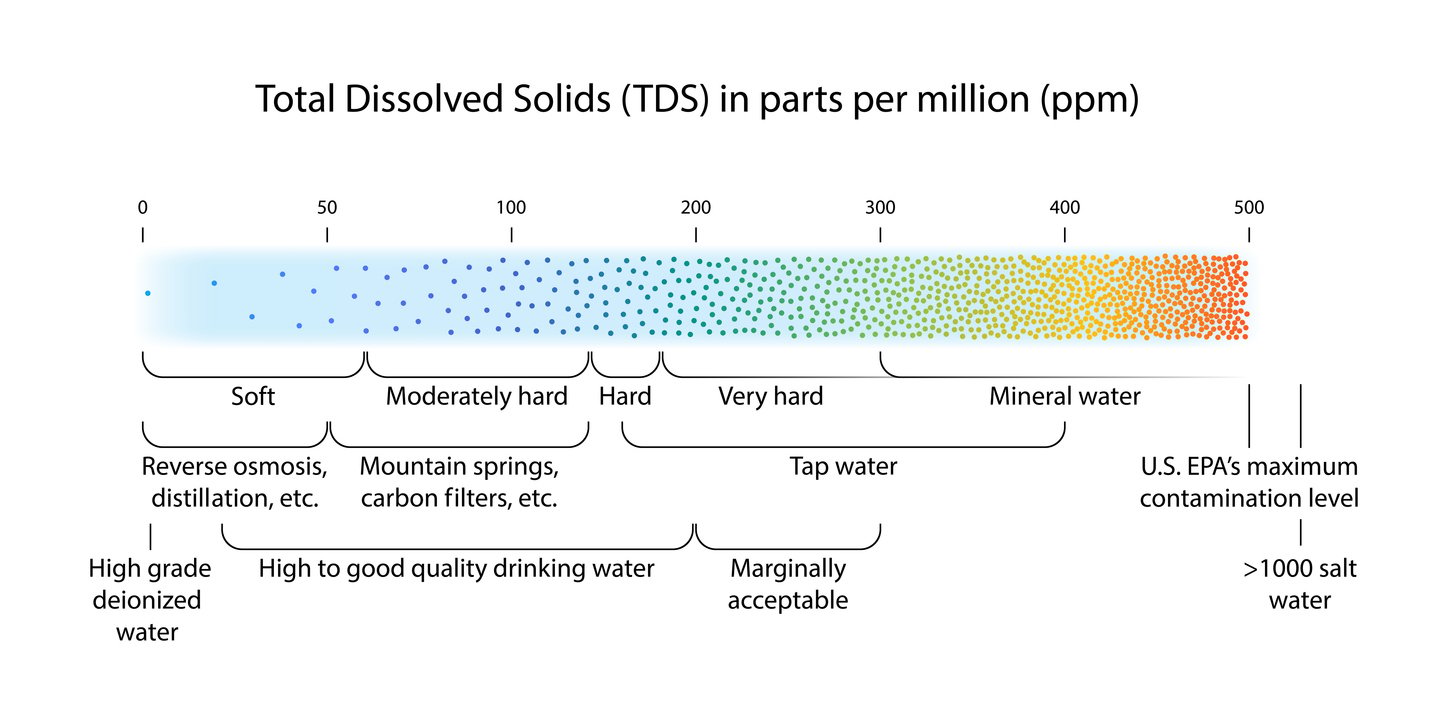
We measure TDS in parts per million (ppm). Think of it this way: one ppm is like one drop of food coloring in 10 gallons of water. It’s tiny, but it matters.
 What is Meant by Total Dissolved Solids?
A reading under 50 ppm? That’s super low—like rainwater or fancy distilled stuff. Between 150 and 350 ppm? That’s your sweet spot for drinking. Sparkling, tasty, alive.
Over 500 ppm, and you start getting that “rock juice” vibe. Over 1000 ppm? Yikes. That’s getting into “brackish” territory—not deadly, but you won’t be chugging it for fun.
Why Should You Care?
Because your water is telling you something. High TDS from a well? Might mean hard water, which wrecks your coffee maker. Low TDS from a filter? Means you’re drinking “dead” water—safe but boring.
It also changes how soap works. Hard water (high TDS) makes soap scum. Soft water (low TDS) makes you feel slippery in the shower. That’s not your imagination; it’s chemistry.
Have you ever traveled to a new city and your water tasted weird? That’s the TDS profile. You’re literally tasting the local geology. How cool (and kind of gross) is that?
 How TDS Affects Your Drinking Water | Castle Rock Water
Can You Change It?
Absolutely. A reverse osmosis system strips out almost everything. You’ll get TDS under 10 ppm. Great for labs, terrible for your morning tea.
Distillation does the same thing. But both methods remove good minerals, too. That’s why some people add mineral drops back in. Because water without personality is just sad.
Want to lower TDS without killing the taste? Use a simple carbon filter. It removes chlorine and sediment but leaves most minerals. Your water gets cleaner without becoming a ghost.
The Bottom Line (No Boring Science)
TDS is your water’s fingerprint. It tells you where your water’s been. High number? It’s been hanging out with rocks. Low number? It’s been through a spa treatment.
You don’t need a chemistry degree. Just remember: moderation is delicious. Too much TDS tastes like a penny. Too little tastes like regret. Aim for that sweet spot.
So next time you see “TDS 180 ppm” on a bottle, you can nod wisely. You know what’s up. And honestly? You’re now more informed than most people at that coffee shop. You’re welcome.
