Why Does My Dishwasher Leave White Residue

So, you’ve just opened your dishwasher after a long, hot cycle, expecting a gleaming miracle. Instead, you’re greeted by glasses that look like they’ve been dusted in a powder...

So, you’ve just opened your dishwasher after a long, hot cycle, expecting a gleaming miracle. Instead, you’re greeted by glasses that look like they’ve been dusted in a powdery, tragic snowstorm. It’s not snow, my friend—it’s white residue, the annoying ghost of dishes past.
You have every right to be offended. You spent good money on detergent, you loaded the rack like a Tetris champion, and the payoff is a coffee mug that looks like a crypt. Let’s crack this case, because you didn’t sign up to be a forensic scientist for your kitchen appliances.
The Usual Suspect: Hard Water (And Its Mineral Gang)
Your water isn’t just water. It’s a traveling circus of calcium and magnesium—microscopic minerals that love to cling to your plates like drunk uncles at a wedding. When the water evaporates in your dishwasher, these minerals get left behind as that chalky white film.
Must Read
Think of it as the water’s way of leaving a business card. “Thanks for the wash! Here’s a souvenir from your local aquifer.” If you live in an area with “hard” water, your dishwasher is basically a mineral spa that forgot to clean up.
Surprising Fact #1: Your Rinse Aid is a Superhero
You know that little compartment labeled “rinse aid” that you’ve been ignoring for three years? That’s not a suggestion; it’s a cry for help. Rinse aid contains surfactants that break the surface tension of water, causing it to sheet off your dishes instead of beading up and baking on those minerals.
Without it, your dishwasher is like a car without windshield wipers in a mudstorm. Rinse aid is cheap, people! Pour some in and watch your glasses go from “foggy” to “crystal ball ready.”
The Detergent Drama: Too Much of a Good Thing
Here’s a twist that will make you feel like a mad scientist: using too much detergent can cause white residue. It’s true! The water can only dissolve so much soap, and the excess just reprecipitates onto your dishes as a sticky, chalky mess.
 Why Do I Have Water Spots On My Dishes at Wayne Morgan blog
It’s like adding a fifth scoop of protein powder to your smoothie—the blender screams, the powder wins, and you drink a gritty regret. Check your detergent’s directions, and unless you have a commercial-grade dishwasher, stop filling the cup to the brim. Less is often more, especially when hard water is involved.
Surprising Fact #2: Jet Dry Isn’t Magic, It’s Chemistry
You might think of rinse aid as a luxury, but the inventors of the dishwasher actually designed them to work with a specific chemical. The active ingredient in most rinse aids is citric acid, which literally dissolves the calcium deposits that cause haze. It’s the same stuff in lemon juice!
So, if you run out of rinse aid, you could technically squeeze a lemon into the compartment. Don’t actually do that (the pulp will clog it), but know that nature and chemistry are on your side. Your dishwasher is just a very thirsty chemistry lab with a heating element.
The Temperature Tango: Hotter Isn’t Always Better
Your dishwasher has a secret life as a performance artist. If the water isn’t hot enough—ideally around 120°F to 140°F—the detergent won’t dissolve properly. The result? Clumpy, half-melted soap that leaves white streaks on everything.
Check your water heater’s temperature. If it’s set too low, your dishwasher is basically trying to wash plates with a lukewarm bath. That’s not a wash; that’s a sad, mineral spa day where nobody had fun.
 How To Clean White Deposits In Dishwasher at Diane Arnett blog
The Fix: A Simple Three-Step Intervention
First, fill your rinse aid reservoir to the brim. Yes, right now. I’ll wait. Second, switch to a high-quality dishwasher detergent—the pods or tablets work better than powder in most homes because they dissolve more completely.
Third, run a cleaning cycle with a cup of white vinegar placed on the top rack. This is the nuclear option that breaks down built-up scale in the machine’s internal pipes. Do this once a month, and your dishwasher will reward you with dishes that actually look clean.
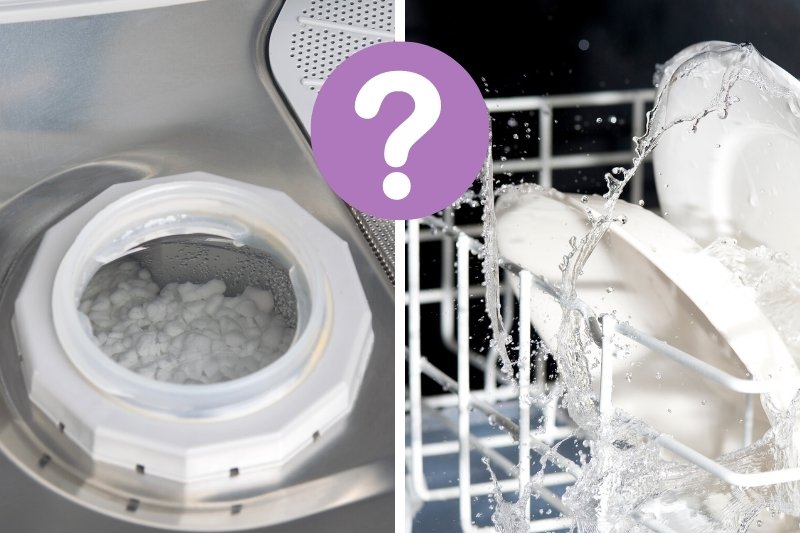
If all else fails, check your water softener. Some homes have a whole-house system that needs salt. If it’s empty, you’re essentially washing dishes in the mineral equivalent of a desert sandstorm. Don’t be that person.
The Grand Finale: A Toast to Science
White residue is just a mineral misunderstanding between your water, your soap, and your machine. With a little rinse aid, the right soap amount, and some heat, you can banish the haze. Your glasses will look so clear, you’ll finally see the terrible dust on your coffee table reflected in them.
So go forth, add that rinse aid, and reclaim your dishwashing dignity. Your future self—and your sparkly, ghost-free wine glasses—will thank you. Cheers!
