Does A Reverse Osmosis System Soften Water

So, picture this: my friend Karen—bless her heart—bought a fancy new reverse osmosis system for her kitchen. She was convinced it would turn her tap water into something that...
So, picture this: my friend Karen—bless her heart—bought a fancy new reverse osmosis system for her kitchen. She was convinced it would turn her tap water into something that tasted like it fell from a mountain spring. A week later, she called me, triumphant: “The water tastes amazing! And it’s so soft now—my soap lathers like a dream!” I had to break it to her gently.
That’s the moment I realized most people—including smart, well-meaning Karen—think reverse osmosis (RO) systems are the ultimate water softeners. Spoiler alert: they’re not. Not in the way your grandma’s water softener is. Let’s untangle this mess together, because I promise it’s simpler than it sounds.
What reverse osmosis actually does (and doesn’t do)
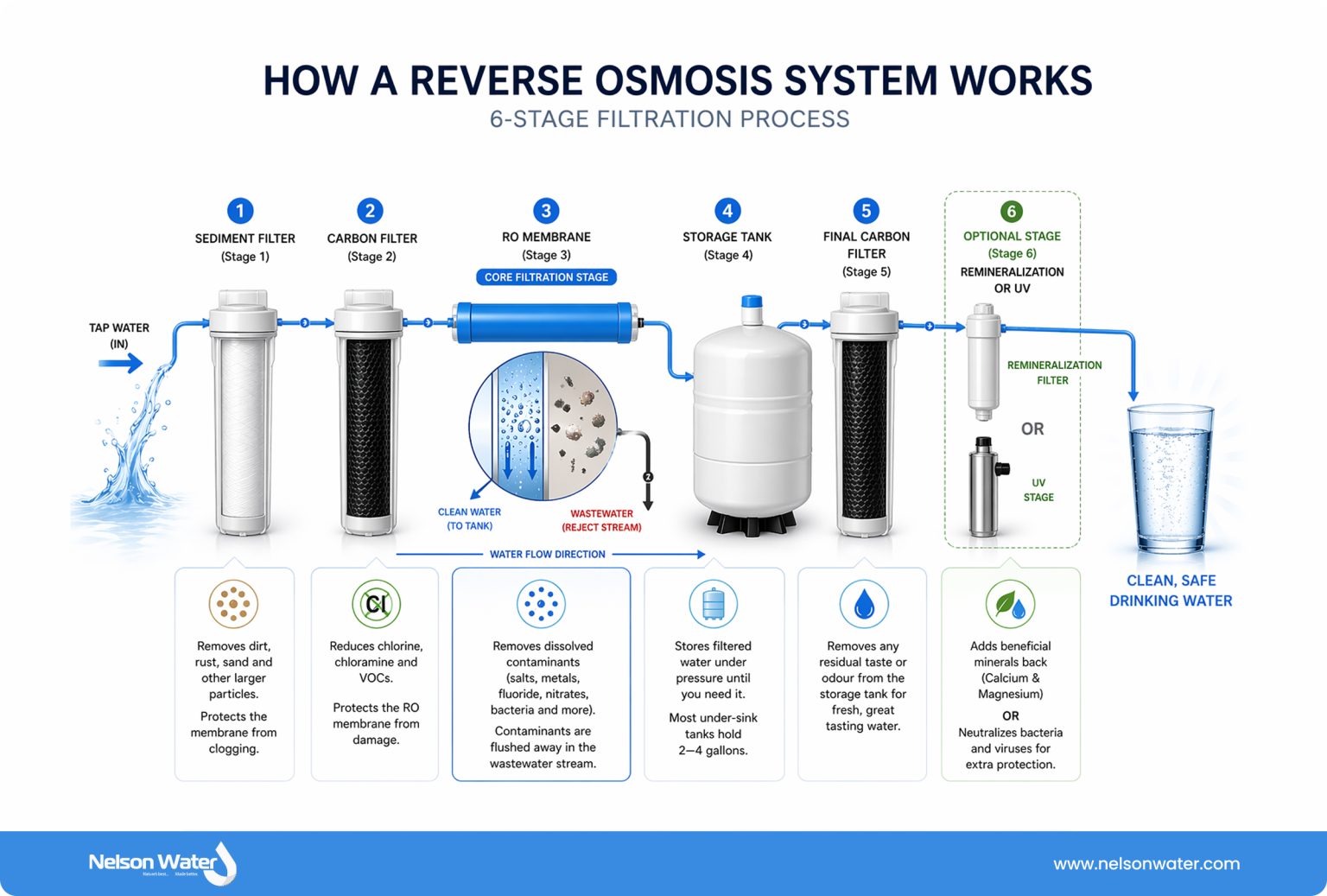
An RO system uses a semi-permeable membrane to shove water through at high pressure, leaving behind nearly all contaminants—stuff like lead, chlorine, and bacteria. Think of it as a bouncer at a club: “Sorry, heavy metals, you’re not coming in tonight.” But here’s the kicker: “soft water” specifically means water with low levels of calcium and magnesium—the minerals that cause hard-water problems.
Must Read
And guess what? Reverse osmosis does remove those minerals, just not through ion exchange (the classic softening method). It’s like saying you can travel to New York by plane or by bus—both get you there, but the ride is completely different. The RO system strips out calcium and magnesium, but it also strips out everything else—including good minerals your body might want. Irony, much?
So technically, yes: RO water is soft. But it’s not the same as water run through a salt-based softener, which replaces hard minerals with sodium. If you’re expecting that slippery, sudsy feeling from an RO tap, you might be disappointed. (Or just confused, like Karen.)
Why the confusion happens
Here’s the traitor in the room: reverse osmosis water feels “slick” compared to hard tap water. That’s because it’s nearly pure H₂O—no dissolved solids giving it that harsh, grippy texture. Your skin might even feel smoother after washing, which tricks your brain into thinking, “Wow, it’s soft!”
 Understanding the Schematic Diagram of a Reverse Osmosis System
But real water softeners do something sneaky: they swap calcium and magnesium for sodium or potassium. That chemical swap prevents scale buildup in pipes and keeps your hair from feeling like straw. RO systems don’t do that swap—they just evict everyone and leave you with ultra-pure water that’s acidic (yes, RO drops pH, which is why some people add a remineralization filter). Fun, right?
So, if you install an RO system expecting to save your showerhead from hard-water crust, you’re barking up the wrong pipe. That’s because RO units are typically installed at a single point (like your kitchen sink), while whole-house softeners treat all the water entering your home. You’d need a massive, expensive RO system to soften your entire house—and even then, it’s overkill for just removing hardness.
The truth, served with a side of irony
Look, I love RO systems. They’re brilliant for making water taste like nothing (which is somehow delicious). But if your goal is softening—as in, no more white spots on dishes, no more dry skin, no more rock-hard mineral deposits—you want a traditional water softener. Or, at least, a combo system that softens first, then polishes through RO. That’s the gold standard, but it’s also a wallet-buster.
Here’s my hot take: most people don’t need both. If your water is moderately hard (say, 7-10 grains per gallon), an RO under your sink will give you soft-taste drinking water, but your shower will still be a mineral-fest. Meanwhile, a softener will save your appliances, but your drinking water might taste slightly salty. Pick your poison—or your budget.
 Does a Reverse Osmosis System Soften Water? Pros and Cons
By the way, Karen eventually bought a whole-house softener. She kept the RO, too. Now she drinks joy and showers in silk. I’m still using tap water and pretending I’m fine.
So, does it soften water? The final verdict
Yes, but not in the way you care about. If “soft water” to you means “no limescale on the kettle and softer laundry,” then an RO system won’t cut it alone. It’s a star player on a different team—the ultra-purification team, not the mineral-swapping team. But for drinking water? It’s incredibly soft in feel and taste.
My advice? Do a quick water test kit (they’re like $10 on Amazon). If your hardness is above 7-8 grains, get a softener first. Then, if you’re a water snob like me, add an RO for drinking. Your taste buds and your pipes will thank you—separately.
And hey, if you’re still confused, just remember Karen. She thought she bought a magic wand. Turns out, she just bought a really good filter that happens to make water feel nice on her face. No shame in that—but now you know better.
