How Much Water Should Be In Water Softener

You’ve got a water softener, which is great—your skin is silky, your dishes are spotless, and your pipes aren’t slowly turning into a mineral graveyard. But then you glance at...
You’ve got a water softener, which is great—your skin is silky, your dishes are spotless, and your pipes aren’t slowly turning into a mineral graveyard. But then you glance at the brine tank and wonder: “How much water should actually be in here?” It’s the appliance equivalent of asking how much salt to put on fries—too little and it’s sad, too much and you’ve ruined dinner.
Let me save you from the existential dread of a flooded basement or a salt-brick fortress. The short answer is: about 4 to 6 gallons of water in the bottom of that brine tank is the sweet spot. Yes, I said bottom—not halfway up, not overflowing like a kiddie pool after a monsoon.
The great water level mystery (and why your tank isn't a fishbowl)
First, kill the myth: your brine tank should not be full of water all the time. If you open the lid and see water sloshing up to your shoulders, you have a problem—likely a stuck float valve or a drain line that’s singing a sad, clogged song. Normal operation: the tank fills with water only during the regeneration cycle, then drains back down.
Must Read
So what’s normal between cycles? You should see maybe a few inches of water, just enough to cover the salt. Imagine a shallow puddle after a light rain—not a swimming pool, not a desert. That’s your target. If you see more, your system might be having a quiet meltdown.
Surprising fact: some modern softeners use “dry brine” technology and barely hold any water at all. But if you’ve got a standard unit—and let’s be honest, most of us are stuck in the 1990s of home maintenance—the rule stays: water level at the bottom, salt above it.
Why too much water is your enemy (and also your bill’s enemy)
Excess water isn’t just a visual annoyance—it dilutes the brine solution, making your softener less effective. It’s like trying to make a strong cup of tea with a gallon of water and one sad tea bag. Your hard water minerals will laugh at your puny attempts to soften them.
Worse, that extra water can freeze in winter, crack your tank, and turn your utility room into an ice rink. Or it can cause salt to turn into a solid, cement-like mush—a “salt bridge” that makes your system useless. You’ll be manually chipping away at a salt iceberg while questioning your life choices.
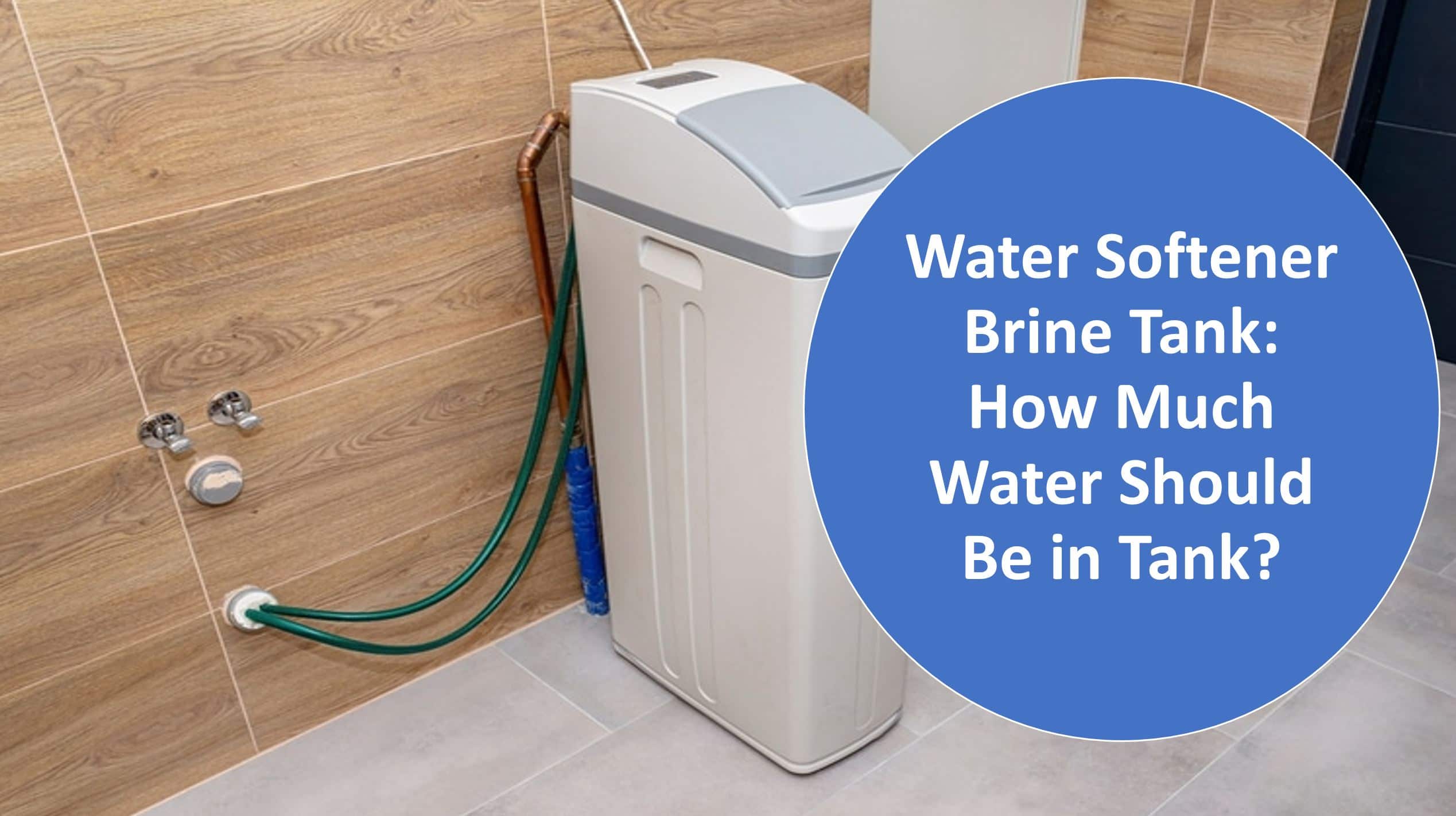 Water Softener Brine Tank Water – CMRNG
And let’s not ignore the water bill: every extra gallon in that tank is water you’ll waste during regeneration. Your wallet will start making passive-aggressive comments every time you flush the toilet.
How to check your water level without losing your sanity
Open the lid of your brine tank. Do not stare into the abyss like you’re summoning the ghost of plumbing past. Simply look—is the water covering the salt? If the salt is dry and the water is nowhere to be seen, you’re good. If you see a lake, grab a towel and your manual.
Second test: wait for a regeneration cycle. Most systems do this around 2 AM—yes, when you’re dreaming of winning the lottery. After regeneration, the water level should drop dramatically. If it doesn’t, your float valve is stuck or the drain line is kinked. Congratulations, you now have a new weekend project.
Quick tip: mark the “normal” water line on the inside of your tank with a permanent marker. This way, next time you peek, you won’t have to guess if you’re looking at “fine” or “disaster.” It’s the home maintenance equivalent of setting a reminder—you’ll feel very adult.
What the experts won’t tell you (but I will)
You don’t need to obsess over exact measurements. The Goldilocks principle works here: water should be present, not abundant, not absent. If you peek and see dry salt sitting on a bone-dry floor, add a gallon of water manually to help it start dissolving. Yes, you can just pour water in like a cheerful bartender.
 what size water softener.for 3 bathroom.house: optimal size guide
If you see water halfway up the salt stack, check these three culprits first: 1) A brine tank overflow hose that’s blocked, 2) A faulty fill valve, or 3) You accidentally ran the system in “extra wet” mode thinking it was a spa feature. No judgment.
Wild fact: some people with very hard water add too much salt, which absorbs all the water, leaving the tank dry on top but waterlogged at the bottom. It’s a salt-water sandwich, and nobody wants that. Always keep salt at least 4 inches below the top of the tank to avoid a mushy disaster.
The final pour: your cheat code for success
To summarize: water level = just enough to kiss the bottom of the salt pile. Not a splash zone, not a desert. If you follow this one rule, your softener will work better, your pipes will thank you, and you’ll never again have to explain to a houseguest why there’s a mysterious tank of salty water in your garage.
One last thing: if your unit is brand new, you’ll need to add water manually for the first cycle. The manual will say something like “add 3 gallons of water to the brine tank.” Ignore the manual at your own peril—it’s the only time you want a mini-pool. After that, let the machine do its job, and stop peeking every hour like it’s a pot of boiling pasta.
Now go forth, check your tank, and pat yourself on the back. You’ve graduated from “confused homeowner” to “person who knows exactly how much water belongs in a brine tank.” That’s a weirdly specific superpower—but hey, it beats adulting being completely useless.
